How to Apply for F-5-10 Permanent Residency Visa in Korea (2026 Updated)
F-5-10 permanent residency visa requirements for foreigners in Korea. Education, income (GNI x1), KIIP requirements, hidden traps, and step-by-step application guide for 2026.
F-5-10 visa is what every foreigner in South Korea eventually dreams about. If you have been here long enough, you already know the drill. Every year or two, you gather a mountain of paperwork, wait on hold with the 1345 immigration hotline for 20 minutes, and pray the Hi Korea website doesn’t crash while you book an appointment.
Not to mention the constant anxiety of having to report your change of address within 14 days every time you move.
This is exactly why the F-5 permanent residency visa is the holy grail for expats. Specifically, the F-5-10 visa (Permanent Residency for High-Degree Holders in Advanced Fields) is one of the most efficient ways to step off the visa-renewal hamster wheel. It gives you absolute freedom to work, start a business, and live in Korea without being tied to a specific employer.
But immigration rules here change faster than K-pop trends. There is a lot of outdated information online. As someone who understands the absolute headache of navigating Korean bureaucracy, I’ve broken down the brutally honest truth about the F-5-10 visa requirements for 2026, the hidden traps, and how to actually check if you qualify.
What Is F-5-10 Visa?
The F-5-10 visa is a permanent residency track designed for educated professionals. Unlike the F-2-7 point-based visa, which requires you to desperately maintain your points every time you renew, the F-5 is truly permanent. You only need to update the physical plastic card once every 10 years.
Many people think you need a Ph.D. or an insane salary to get this, but the requirements are actually more accessible than you might expect. Especially if you graduated from a Korean university.
F-5-10 Visa – The Direct Qualification Checklist
To get the F-5-10 sticker in your passport, you must cross three main hurdles simultaneously. If you miss even one, your application will be rejected at the counter.
Requirement 1 – Education and Employment
You don’t necessarily need a Master’s degree. The F-5-10 is essentially designed for these groups:
- A Bachelor’s degree or higher from a Korean university (any field), combined with at least 3 years of continuous employment in Korea in a specialized field.
- A Bachelor’s degree or higher in an advanced tech field from an overseas university, combined with at least 3 years of continuous employment in Korea in a specialized field.
Notice the difference: Korean university graduates can have any major, but overseas graduates must have studied an advanced technology field to qualify.
What about Ph.D. holders? Technically they can apply for F-5-10, but most don’t bother. Ph.D. graduates typically go straight to F-5-9 (Advanced Technology Ph.D.) or F-5-15 (General Ph.D.), which are faster and exempt you from KIIP entirely. If you have a doctorate, look into those options first.
Crucial Note: You need to be holding a valid professional working visa (such as E-1 to E-7, or F-2) at the time of your application.
Requirement 2 – The Income Hurdle (GNI x1)
A lot of blogs mistakenly claim you need to make double the national average for this visa. That is false. That rule applies to the standard F-5-1 visa.
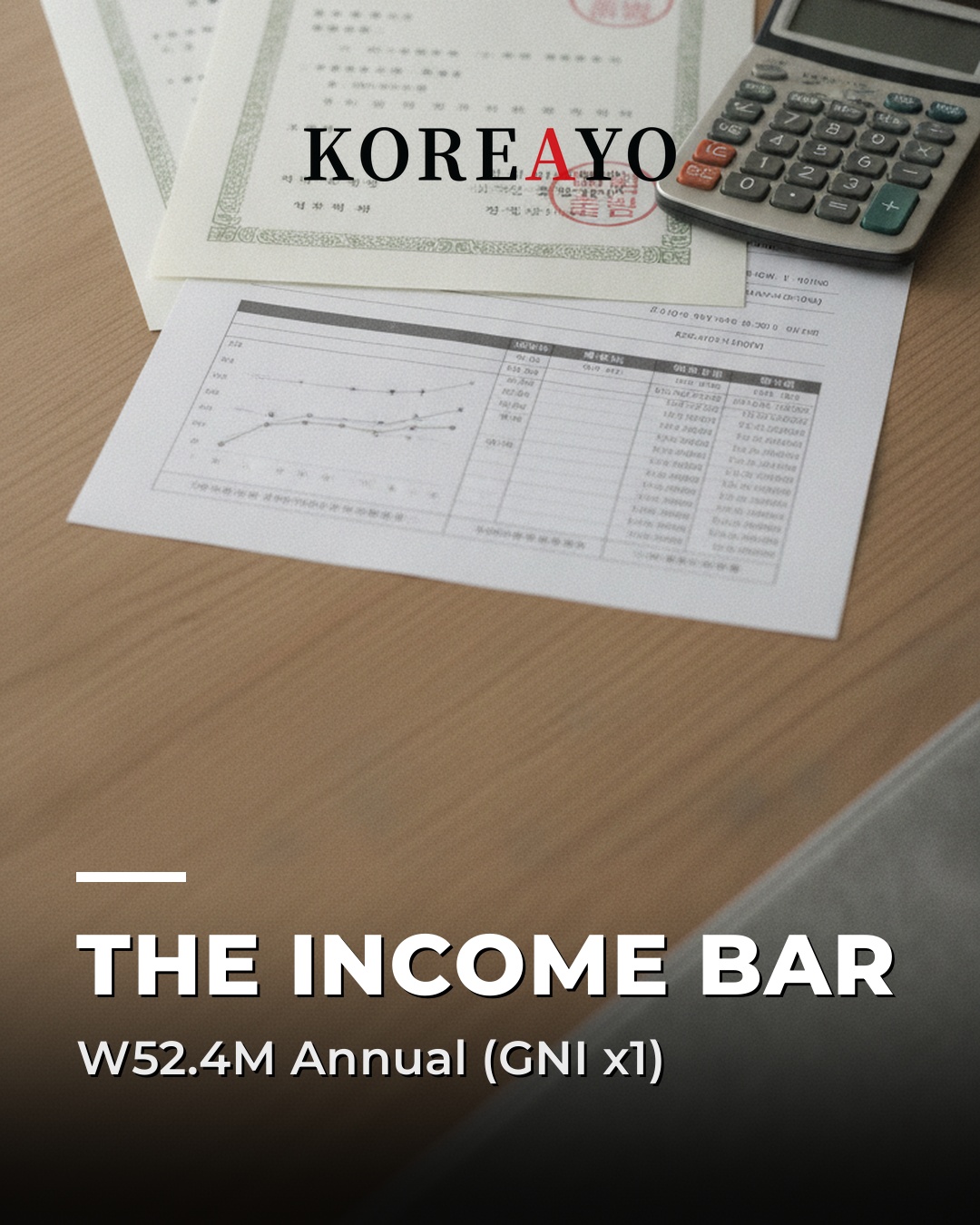
For the F-5-10 visa, your annual income must be equal to or greater than the Gross National Income (GNI) per capita of Korea from the previous year.
| Metric | Estimated Standard (Based on Recent Data) |
|---|---|
| Current Korean GNI per Capita | 52,490,000 KRW (2026 standard) |
| Your Required Annual Income (GNI x1) | 52,490,000 KRW+ (about 4.37M KRW/month) |
One thing I wish someone told me earlier: Your income is purely based on the official Certificate of Income Amount issued by the National Tax Service, usually available around May every year. Allowances not reported to the tax office do not count.
Requirement 3 – Korean Integration (KIIP)
You cannot live here permanently without proving you understand the culture and language. You must complete:
- KIIP (Korea Immigration & Integration Program) Level 5 (Pass the Comprehensive Test), OR
- Score a passing grade on the KIPRAT (Permanent Residency Test).

How to Apply for F-5-10 Visa?
If you tick all three boxes, you are ready. Here is the exact workflow you should follow to avoid getting sent home by the immigration officer.
Step 1 – Wait for the Official Tax Release
Timing is everything.
Do not apply in January or February. Wait until May when the National Tax Service officially updates your previous year’s income tax records. Applying with unverified company pay stubs is a guaranteed rejection.
Step 2 – Gather the Paperwork Mountain
Prepare for at least 15 documents.
Collect your apostilled degrees, employment contracts, official tax certificates, KIIP completion certificates, housing lease agreement, and a clean Criminal Record Check from your home country (issued within the last 6 months and apostilled).
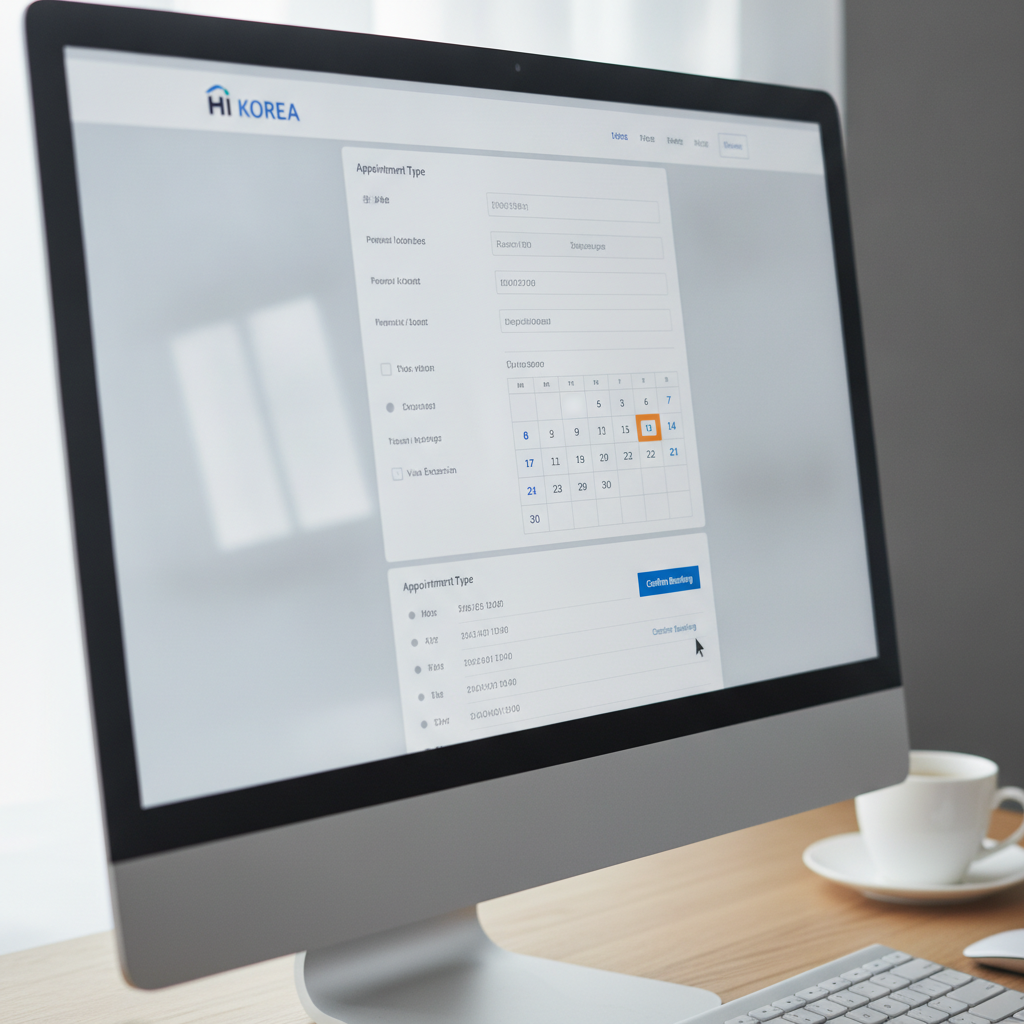
Step 3 – Book the Hi Korea Appointment
Do this 2 months in advance.
Immigration slots in Seoul, Suwon, and Incheon fill up incredibly fast. Book your appointment on the Hi Korea website at least 60 days before your current visa expires.
Step 4 – Survive the Screening Period
Patience is a virtue.
After submitting everything, the review process takes anywhere from 4 to 10 months. During this time, your current visa status is automatically extended.
F-5-10 Visa – The Hidden Traps That 1345 Won’t Tell You
Before you run to your HR department, keep these real-world realities in mind:
The 90-Day Grace Period Trap
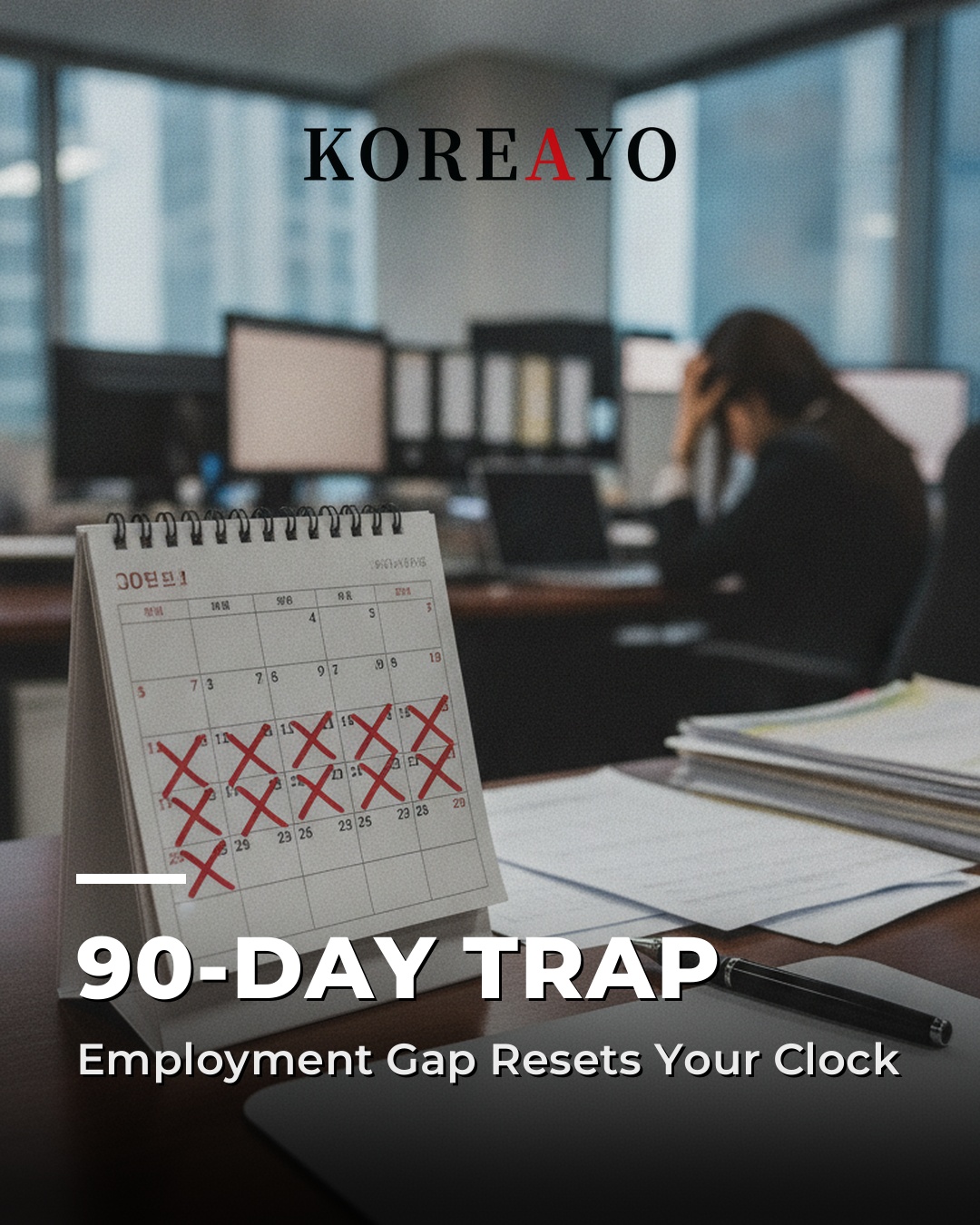
Remember that “3 years of continuous employment” rule? If you quit a job and took a 4-month break before starting your new job, your 3-year clock resets to zero. Immigration only allows a gap of maximum 90 days between jobs for it to be considered “continuous.”
One more thing: if you are planning to switch jobs, do not schedule any long trips abroad during that transition period. Days spent outside Korea while unemployed still count toward your gap. Plenty of people have accidentally reset their clock by taking a “well-deserved vacation” between jobs.
Also, even if your total gap is under 90 days, there is a stricter rule for the final stretch: the gap within the last 1 year before your application cannot exceed 30 days. This catches a lot of people off guard.
The Single-Income Rule
Unlike the F-2-7 visa where you can combine your salary with your spouse’s to meet a quota, the F-5-10 strictly looks at your individual economic capability. Your spouse’s income is irrelevant here.
The Officer’s Discretion
Even if your paperwork is 100% perfect, the individual immigration officer has the right to ask for additional documents explaining your exact job duties to ensure you are truly working in a “specialized” field.

F-5-10 Visa – Required Documents Checklist
Here is the complete list you need to bring to your immigration appointment:
| Document | Notes |
|---|---|
| Passport | Original + copy of ID page and visa page |
| Residence Card (formerly ARC) | Original + copy |
| Application Form | Available at immigration office or Hi Korea |
| Passport Photo (3.5×4.5cm) | 1 photo, white background |
| Degree Certificate | Apostilled, with Korean translation if needed |
| Certificate of Employment | From current employer, stating job title and period |
| Certificate of Income Amount | from National Tax Service |
| KIIP Completion Certificate | Level 5 or KIPRAT passing certificate |
| Criminal Background Check | From home country, apostilled, within 6 months |
| Housing Contract | Lease agreement or proof of residence |
| Fee | Approx. 230,000 KRW |
F-5-10 Visa vs F-2-7 Visa – Which Should You Choose
Many expats wonder whether to go for F-2-7 first or jump straight to F-5-10. Here is the honest comparison:
| Criteria | F-2-7 (Points Visa) | F-5-10 (Permanent Residency) |
|---|---|---|
| Validity | 1 to 5 years (depending on points) | Permanent (card renewal every 10 years) |
| Income Requirement | Combined with spouse OK | Individual income only |
| Work Freedom | Unrestricted | Unrestricted |
| Points System | Must maintain 80+ points | No points needed |
| KIIP Required | Optional (gives bonus points) | Mandatory |
| Best For | Those who need flexibility now | Those ready to settle permanently |
If you have a STEM Bachelor’s degree from a Korean university or a Master’s degree, and you make over 52.4 million KRW (the 2026 GNI threshold), applying for the F-5-10 is a no-brainer. It is the ultimate peace of mind.
F-5-10 Visa – Processing Time and Fees
The processing time varies significantly depending on your immigration office location and the completeness of your documents.
| Item | Details |
|---|---|
| Application Fee | Approx. 230,000 KRW |
| Processing Time | 4 to 10 months (average 6 months) |
| Appointment Wait Time | 1-2 months in Seoul area |
| Card Validity | 10 years (then renewal) |

F-5-10 Visa – Common Rejection Reasons
Immigration officers reject applications for these reasons more often than you think:
- Employment gap over 90 days – Your “3 years continuous” clock resets
- Income documents from wrong year – Must be previous year’s official tax records
- Missing apostille on criminal record – Must be within 6 months AND apostilled
- KIIP not completed – Level 5 completion or KIPRAT required
- Job duties not “specialized” – Simple office work may not qualify
Related Guides
- Korea Banking Guide for Foreigners
- Korean Work Culture Guide
- Korea Housing Guide for Expats
- International Students Korea Guide
- Korean Neighborhoods Guide
For official immigration information, visit Korean Immigration on Wikipedia.
F-5-10 Visa – Conclusion
If you are struggling with the paperwork, it is often worth hiring a licensed Korean administrative lawyer (행정사) to organize the documents for you. Consider it an investment in your permanent freedom in Korea.
The F-5-10 visa is not as unreachable as many believe. If you have the education, the income, and the KIIP certificate, start gathering your documents in March and apply in May. Your future self will thank you.
FAQ
Do I need a Ph.D. to get the F-5-10 visa?
No. A Master’s degree with 3 years of work experience, or even a STEM Bachelor’s from a Korean university with 3 years of work, can qualify you.
Can I combine my income with my spouse’s for F-5-10?
No. Unlike F-2-7, the F-5-10 strictly evaluates your individual income only. Your spouse’s salary does not count toward your requirement.
What happens if I have a 4-month gap between jobs?
Your 3-year continuous employment clock resets to zero. Immigration allows a maximum 90-day gap between jobs.
How long does F-5-10 processing take?
Anywhere from 4 to 10 months, with 6 months being average. Your current visa status is extended during the review period.
Is KIIP mandatory for F-5-10?
Yes. You must complete KIIP Level 5 or pass the KIPRAT (Permanent Residency Test). There is no way around this requirement.