Korean Workplace Culture: Hierarchy, Hoesik, and Survival Tips for Foreign Employees
Guide to Korean workplace culture for foreign employees. Covers hierarchy, teamwork, communication styles, company dinners (hoesik), work hours, and tips for success in Korean companies.
Korean Workplace Culture: Essential Guide
Understanding Korean workplace culture is essential for success. Working in Korea means navigating a unique professional culture shaped by Confucian values, hierarchy, and collective harmony. Understanding these unwritten rules will help you succeed. See also our guide to making friends in Korea and avoid common misunderstandings that trip up foreign employees.
Korean Workplace Culture: Hierarchy and Titles
The Importance of Rank
Korean workplaces operate on strict hierarchy. Your position determines:
- How you’re addressed
- Who speaks first in meetings
- Who pours drinks at dinner
- The level of deference expected from you
Common Job Titles
| Korean | Romanization | English Equivalent | Notes |
|---|---|---|---|
| 회장 | Hoejang | Chairman | Founder/top executive |
| 사장 | Sajang | President/CEO | Top executive |
| 부장 | Bujang | Department Head | Senior manager |
| 차장 | Chajang | Deputy Manager | Senior position |
| 과장 | Gwajang | Manager | Mid-level manager |
| 대리 | Daeri | Assistant Manager | Junior management |
| 주임 | Juim | Senior Staff | Experienced staff |
| 사원 | Sawon | Staff/Employee | Entry level |
| 인턴 | Intern | Intern | Trainee |
How to Address Colleagues
Basic rules:
- Use title + 님 (nim): “과장님” (Gwajang-nim) for Manager
- Never use first names with superiors
- With same-level colleagues, last name + 씨 (ssi): “김씨” or title
- Foreigners often get more flexibility, but err on formal side
Korean Workplace Culture: Working Hours
Standard Hours
Legal workweek: 52 hours maximum (40 regular + 12 overtime)
Typical schedule: 9:00 AM – 6:00 PM, Monday-Friday
Reality check: Many Korean offices, especially traditional ones, expect:
- Arriving before your boss
- Not leaving until your boss leaves
- Visible presence = dedication
Overtime Culture
야근 (Yageun) – Working overtime:
- Common in many industries
- Often unpaid in traditional companies
- Declining due to recent labor law changes
- Tech and startup companies generally better about this
How to handle:
- Observe company culture first
- If others stay late, staying shows commitment (initially)
- Efficiency matters less than presence in some workplaces
- Foreign companies in Korea often have better work-life balance
Korean Workplace Culture: Communication
Indirect Communication
Koreans often communicate indirectly to maintain harmony:
| What They Say | What They Might Mean |
|---|---|
| “That might be difficult” | No |
| “We’ll consider it” | Probably not going to happen |
| “Let me think about it” | I disagree but won’t say directly |
| “It’s a good idea, but…” | There are significant problems |
| “We should discuss further” | This needs more work |
Saying No
Avoid direct rejection:
- “I’ll check on that” instead of immediate “no”
- Suggest alternatives rather than flat refusal
- Use “we” instead of “I” when declining
Email Etiquette
Structure:
- Greeting with title: “과장님께” (To Manager [Name])
- Brief pleasantry or context
- Main content
- Closing: “감사합니다” (Thank you) or “잘 부탁드립니다” (Please take care of this)
- Your name and title
Tips:
- CC everyone who might be relevant (over-CC is normal)
- Respond promptly, even if just acknowledging receipt
- Keep emails formal, even internally
Korean Workplace Culture: Meetings
Meeting Culture
Expectations:
- Arrive on time (or early for senior attendees)
- Seniors speak first
- Take notes visibly
- Don’t interrupt superiors
- Decisions often made before/after official meeting
Presentations
Korean style:
- Detailed, thorough slides preferred
- Data and preparation valued over improvisation
- Anticipate all possible questions
- Defer to seniors if challenged
Korean Workplace Culture: Business Cards
Exchange Etiquette
- Receive with both hands
- Study it briefly – don’t just pocket it immediately
- Don’t write on it in front of the person
- Place on table during meeting, arranged by seniority
- Store respectfully in card holder, not back pocket
Card Design
For foreigners working in Korea:
- Korean on one side, English on other (standard)
- Company usually provides
- Include: Name, title, company, phone, email
Korean Workplace Culture: Company Dinners
What Is Hoesik?
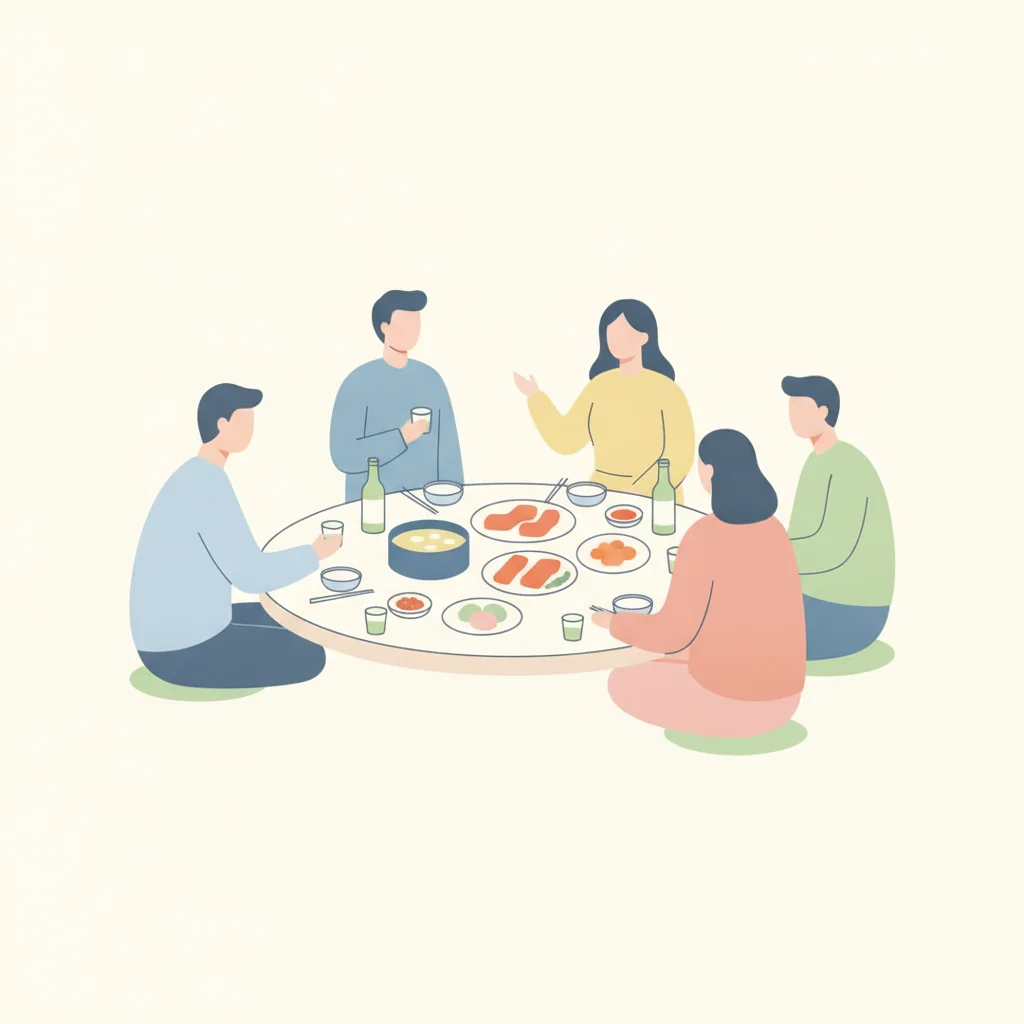
Team dinners that are essentially mandatory social events. Usually after work, often involving alcohol.
How Hoesik Works
Typical structure:
- 1차 (Il-cha): Primary dinner – Korean BBQ or similar
- 2차 (I-cha): Second round – often a bar or noraebang (karaoke)
- 3차 (Sam-cha): Third round – more drinks, late night
Cost: Usually company-paid or boss pays
Drinking Etiquette
Pouring rules:
- Never pour your own drink
- Pour for others, especially seniors
- Use both hands when pouring for or receiving from seniors
- Turn away from seniors when drinking
What to drink:
- Soju: Most common, expected to drink together
- Beer: Often mixed with soju (“소맥” – somaek)
- Non-alcohol: Increasingly acceptable, especially citing health/religion
If you don’t drink:
- Politely explain: health, religion, or personal choice
- Still attend the dinner portion
- Participate in toasts with water or soft drink
- Younger generation and international companies more understanding
Noraebang (노래방) – Karaoke
What to expect:
- Private room with your team
- English songs available
- Participation expected, even if brief
- Ability doesn’t matter—effort does
Safe song choices: Beatles, ABBA, popular K-pop, Queen—anything upbeat and well-known
Korean Workplace Culture: Relationships
Sunbae-Hoobae (선배-후배)
Sunbae: Senior (by age or tenure)
Hoobae: Junior
This relationship involves:
- Sunbae guides and mentors
- Hoobae shows respect and follows advice
- Extends beyond work to meals, drinks, life advice
Building Relationships
Important activities:
- Attend all team events
- Have lunch with colleagues
- Small talk about weekends, hobbies
- Remember personal details (family, interests)
Warning signs you’re isolating:
- Eating alone daily
- Leaving exactly at end time every day
- Skipping all hoesik
Korean Workplace Culture: Challenges
Language Barrier
Even in “English-speaking” companies:
- Informal communication usually in Korean
- Missing nuances in meetings
- Feeling excluded from water cooler talk

Solutions:
- Learn basic Korean for workplace greetings and small talk
- Ask colleagues to summarize important Korean discussions
- Request meeting minutes in writing
Different Work Styles
Common frustrations:
- Last-minute changes to plans
- “빨리빨리” (hurry hurry) culture
- Less individual recognition
- Consensus over speed
Adaptation tips:
- Build flexibility into your timelines
- Focus on team success, not personal credit
- Patience with approval processes
Feedback Culture
Differences from Western workplaces:
- Direct criticism is rare
- Praise is often indirect or absent
- Issues addressed privately, not in group settings
How to give feedback:
- Sandwich criticism between positives
- Private conversations for negative feedback
- Focus on situation, not person
Korean Workplace Culture: Career Growth
Promotions
Traditional factors:
- Seniority (years of service) matters significantly
- Loyalty to company valued
- Relationships with superiors important
- Performance is one factor among many
Modern changes:
- Tech companies moving toward merit-based
- International companies often different
- Younger generation pushing for change
Job Hopping
Traditional view: Frequent job changes seen negatively
Current reality: More accepted, especially in tech and among younger workers
Korean Workplace Culture: Lunch and Break Time
Lunch (점심, jeomsim) is usually a full hour, and teams often go out together rather than eating at their desks. A few patterns worth knowing:
- Junior employees don’t always get a say in where the team eats, though this is loosening at younger, less hierarchical companies
- Eating alone every day can be read as a sign you’re not integrating with the team (see the warning signs under Relationships above)
- A “coffee run” after lunch, where one person grabs drinks for the group, is common in many offices
- Short breaks for coffee or a walk are normal, but stepping away often or for long stretches can stand out in offices that value visible presence
Useful Workplace Korean Phrases
| Korean | Pronunciation | Meaning/Usage |
|---|---|---|
| 수고하셨습니다 | Sugohasyeosseumnida | “You worked hard” – said when leaving office |
| 먼저 들어가겠습니다 | Meonjeo deureogagesseumnida | “I’ll leave first” – before leaving office |
| 잘 부탁드립니다 | Jal butak deurimnida | “Please take care of this” – requesting help |
| 알겠습니다 | Algesseumnida | “Understood” – acknowledging instructions |
| 감사합니다 | Gamsahamnida | “Thank you” – formal |
| 죄송합니다 | Joesonghamnida | “I’m sorry” – for mistakes |
| 회의 있어요 | Hoeui isseoyo | “I have a meeting” |
| 점심 드셨어요? | Jeomsim deusyeosseoyo? | “Did you have lunch?” – common greeting |
Tips for Success
- Observe first: Watch how Korean colleagues behave before acting
- Show respect: Err on the side of formality
- Be patient: Building trust takes time
- Participate: Join team activities, even uncomfortable ones
- Learn Korean: Even basics show effort and respect
- Adapt, don’t fight: Work within the system while maintaining your identity
- Find allies: Connect with other foreigners and understanding Korean colleagues
- Stay positive: Cultural differences are challenges, not judgments
Working in Korea offers unique rewards—strong team bonds, professional growth opportunities, and deep cultural immersion. Understanding workplace culture isn’t about losing yourself; it’s about building bridges that benefit everyone. With patience and openness, you’ll find your place in the Korean professional world.
Learn more about Korean business culture at South Korean business culture on Wikipedia.
FAQ
Is Korean workplace hierarchy the same at every company?
No. Traditional Korean conglomerates (chaebol) and older, more traditional companies tend to follow the rank structure and hoesik culture described above most strictly. Startups, tech companies, and multinational firms in Korea are often flatter and less formal, though titles and seniority still matter to some degree almost everywhere.
Do I have to drink at hoesik if I don’t drink alcohol?
No. You’re expected to attend, but not to drink. Politely explaining health, religion, or personal preference is common practice, and participating in toasts with water or a soft drink is generally accepted, especially at younger and international-facing companies.
How long does it take to feel comfortable with Korean workplace norms?
Most foreign employees report the biggest adjustment period is the first three to six months — enough time to learn your specific team’s hierarchy, communication habits, and hoesik rhythm. Observing before acting, per the tips above, tends to shorten this.
Related Guides
- Making Friends in Korea
- Korean Café Culture Guide
- Everyday Life in Korea
- Korea Banking Guide for Foreigners