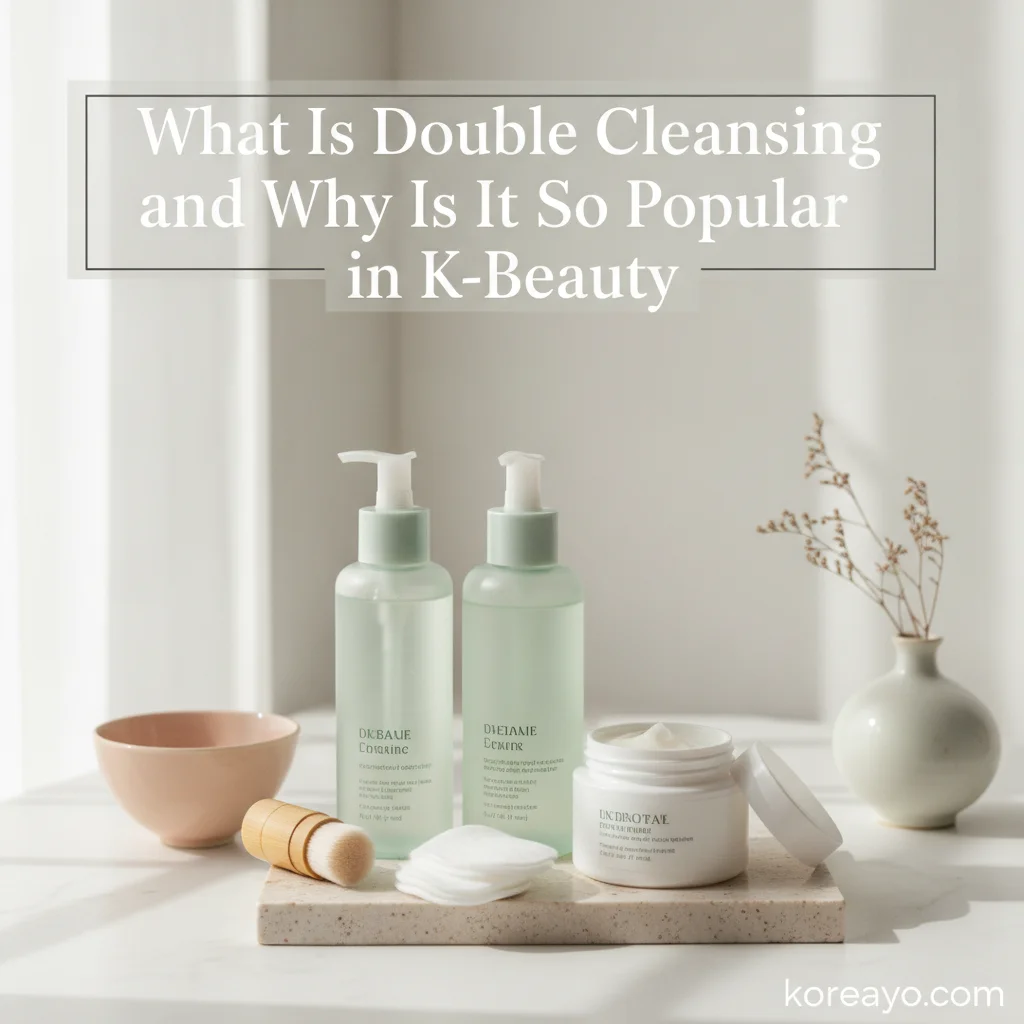
Korean Skincare (K-Beauty): The Philosophy Behind the Routine
Korean skincare is more than products. This beginner guide to K-Beauty explains the philosophy of hydration, prevention, and consistent daily care.
Over the past decade, Korean skincare has evolved from a niche interest into a global phenomenon. K-Beauty products can now be found in stores and online shops around the world, attracting consumers curious about the routines and philosophies behind them.
When people first explore K-Beauty, they often focus on individual products such as cleansers, toners, or sheet masks. However, the popularity of Korean skincare is not based on a single product category. Instead, it is rooted in a broader approach that emphasizes consistency, prevention, and daily maintenance.
Understanding this philosophy can help beginners navigate K-Beauty more effectively and avoid becoming overwhelmed by the large number of available products.
What Korean Skincare (K-Beauty) Really Means
Korean skincare refers to skincare and beauty practices that originated in South Korea. The term K-Beauty generally includes skincare products, beauty routines, cosmetic trends, ingredient innovations, and consumer skincare culture.
Although makeup is part of K-Beauty, skincare has become the category most closely associated with the movement. Many international consumers first encounter Korean beauty through products designed to support healthy-looking skin over time.
The Cultural Context of Korean Skincare
In Korea, skincare is not viewed as vanity but as self-care and health maintenance. Taking care of your skin is considered as natural and necessary as brushing your teeth or eating well.
This cultural attitude means that:
- Both men and women engage in skincare routines
- Skincare education often begins in adolescence
- Clear, healthy skin is valued over heavy makeup coverage
- Prevention is prioritized over correction
- Daily consistency matters more than occasional intensive treatments
Understanding this cultural foundation helps explain why Korean skincare products and routines developed the way they did.
The Korean Beauty Industry
South Korea has one of the most competitive and innovative beauty markets in the world. The domestic market’s intensity drives constant innovation as brands compete for discerning local consumers.
This environment has produced:
- Rapid product development cycles
- Creative new product formats
- Extensive ingredient research
- High-quality products at various price points
- Strong consumer feedback loops that improve formulations
The Korea Tourism Organization highlights beauty tourism as a significant draw for visitors interested in experiencing K-Beauty firsthand.
A Prevention-Focused Approach to Korean Skincare
One characteristic frequently associated with K-Beauty is its focus on prevention rather than correction. Instead of waiting for visible concerns to appear, many routines emphasize maintaining the skin through regular care.
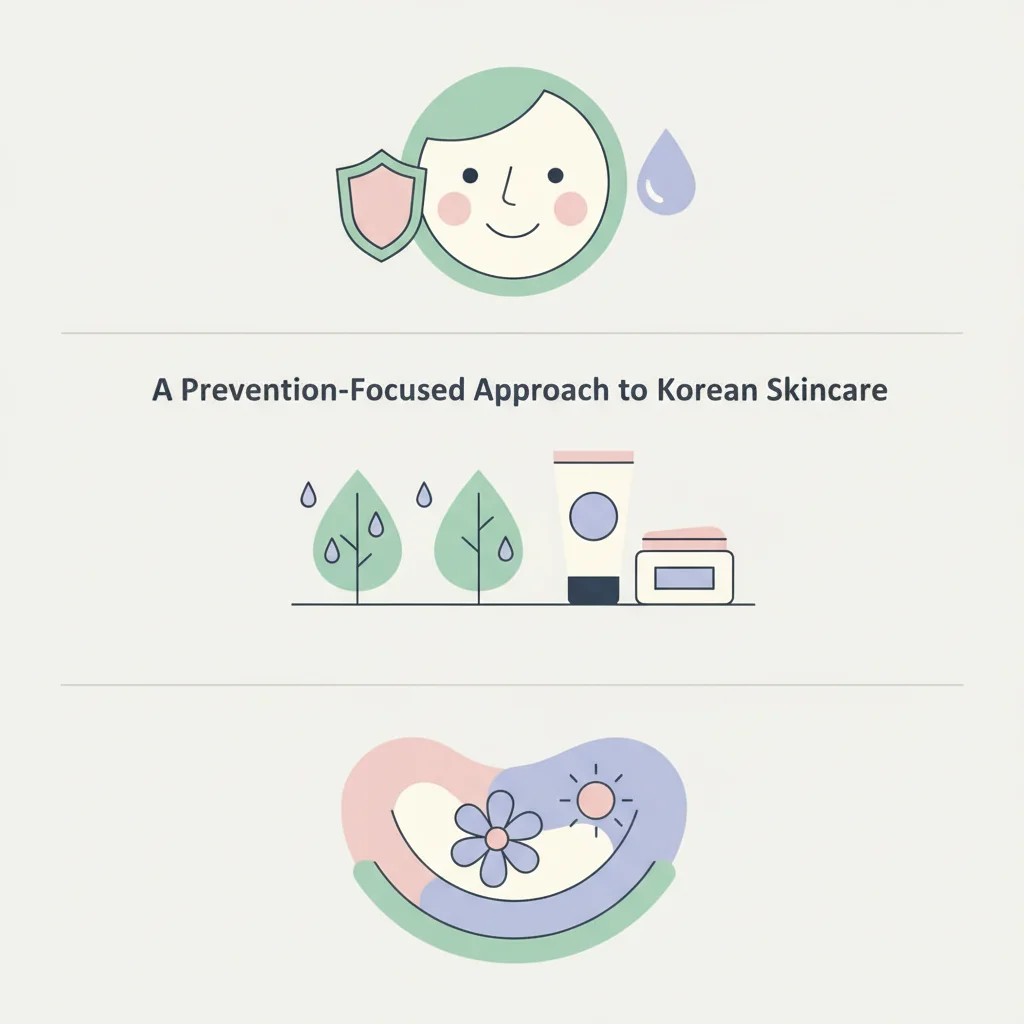
The Prevention Philosophy
Western skincare has traditionally focused on treating problems after they appear—acne treatments, anti-aging products for existing wrinkles, dark spot correctors for hyperpigmentation that has already developed.
Korean skincare takes a different approach:
- Daily cleansing to prevent buildup and breakouts
- Consistent moisturizing to maintain the skin barrier
- Sun protection to prevent UV damage before it occurs
- Gentle product use to avoid irritation and sensitivity
- Hydration to keep skin resilient and healthy
This approach encourages long-term habits rather than short-term solutions. As a result, skincare is often viewed as part of a daily routine similar to brushing teeth or exercising.
Why Prevention Works
Prevention-focused skincare works because many skin concerns are easier to prevent than to reverse. Sun damage, for instance, accumulates over years and is difficult to fully correct once it appears. Daily sunscreen use prevents that damage from occurring in the first place.
Similarly, maintaining consistent hydration helps keep the skin barrier healthy, which reduces the likelihood of sensitivity, dryness, and other issues developing.
Why Hydration Is Central to K-Beauty
If you spend time exploring K-Beauty content, you will likely encounter the word “hydration” repeatedly. Many K-Beauty routines prioritize products designed to support skin moisture.
The Science of Skin Hydration
Well-hydrated skin functions better in several ways:
- The skin barrier remains intact and protective
- Skin appears plumper and more radiant
- Fine lines are less visible
- Products absorb more effectively
- Skin is more resilient to environmental stressors
Dehydrated skin, regardless of skin type, can appear dull, feel tight, and become more prone to irritation and sensitivity.
Layering for Hydration
Rather than relying on a single heavy product, K-Beauty routines often use several lightweight layers. This layering concept has become one of the most recognizable aspects of Korean skincare culture.
Common layering products include:
- Hydrating toners – watery products applied after cleansing
- Essences – lightweight, hydrating liquids unique to K-Beauty
- Serums – targeted treatments with active ingredients
- Ampoules – concentrated versions of serums
- Moisturizers – creams or lotions that seal in hydration
The idea is that multiple thin layers of hydration penetrate more effectively and feel more comfortable than one thick, heavy product.
Hydration Versus Moisturization
K-Beauty distinguishes between hydration (adding water to the skin) and moisturization (sealing that water in). A complete routine often includes both:
- Hydrating products (toners, essences) add water content
- Moisturizing products (creams, oils) prevent water loss
Understanding this distinction helps in building an effective routine.
The Influence of Innovation
South Korea has developed a reputation for skincare innovation. Consumers often see new product formats that later spread to global markets.

Product Format Innovations
Korean brands have popularized several product formats now common worldwide:
Sheet masks: Single-use masks soaked in serum, designed for convenience and intensive hydration. What was once uniquely Korean is now sold globally.
Cushion compacts: Sponge-applied foundation in a compact case, combining skincare benefits with makeup. This format revolutionized base makeup application.
Sleeping masks: Leave-on overnight treatments that work while you sleep, maximizing skincare benefits without adding daytime steps.
Essence: A product category that did not exist in Western skincare until K-Beauty introduced it—lightweight, hydrating, and designed to enhance other products’ absorption.
Ampoules: Highly concentrated serums for intensive treatment periods.
Ingredient Innovation
Korean brands frequently pioneer ingredients that later gain international popularity:
- Snail mucin – for hydration and skin repair
- Centella asiatica (cica) – for soothing and healing
- Propolis – for nourishment and antibacterial benefits
- Fermented ingredients – for enhanced absorption and efficacy
- Rice extracts – for brightening and nourishment
- Green tea – for antioxidant protection
- Hyaluronic acid variations – multiple molecular weights for different skin layers
Because the domestic beauty market is highly competitive, companies continually develop new formulations and packaging. This environment has contributed to K-Beauty’s global reputation for creativity and product diversity.
Understanding the Core Product Categories
Before building a routine, it helps to understand the major categories commonly found in K-Beauty.
Cleansers
Korean skincare places great emphasis on proper cleansing, viewing it as the foundation of any routine.
Oil cleansers: Used first in the evening to dissolve makeup, sunscreen, and oil-based impurities. These emulsify with water for easy rinsing.
Water-based cleansers: Used second to remove any remaining residue and water-based impurities like sweat. Common formats include foams, gels, and cream cleansers.
This two-step approach, called double cleansing, ensures thorough but gentle cleansing without harsh scrubbing.
Toners
Korean toners differ from Western astringent toners. Rather than stripping or tightening, K-Beauty toners typically:
- Hydrate and prepare the skin
- Balance pH after cleansing
- Help subsequent products absorb better
- Provide a first layer of hydration
Many people apply toner by patting it into the skin with their hands rather than using cotton pads.
Essences
Essence is a product category closely associated with Korean skincare that has no direct Western equivalent. These lightweight, watery products typically:
- Provide concentrated hydration
- Support cell turnover and renewal
- Enhance the effectiveness of other products
- Give skin a “glass skin” glow
Essences are often considered the heart of a K-Beauty routine.
Serums and Ampoules
These concentrated treatments target specific concerns:
- Vitamin C serums for brightening
- Niacinamide for pore appearance and tone
- Retinol for anti-aging (used more carefully in K-Beauty)
- Hyaluronic acid for hydration
- Centella for soothing irritated skin
Ampoules are typically more concentrated than serums and may be used during intensive treatment periods.
Moisturizers
Korean moisturizers come in various textures to suit different skin types and preferences:
- Gel creams – lightweight, suitable for oily skin
- Emulsions – light lotions for combination skin
- Creams – richer formulas for dry skin
- Sleeping packs – intensive overnight treatments
The goal is to seal in all the hydrating layers applied before.
Sunscreen
Sunscreen is considered one of the most important products in K-Beauty—arguably the most important for preventing premature aging and maintaining skin health.
Korean sunscreens are known for:
- Elegant, lightweight textures
- No white cast on various skin tones
- Comfortable wear under makeup
- High protection (SPF 50+ PA++++ is common)
- Added skincare benefits
Daily sunscreen use, regardless of weather or season, is a cornerstone of the K-Beauty philosophy.
The Famous Multi-Step Routine
Korean skincare became famous for elaborate multi-step routines, sometimes featuring 10 or more products. Understanding what this actually means helps beginners approach it realistically.
What the Steps Actually Are
A comprehensive K-Beauty routine might include:
- Oil cleanser (PM only)
- Water-based cleanser
- Exfoliator (1-2 times per week)
- Toner
- Essence
- Serum or ampoule
- Sheet mask (occasional)
- Eye cream
- Moisturizer
- Sunscreen (AM only)
Not all steps are used every day, and many people use far fewer products.
Why Fewer Steps Often Work Better
The multi-step routine is a maximum, not a minimum. Many Korean skincare enthusiasts use simplified routines:
- Morning: Cleanser, toner, moisturizer, sunscreen
- Evening: Double cleanse, toner, moisturizer
Starting simple and adding products gradually as you learn your skin’s needs is more sustainable than immediately adopting an elaborate routine.
Why K-Beauty Appeals to Beginners
Many newcomers are attracted to K-Beauty because it encourages gradual learning. Rather than recommending a single universal solution, K-Beauty often promotes understanding:
- Your specific skin type (oily, dry, combination, sensitive)
- Environmental factors (climate, pollution, seasons)
- Daily habits (sleep, diet, stress)
- Personal preferences (textures, scents, routines)
This flexibility allows people to build routines that fit their own lifestyles.
The Emphasis on Gentle Products
K-Beauty generally favors gentle formulations over harsh treatments. This approach:
- Reduces risk of irritation for beginners
- Supports long-term skin health
- Makes daily use comfortable and sustainable
- Works with the skin rather than against it
Beginners tend to feel less overwhelmed once they realize they do not need every product they see online—a simple routine is often the best starting point.
Common Misconceptions About K-Beauty
Several myths about Korean skincare can mislead newcomers.
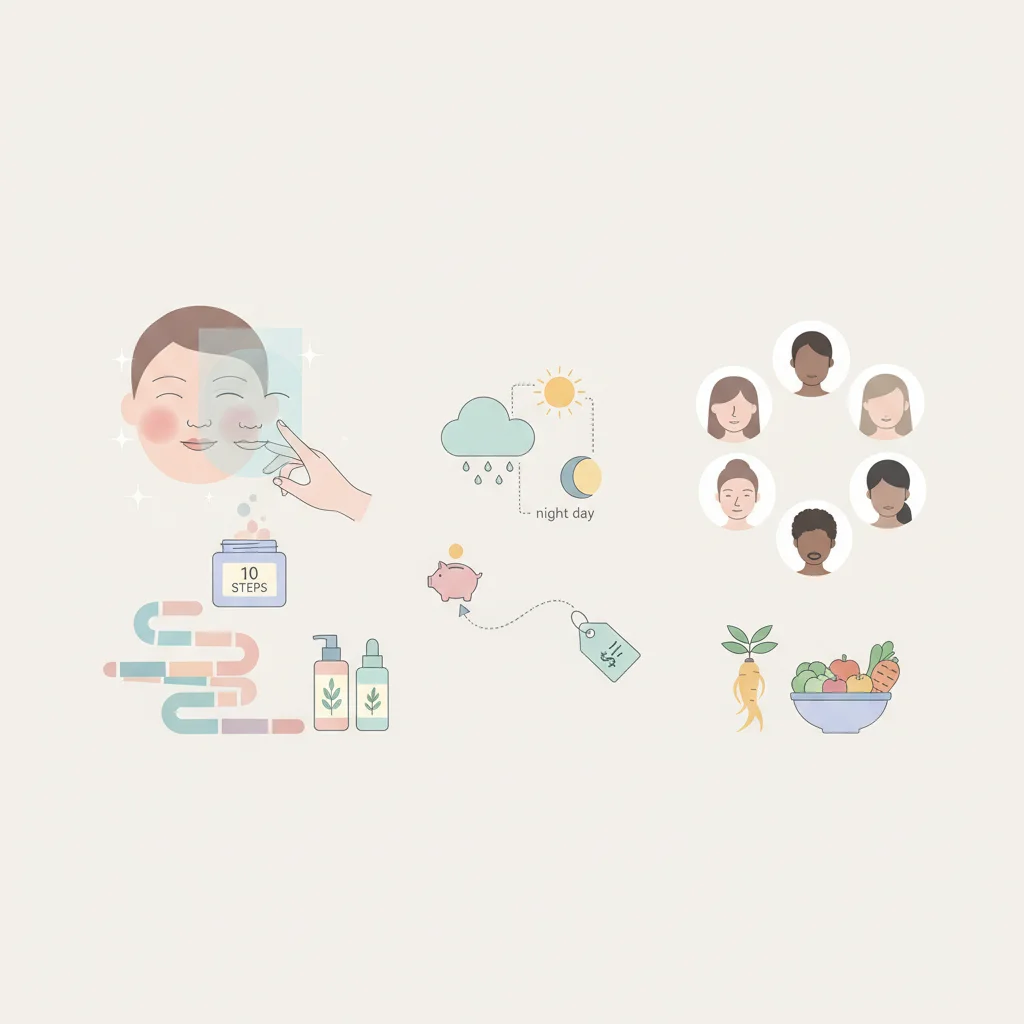
Misconception 1: Everyone Uses 10 Steps
One of the most common myths is that every K-Beauty routine involves ten products. In reality, routines vary widely, and many Koreans use only a few products each day. The multi-step routine represents a maximum possibility, not a daily requirement.
Misconception 2: More Products Are Always Better
Using numerous products does not automatically create better results. Consistency and suitability often matter more than quantity. Using three well-chosen products daily will likely produce better results than ten random products used sporadically.
Misconception 3: K-Beauty Is Only for Young People
People of all ages use Korean skincare products. Product choices often depend more on personal skin concerns and preferences than on age alone. K-Beauty offers options for every life stage.
Misconception 4: K-Beauty Is Only for Women
Skincare is gender-neutral in Korean culture. Many Korean men maintain regular skincare routines, and numerous brands offer products marketed to all genders or specifically to men.
Misconception 5: All K-Beauty Products Are Gentle
While K-Beauty emphasizes gentle formulations, not every product suits every skin type. Patch testing and gradual introduction remain important, especially for sensitive skin.
Building a Sustainable Skincare Routine
One lesson many beginners learn is that skincare works best when it is sustainable. A good routine should fit your schedule, your budget, and your comfort level.
Start Simple
For beginners, a basic routine might include:
- A gentle cleanser
- A hydrating toner or essence
- A moisturizer appropriate for your skin type
- Sunscreen for daytime
Starting with a few basic products allows you to develop consistent habits before expanding your routine.
Add Products Gradually
When introducing new products:
- Add one product at a time
- Wait 1-2 weeks before adding another
- Observe how your skin responds
- Discontinue anything that causes irritation
This approach helps you identify what works for your skin and what does not.
Consider the Seasons
Skincare needs change with the seasons. In Korea’s humid summers, lighter products may feel more comfortable. In dry winters, richer moisturizers provide necessary protection. Our guide to the four seasons in Korea can help you understand how climate affects skincare needs.
Shopping for K-Beauty Products
Korean skincare products are available through many channels, each with different advantages.
In Korea
Visitors to Korea can explore:
- Olive Young – the largest beauty store chain, found everywhere
- Lohbs – another major drugstore chain
- Brand flagship stores – for specific brands
- Myeongdong – Seoul’s famous beauty shopping district
- Duty-free shops – at airports and downtown
Online
Reliable online retailers ship K-Beauty products worldwide. Research reviews and shipping policies before purchasing from unfamiliar sites.
Understanding Product Labels
Korean products may have Korean-language labels. Look for:
- English ingredient lists (often on the back or inner packaging)
- Expiration dates (sometimes in YYYY.MM.DD format)
- PAO symbols showing how long the product lasts after opening
The Global Impact of K-Beauty
Today, K-Beauty influences skincare trends around the world. Concepts that originated in Korea have become mainstream:
- Layered hydration approaches
- Double cleansing
- Daily sunscreen as essential (not optional)
- Skin-focused beauty rather than makeup-focused
- Sheet masks as at-home treatments
- Essence as a product category
Whether someone ultimately adopts a full K-Beauty routine or simply incorporates a few ideas, Korean skincare has undeniably shaped modern skincare conversations worldwide.
This influence extends to how people think about beauty—prioritizing skin health over coverage, prevention over correction, and consistency over quick fixes.
Related Guides on K-Beauty
- Understanding Your Skin Type in K-Beauty
- What Is Double Cleansing and Why Is It Popular?
- Korean Cafe Culture Guide
- Everyday Life in Korea Beyond K-Pop
Conclusion
K-Beauty is more than a collection of products. It represents a skincare philosophy centered on consistency, hydration, prevention, and thoughtful daily care.
For beginners, understanding these core principles provides a strong foundation for exploring Korean skincare without feeling overwhelmed. Rather than focusing on trends alone, learning the philosophy behind K-Beauty can help create a more informed and enjoyable skincare journey.
The essence of Korean skincare is not about owning many products or following complicated routines. It is about caring for your skin consistently, understanding what your skin needs, and making skincare a natural part of daily life.
FAQ
Do I need a 10-step routine to follow K-Beauty?
No. Many people use much simpler routines of 3-5 products. The 10-step routine is a maximum framework, not a daily requirement. Consistency with a few suitable products matters more than using many products irregularly.
Is K-Beauty only about skincare products?
No. K-Beauty also includes skincare philosophy, beauty culture, ingredient innovation, and cosmetic trends. The approach to skin health and prevention is as important as the products themselves.
Why is hydration so commonly discussed in Korean skincare?
Hydration is emphasized because well-hydrated skin functions better, looks healthier, and is more resilient. K-Beauty routines focus on supporting skin moisture through multiple lightweight layers rather than single heavy products.
Is Korean skincare suitable for beginners?
Yes. Korean skincare is beginner-friendly because it encourages starting simple, learning your skin type, and gradually building a routine. The emphasis on gentle products also reduces the risk of irritation.
How long does it take to see results from a skincare routine?
Results vary by person and product, but most benefits come from regular use over weeks and months. Skin cell turnover takes about 28 days, so meaningful changes typically require at least 4-6 weeks of consistent use.
Are Korean skincare products suitable for all skin types?
K-Beauty offers products for all skin types—oily, dry, combination, sensitive, and normal. The key is identifying your skin type and choosing appropriate products. Many Korean brands formulate specifically for sensitive skin.
Can men use K-Beauty products?
Absolutely. Skincare is gender-neutral in Korean culture, and many Korean men maintain regular skincare routines. Most products work for all genders, and some brands offer lines specifically marketed to men.
What is the most important K-Beauty product?
Many K-Beauty experts consider sunscreen the most important product because it prevents UV damage that causes premature aging and skin concerns. Consistent sun protection is a cornerstone of the K-Beauty philosophy.
Is K-Beauty expensive?
K-Beauty spans all price points. While premium products exist, many effective Korean skincare products are affordable. The competitive Korean market has produced high-quality options at various budgets.