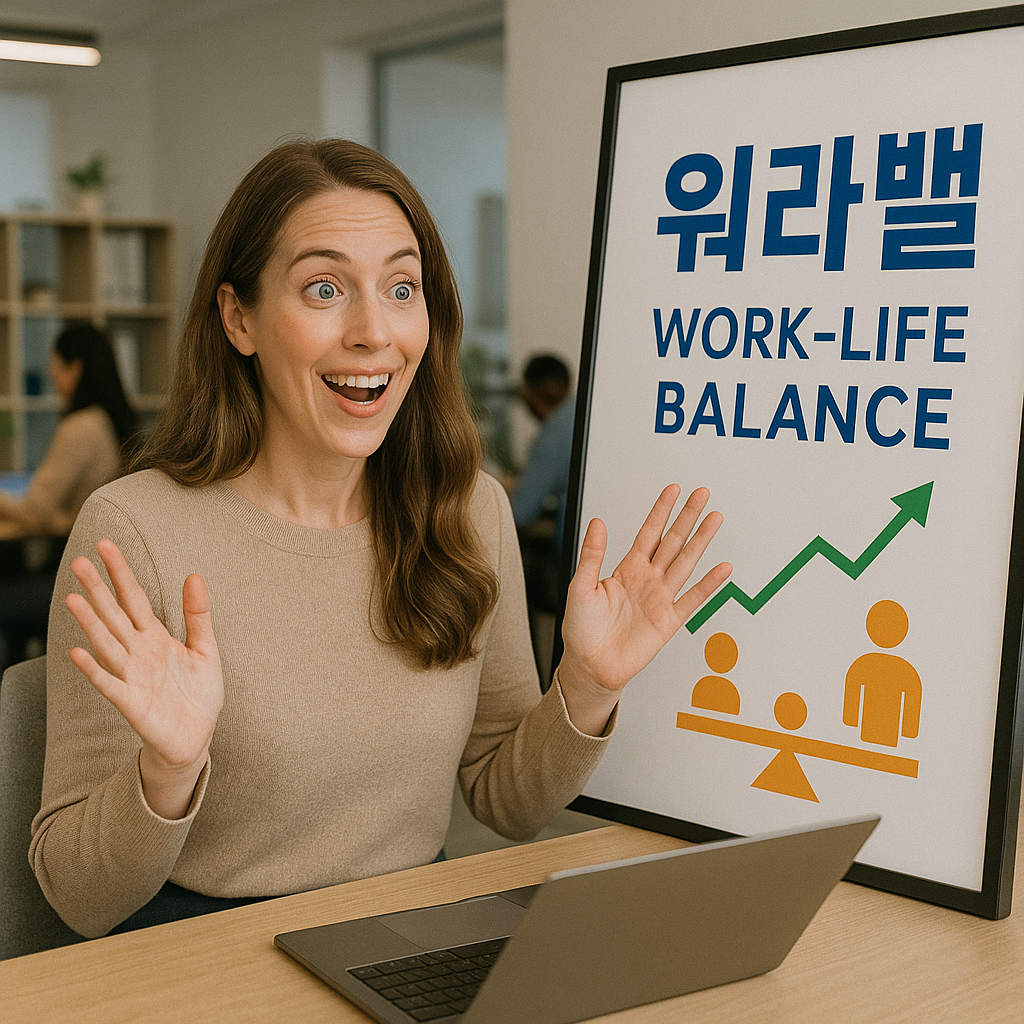
Korea’s work-life balance has improved noticeably in recent years, driven by government reforms and younger workers’ changing priorities. Flexible work systems and mental health awareness are now reshaping traditional workplace culture.
1. Why This Information Matters
Foreign residents in Korea often hear about the country’s demanding work culture — long hours, hierarchical structures, and limited personal time. However, this image has been gradually changing.
In 2025, discussions around work-life balance (워라밸) are more mainstream than ever. Companies are adapting to new labor laws, younger generations are redefining success, and even traditional industries are experimenting with flexible work policies.
Understanding these changes helps foreign workers and students better navigate the evolving expectations of the modern Korean workplace.
2. Background: How Korean Work Culture Is Changing
For decades, Korea’s rapid economic growth was fueled by long working hours and strong company loyalty. The phrase “ppalli-ppalli” (meaning “quickly”) reflected a national mindset focused on speed and productivity.
Government Reforms and Labor Policies
To address overwork and burnout, the Korean government introduced key reforms:
- 52-hour workweek law (2018): Employers must limit total weekly working hours to 52 (40 regular + 12 overtime).
- Encouragement of paid leave usage: Companies are required to ensure employees take mandatory rest days.
- Support for remote and hybrid work: Particularly expanded after the COVID-19 pandemic, many workplaces now include flexible options.
These regulations aim to protect workers’ health while maintaining productivity.
Shifts Among Younger Generations
Younger employees, often called MZ Generation (Millennials + Gen Z), prioritize personal time, hobbies, and self-development. They value workplaces that respect individual freedom and flexibility over traditional seniority.
In surveys by the Korea Labor Institute (KLI) and Statistics Korea, more than 70% of employees under 35 said work-life balance is more important than salary growth.
3. Practical Changes in Korean Workplaces
3.1 Rise of Flexible Work Hours
Many companies now use flex-time systems allowing employees to start and finish work at different hours. This trend is particularly strong in tech, media, and public sectors.
3.2 Remote and Hybrid Work
While not universal, remote work options are increasing, especially in international firms and startups. Large corporations such as Samsung and LG have introduced partial work-from-home policies for certain roles.
Government agencies have also begun digitalizing administrative systems to support remote access.
3.3 Focus on Employee Well-being
Mental health programs, gym subsidies, and counseling services are becoming standard benefits. Some offices even designate “no-meeting Fridays” to reduce burnout.
3.4 Shorter Workweeks and Trial Programs
A few Korean startups have tested the four-day workweek, following global trends. Early reports show higher satisfaction and stable productivity. Although still experimental, the idea is gaining media and political attention.
4.1 The Role of Gender and Family Policies
Work-life balance discussions in Korea also intersect with gender equality and parenting support.
Policies now include:
- Parental leave for both mothers and fathers (up to 12 months each)
- Government childcare subsidies
- “Dad care leave” campaigns promoting active fatherhood
These programs aim to encourage a better balance between family and career responsibilities.
4.2 Corporate Culture Shifts
Hierarchy and after-work drinking (hoesik) culture are gradually fading. Many younger employees prefer casual team lunches or online gatherings instead of late-night sessions.
Companies are adopting flatter communication styles — employees address colleagues by names rather than titles in some international teams, reflecting a broader move toward equality.
4.3 Impact of Technology
Digital tools like KakaoWork, Zoom, and Notion help maintain communication even when teams work remotely. However, some workers note that constant connectivity can blur boundaries between work and personal life.
5. What Foreign Workers Should Know
For expats, adapting to Korea’s changing work culture requires balance between local customs and global work practices.
- Understand hierarchy, but communicate openly. Seniority still matters, but many Korean managers now appreciate respectful, direct communication.
- Take advantage of flexible policies. If your company allows telecommuting or flexible hours, use them — it shows productivity and responsibility.
- Watch work-hour expectations. Some industries, especially manufacturing or finance, still value physical presence. Understanding your field’s norms prevents misunderstandings.
- Prioritize mental health. Korea’s awareness around burnout is growing; using company counseling or rest days is becoming normal, not taboo.
6. FAQs
Q1. Are Korean companies really reducing work hours?
Yes, especially large corporations and public institutions. Small and medium-sized businesses are slower to change but increasingly adopt flexible systems to attract younger talent.
Q2. Is remote work common in Korea now?
It depends on the industry. IT, media, and global companies often allow hybrid work, while education, manufacturing, and retail sectors mostly require on-site presence.
Q3. How do foreigners fit into this new culture?
Foreign employees, especially in multinational companies, often experience a more balanced environment. Local firms are also learning from global standards to improve inclusivity and flexibility.
Conclusion
Korea’s journey toward a healthier work-life balance is ongoing. The combination of labor reform, generational change, and digital transformation continues to redefine what “working life” means in the country.
For foreigners, this trend brings both opportunities and adjustments — a chance to enjoy a more balanced lifestyle while understanding the local workplace culture’s evolving nature.
See also: [Why Is Brunch Culture Booming in Korea?]