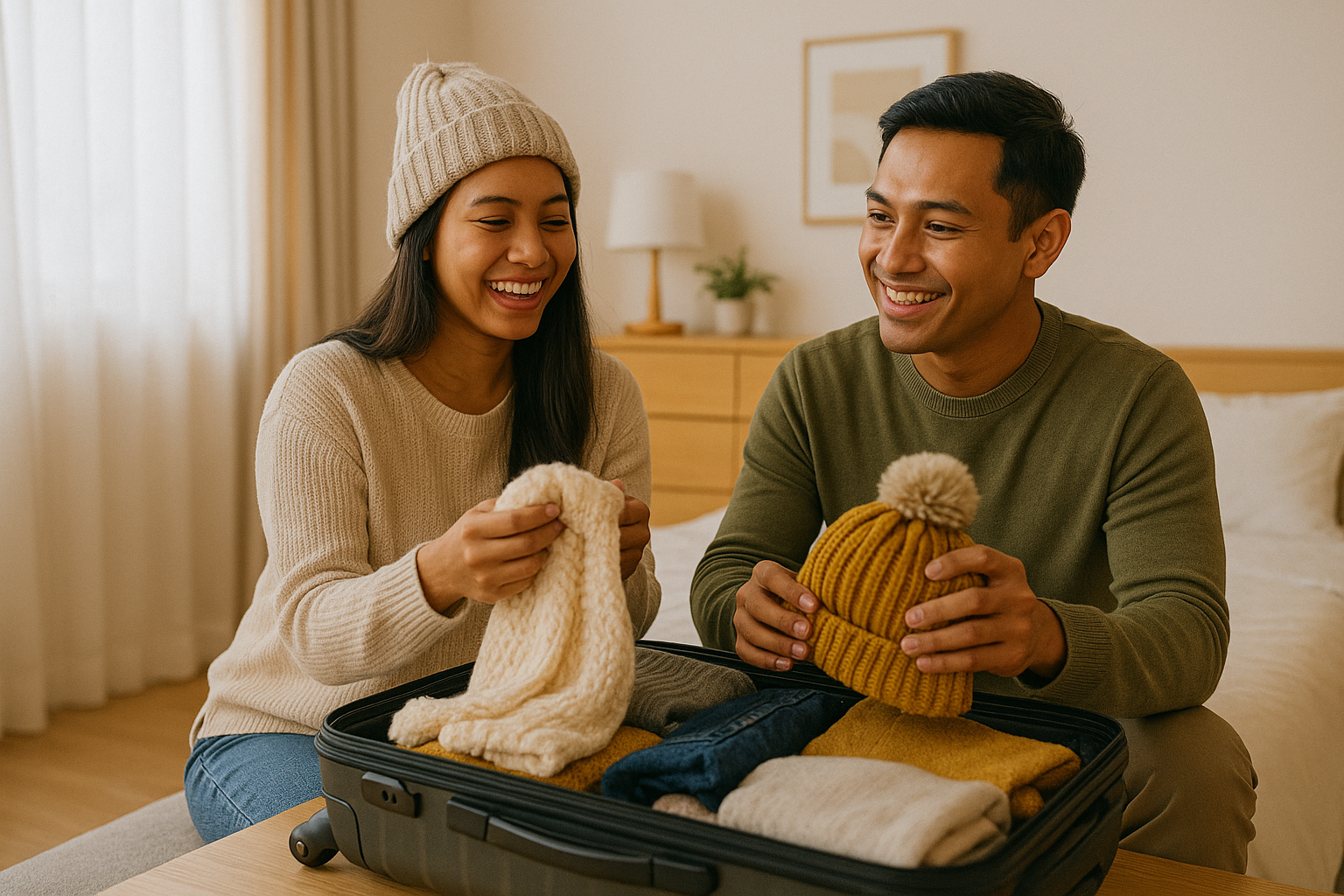
If you’re coming to Korea for the first time in winter, brace yourself. The cold isn’t just “bundle up a bit” kind of cold — it’s “why do my eyelids hurt” cold. A kind of crisp, dry chill that makes even locals complain. Every December, I see tourists walking around Myeongdong in light jackets, shivering while eating street food and pretending they’re fine. Spoiler: they’re not fine.
But don’t panic. With the right packing strategy, you’ll be warm enough to actually enjoy the trip — snow-covered palaces, hot street snacks, maybe even a ski trip or two. I’ve made every packing mistake possible over the years, so here’s a very real, not-perfect guide for surviving your first Korean winter.
The Weather Reality Check
Before you throw anything in your suitcase, you should know what you’re dealing with. Korea’s winter (roughly December to February) isn’t just cold — it’s sharp. Temperatures in Seoul average around -2°C, but the windchill can make it feel closer to -10°C. And it’s dry, painfully so. Skin cracks, lips peel, and static electricity becomes your new enemy.
Southern cities like Busan or Daegu are milder, but still chilly. Jeju Island is warmer, but windy. And if you plan to visit places like Gangwon-do for skiing or snow festivals — just assume you’ll be walking through a freezer.
Thing is, Korea’s cold doesn’t always look intimidating on paper. You might see “1°C and sunny” on your weather app and think, “Not bad.” Then you step outside and realize the air feels like glass. I made that mistake my first year here — wore sneakers and a light coat. Worst decision ever.
Core Clothing Essentials (a.k.a. Don’t Freeze)
I’ll say this now: layering is everything. Korean buildings are heated like saunas, but outside feels like Siberia. You’ll constantly move between extremes, so being able to peel off or pile on layers matters.
Here’s what I swear by now:
- Base layer: Uniqlo Heattech or any thermal top + leggings. Get the “extra warm” version if you can.
- Mid layer: Fleece or knit sweater. Not too bulky — you’ll be moving around a lot.
- Outer layer: A thick padded coat, ideally waterproof. Koreans basically live in these from December onward. If you don’t have one, you can buy affordable ones at stores like SPAO, Musinsa Standard, or even Emart.
- Pants: Jeans look nice but trap cold air. Fleece-lined leggings or thermal jeans are lifesavers.
- Accessories: Beanie, gloves, and scarf. Gloves are non-negotiable — the wind will make your fingers go numb in minutes.
And honestly, bring heat packs. You can buy them anywhere in Korea, but if you’re arriving late or during a snowstorm, it’s nice to have a few ready. They’re cheap, single-use, and can be tucked into your pockets or even shoes.
The Footwear Dilemma
Here’s where most travelers mess up. Regular sneakers? Nope. Cute leather boots? Forget it. Korea’s sidewalks turn icy fast, especially in northern cities. You need shoes with real traction.
If you plan to do city sightseeing:
- Go for water-resistant boots or sneakers with rubber soles.
- Add thermal insoles or heat socks for extra comfort.
- Bring at least two pairs of shoes — in case one gets soaked.
For hiking or skiing:
- You’ll want waterproof snow boots.
- Most ski resorts rent gear, but I’d still pack your own socks and gloves. Rental ones are… let’s say, “questionably clean.”
Fun fact — Koreans tend to remove shoes indoors, even in Airbnb stays. So bring warm indoor socks too. Your feet will thank you when you’re padding around on cold floors.
Skin, Hair, and Body Survival Kit
Nobody talks about this enough: Korea’s winter air will destroy your skin if you’re not ready. It’s dry to the point where you can actually hear your hands cracking. Okay, slight exaggeration, but not by much.
You’ll need:
- Heavy moisturizer (Cicaplast, Ceramide creams, or even Vaseline).
- Lip balm, lots of it. I go through one a week in January.
- Sheet masks — yes, they’re everywhere, and yes, they actually help.
- Hydrating mist for during the day.
- Hand cream — stash one in your bag.
- Sunscreen — the sun still burns even in the cold, especially with snow glare.
Hair gets static-y too. I’ve seen sparks fly when taking off a sweater (literally). A few drops of hair oil or a small humidifier in your room can help.
Smart Packing: What to Bring vs Buy in Korea
You don’t have to pack everything — Korea is ridiculously convenient when it comes to winter gear. Stores like Uniqlo, Daiso, and Olive Young have everything from thermals to hand warmers. But a few items are worth bringing from home:
Bring from home:
- Quality winter coat (if you already have one)
- Warm boots
- Travel-sized moisturizer and lip balm you trust
- Power adapter (Type F or “two round pin”)
- Medicine for colds — Korean pharmacy labels can be confusing
Buy in Korea:
- Heat packs
- Fleece-lined leggings (cheap and everywhere)
- Masks (KF94 doubles as face warmers)
- Moisturizers and sheet masks
- Compact umbrella (it snows and rains)
Actually, a quick anecdote — my friend from Spain once packed six sweaters and zero gloves. She lasted one day before panic-buying mittens in Hongdae. So yeah, gloves first, fashion second.
Staying Warm While Exploring
Tourist mode in winter is tricky. You’re walking a lot, stopping for photos, drinking hot chocolate every hour just to stay alive. So here’s what actually works:
- Layer smartly. You’ll be going indoors constantly — cafes, subways, museums — all heated like mini greenhouses. Wear a coat you can unzip fast.
- Warm your core. Heat packs near your chest or lower back help more than on your hands.
- Move often. Standing still is when you start freezing. Even a quick walk around helps.
- Drink hot drinks constantly. Koreans basically live on coffee in winter. There’s a café every 20 meters for a reason.
- Keep your phone warm. Batteries die fast in cold air. Put it in an inner pocket.
And if you’re venturing to mountain areas (like Seoraksan or Pyeongchang), check weather advisories — strong winds can close trails without much warning.
Indoor vs Outdoor Culture Shock
One thing travelers often underestimate: indoor heat is intense. Like, “you might break a sweat eating ramen” intense. Koreans love keeping rooms toasty, thanks to the ondol (floor heating) system. So even if you’re freezing outside, don’t overdress indoors.
A good routine:
- Dress in thin layers.
- Take off outerwear right when you step inside — it’s polite and practical.
- Keep chapstick and tissues handy — dry air from heating systems hits hard.
If you’re staying in a guesthouse or Airbnb, ask about the boiler control. Some places leave it off until you request it. Learned that the hard way my first winter — shivered for hours before realizing I could press a single button.
Random Winter Travel Tips I Learned the Hard Way
- Carry tissues. Cold air = constant runny nose.
- Convenience stores sell instant heat pads, coffee, and mini gloves. They’ll save your life.
- Download Naver Map — Google Maps doesn’t work well here.
- Don’t underestimate indoor humidity. Buy a small humidifier (₩10,000 at Daiso).
- Korean winter air dries out contact lenses fast. Bring eyedrops.
- Snow melts fast in Seoul but turns to slush — waterproof shoes help.
- Public transport stays warm — so you’ll constantly remove and re-wear layers. Dress accordingly.
Actually, one of my favorite winter memories is sitting by the window in a heated cafe in Insadong, sipping yuzu tea while it snowed outside. Freezing outside, cozy inside — that’s Korea in a nutshell.
The Packing Mindset
It’s not about bringing more — it’s about bringing smarter. Think modular: thin thermal layers, practical accessories, and solid shoes. Leave bulky sweaters at home; bring stuff that works in combination.
Winter in Korea is harsh but beautiful — neon reflections on icy streets, steaming tteokbokki, couples huddled under one scarf. If you pack right, you’ll get to enjoy all that without worrying about frozen toes or gasping at your Airbnb boiler bill.
FAQ
Is it really that cold in Seoul?
Yes. It’s a dry, piercing cold that feels worse than the actual number on your phone.
Can I buy winter clothes easily there?
Absolutely. Uniqlo, SPAO, and local markets have good options at fair prices.
Do I need snow boots?
Not unless you’re heading to mountain regions. City boots with grip should be fine.
What’s the best month to visit in winter?
Late December to mid-February — you’ll get snow but also clear skies.
How do Koreans stay warm outdoors?
Heat packs, padded coats, and endless hot coffee.
Can I wear jeans in winter?
You can, but layer underneath or get fleece-lined ones.
What about skincare?
Moisturize constantly. The air is brutally dry.
Unrelated but curious: does Seoul decorate for Christmas?
Yes, beautifully. Especially Myeongdong and Lotte Tower. It’s festive, even if most people aren’t Christian.
Why Does South Korea Feel So Much Colder Than Its Latitude Suggests?
How to Reduce Heating Bills in Korea: Hacks Every Foreigner Should Know
How to Survive Korean Winters: Heating, Clothing, and Home Insulation Tips
“How to Prepare for Your First Korean Winter Trip: Packing Guide for Travelers”에 대한 1개의 생각