Sending Money Home from Korea: Bank Wires vs. Remittance Apps Compared
Bank SWIFT transfer or a remittance app like Wise or WireBarley? Compare fees, speed, limits, and required documents for sending money home from Korea.
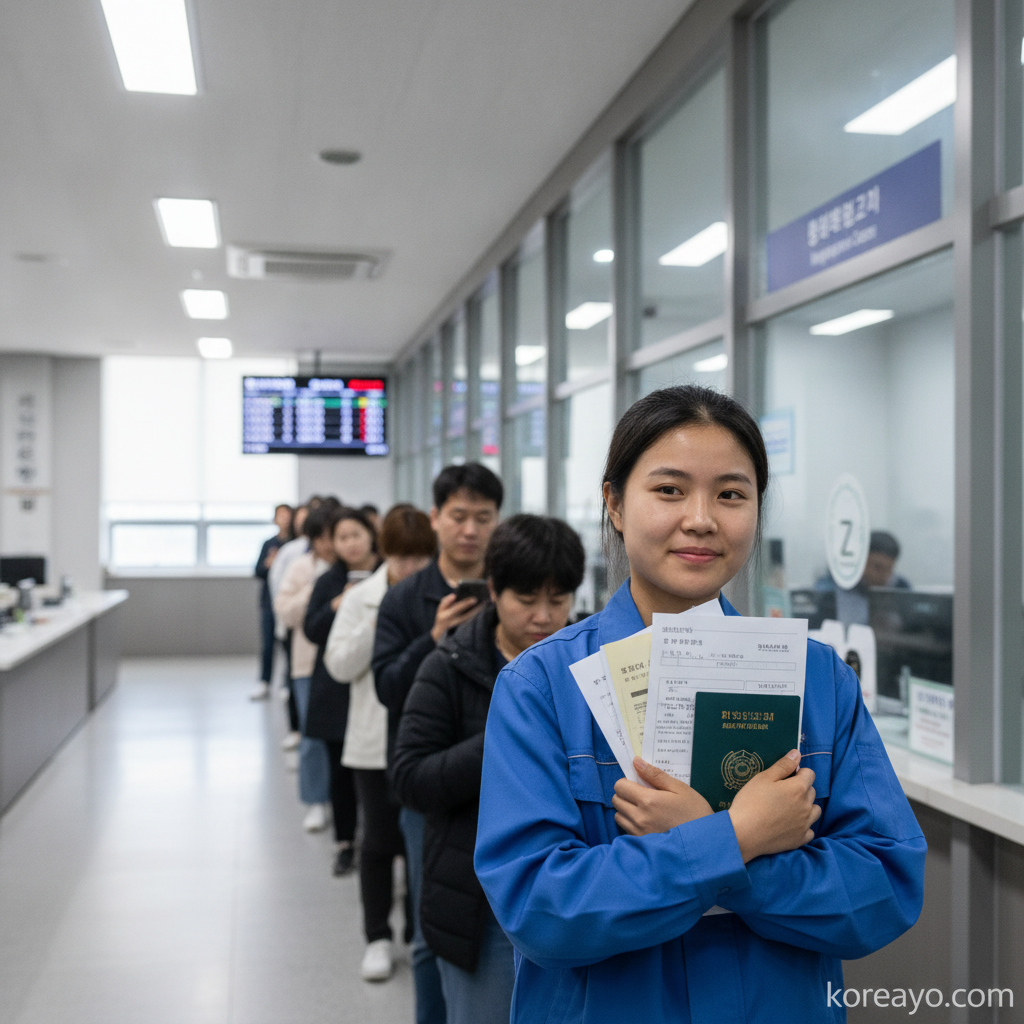
Foreign workers in Korea sending money home usually choose between two very different paths: a bank’s SWIFT wire, or a licensed remittance app such as Wise, WireBarley, Sentbe, GME Remittance, or Hanpass. In most cases, the fintech apps end up cheaper and faster for everyday remittances to the Philippines, Vietnam, Nepal, Indonesia, Thailand, or Cambodia, since they skip the intermediary-bank chain and often land in a recipient’s account or cash-pickup point within minutes to a few hours. Bank wires still make sense for larger, less frequent transfers or when a recipient bank strongly prefers a traditional SWIFT deposit. The right choice usually comes down to the amount you’re sending, how fast the recipient needs it, and which service your destination country’s banks and cash-pickup networks actually support well.
Two main paths for sending money out of Korea
Almost every option for moving money from Korea abroad falls into one of two categories. The first is a traditional bank-to-bank wire that runs on the SWIFT network, arranged through a Korean bank branch or its app. The second is a registered money-transfer service — sometimes called “small-amount overseas remittance business” in Korean regulatory language — that moves funds through its own network of partner banks and cash agents abroad instead of a classic SWIFT wire. Wise, WireBarley, Sentbe, GME Remittance, and Hanpass all fall into this second group. Both paths are legal and commonly used; the difference is mostly cost structure, speed, and which corridors each provider covers well. Migrant workers sending a regular monthly amount to family tend to gravitate toward the fintech apps for lower fees on smaller amounts and faster delivery, while people sending a large one-time sum sometimes still use a bank wire, partly because some banks offer better FX rates to long-time customers on bigger transfers.
If you haven’t set up your Korean bank account yet, KoreaYo’s guide to banking and payments in Korea walks through account opening, since a Korean account is a prerequisite for nearly every method below.
Bank SWIFT wire transfers
A SWIFT transfer through a Korean bank moves money through the international SWIFT messaging network, typically passing through one or more intermediary banks before reaching the recipient’s bank abroad. To send one as a foreign resident, you’ll generally need your Residence Card (formerly the Alien Registration Card, ARC), a Korean bank account in your own name, and the recipient’s SWIFT/BIC code and IBAN or account number.
Cost is where SWIFT wires tend to add up. The sending bank usually charges its own fee — commonly somewhere in the ₩15,000 to ₩30,000 range, though this can run lower or higher depending on the bank, channel, and amount. On top of that, a separate cable fee may apply, and any intermediary bank in the chain typically deducts its own charge — often cited as roughly $10 to $50 per bank — unless the intermediary happens to be the same institution as the receiving bank, which may also subtract its own handling fee. Adding it all up, the realistic total can land noticeably higher than the headline fee suggests; some comparison write-ups put it closer to ₩60,000–₩80,000 once every layer is counted, though the figure varies by bank pairing and destination. Banks also apply their own FX rate, usually with a spread above the interbank mid-market rate that is rarely itemized as a separate line, so it’s easy to underestimate.
Processing time is, as a rule, slower than a dedicated remittance app — commonly 2 to 5 business days depending on the destination, the number of intermediary banks involved, and whether the transfer is flagged for manual review. Weekends and public holidays on either end can add further delay.
Fintech and small-amount remittance apps
Wise, WireBarley, Sentbe, GME Remittance, and Hanpass are among the services most commonly used by migrant workers and other foreign residents in Korea for sending money to countries such as the Philippines, Vietnam, Nepal, Indonesia, Thailand, and Cambodia. These providers are registered as small-amount overseas remittance businesses (or hold equivalent licensing) rather than operating as banks, which lets them route funds through their own settlement networks instead of a full SWIFT chain in many cases.
The practical upside is usually lower cost and faster delivery. WireBarley, for instance, states on its own site that skipping the intermediary-bank chain lets its costs run up to roughly 90% lower than a traditional bank wire for comparable transfers — worth treating as a company claim rather than an independently audited benchmark, but directionally consistent with how these services are built. Instead of a flat SWIFT-style fee plus intermediary deductions, most apps charge a smaller, visible service fee and apply a rate close to the mid-market rate, with the app’s margin usually built into that rate.
Delivery speed depends heavily on destination and payout method. For popular corridors like Korea-to-Philippines or Korea-to-Vietnam, cash pickup or e-wallet delivery is often completed within minutes to a few hours, while bank-account deposits are commonly finished same-day or within one business day. Less common corridors or transfers that trigger extra verification can take longer, so check each app’s stated delivery window for your specific destination and payout method.
Signing up typically involves the same steps across these apps: verifying identity with your ARC, linking a Korean bank account, and confirming your phone number with an SMS code. Some apps allow a small transfer before full verification, but larger transfers usually require completing it first, since these providers run anti-money-laundering checks similar to banks.
Comparing bank wires and remittance apps
The table below summarizes the general pattern. Exact fees and FX spreads change often and vary by bank, corridor, and amount, so treat this as a starting reference rather than a quote — check the current rate inside the app or at your bank before sending.
| Method | Typical fees | Exchange rate | Typical speed | Documents needed | Typical limits |
|---|---|---|---|---|---|
| Bank SWIFT wire | ~₩15,000–₩30,000 sending fee, plus possible cable fee, intermediary bank fee ($10–$50 each), and receiving-bank fee | Bank’s own rate, usually with a spread above mid-market | Usually 2–5 business days | ARC, Korean bank account, recipient’s SWIFT/BIC and IBAN/account number | Governed by the same annual no-documentation ceiling as other channels; larger amounts may require supporting documents |
| Fintech / small-amount remittance apps (Wise, WireBarley, Sentbe, GME Remittance, Hanpass, etc.) | Usually a smaller, more visible service fee; rate margin is often built into the FX rate rather than itemized separately | Generally closer to the mid-market rate than a typical bank wire | Often minutes to a few hours for cash pickup/e-wallet; commonly same-day to 1 business day for bank deposit, depending on corridor | ARC, Korean bank account, Korean mobile number for verification | Per-transaction and daily caps vary by app; verified accounts get higher limits than unverified ones |
Documents you’ll need either way
Regardless of method, Korean banks and licensed remittance apps generally ask for the same baseline documentation from a foreign resident:
- A valid Alien Registration Card (ARC) — the standard proof of legal residency status used to open both bank accounts and remittance-app accounts.
- A Korean bank account in your own name, since most apps require linking one to fund transfers or receive refunds, and banks require one to initiate a wire.
- A Korean mobile phone number, used for SMS one-time-password verification during signup and, often, for each transfer.
- The recipient’s details — for a bank wire, their SWIFT/BIC code and account or IBAN number; for an app, usually just their local bank account, mobile wallet ID, or cash-pickup details.
If your ARC application is still being processed, KoreaYo’s guide to ARC processing times covers typical wait periods and what you can use in the meantime.
If you have not set up Korean banking yet, KoreaYo’s guide to getting a credit card in Korea as a foreigner walks through the account and card-approval steps that overlap with what remittance apps require.
Transfer limits: per-transaction, daily, and annual
Limits on outbound remittances from Korea work on a few overlapping layers, differing by whether you’re a verified or unverified app user, and whether the transfer requires supporting documents.
At the account level, most remittance apps set their own per-transaction and daily caps that are lower for newly signed-up, unverified users and step up once you complete fuller identity verification — a tiered structure standard across the industry, though exact numbers differ by app, so check the limits shown in your account before assuming a cap applies.
At the regulatory level, providers registered as small-amount overseas remittance businesses have historically operated within a per-transaction ceiling of roughly $5,000 and a per-person annual ceiling of about $50,000 under the Foreign Exchange Transactions Act, without requiring supporting documents proving the transfer’s purpose. Separately, foreign residents have generally been subject to an annual no-documentation ceiling of about $50,000 across all channels combined — banks and apps together, not $50,000 per provider.
This framework is mid policy update as of the time of writing. Korean authorities have been rolling out an integrated tracking system for cross-border remittances (sometimes referred to as ORIS) meant to replace the older practice of designating a single bank for larger no-documentation transfers; reporting from late 2025 indicated the ceiling for Korean nationals was being raised toward $100,000 under the new system, while the ceiling for foreign residents was reported to stay around $50,000. Because this kind of change can be phased in and adjusted, confirm the current limit with your bank or app rather than relying on a fixed number from an older article — including this one. If you’re planning a large lump-sum transfer, for instance after a severance payment when leaving a job, check your remaining annual limit first; KoreaYo’s guide to severance pay for foreign workers explains how that payout is typically calculated.
Who regulates these services
Bank wires and small-amount remittance apps in Korea both operate under the Foreign Exchange Transactions Act. Companies offering app-based cross-border transfers must register as a small-amount overseas remittance business with Korea’s Ministry of Economy and Finance, meeting requirements around minimum capital, financial soundness, and an established foreign-exchange settlement network before approval. The Bank of Korea also plays a role in the broader foreign-exchange reporting framework these transactions fall under, though registration itself is filed with the Ministry rather than the central bank. In practice, any app legitimately offering international transfers to the public — including the ones named in this guide — should be listed as a registered provider, which is worth checking before trusting an unfamiliar app with a transfer.
Choosing between a bank and a remittance app
For most routine remittances home, a registered fintech app is usually the more cost-effective and faster option, particularly for popular corridors like the Philippines, Vietnam, Nepal, Indonesia, Thailand, and Cambodia where these apps have well-established cash-pickup and bank-deposit networks. A bank wire tends to make more sense for less frequent, larger transfers, corridors where a given app isn’t well supported, or when the recipient’s bank specifically prefers a standard SWIFT deposit.
Since fees, FX spreads, and payout speed shift over time and differ by corridor, compare the live rate in two or three apps against your bank’s quoted rate before sending anything larger than usual — most apps show the exact amount the recipient will get before you confirm, making the real cost easier to compare than the advertised fee alone. Everyday cash flow in Korea also affects how much you have available to remit each month; KoreaYo’s overview of daily payments in South Korea can help with budgeting around your regular expenses.
Common questions about sending money home from Korea
Do I need an ARC to send money abroad from Korea?
In most cases, yes. Both banks and licensed remittance apps require a valid Alien Registration Card to verify your identity and legal residency status before you can open an account or send a transfer. Without a valid ARC, you’re generally limited to whatever alternative ID a specific provider may accept, which tends to be far more restrictive.
Is a bank wire or a remittance app cheaper?
For most typical amounts, a registered fintech app tends to work out cheaper once you add up a bank’s sending fee, possible cable fee, intermediary charges, and FX spread. Bank wires can occasionally compete on very large transfers if your bank offers a preferential rate, so compare the actual amount the recipient will receive rather than assuming one option always wins.
How long does it take for money to arrive?
Fintech apps often deliver cash-pickup or e-wallet transfers within minutes to a few hours, and bank-deposit transfers within the same day or one business day, for well-supported corridors. Bank SWIFT wires usually take longer — commonly 2 to 5 business days — because the transfer passes through one or more intermediary banks along the way.
Is there a limit on how much I can send per year?
Foreign residents have generally been subject to an annual no-documentation remittance ceiling of around $50,000 across all providers combined, though this framework has been under active policy revision, so it’s best to confirm your current limit directly with your bank or remittance app rather than relying on a fixed figure.
Are apps like Wise, WireBarley, Sentbe, GME Remittance, and Hanpass legal in Korea?
Yes — legitimate providers offering cross-border transfers to the public in Korea are expected to be registered as a small-amount overseas remittance business (or hold equivalent licensing) with Korea’s Ministry of Economy and Finance under the Foreign Exchange Transactions Act. It’s still a reasonable habit to confirm a provider’s registration status before sending a large amount through an app you haven’t used before.
Can I use a remittance app without a Korean bank account?
Usually not for the full range of features. Most remittance apps ask you to link a Korean bank account to fund transfers, verify your identity, or process refunds, which makes a Korean bank account a practical prerequisite even if it isn’t always required for the very first step of signing up.
Sources
- Moin (themoin.com), 2026 overseas remittance limit summary — https://www.themoin.com/blog/2026-%eb%aa%a8%ec%9d%b8-%ed%95%b4%ec%99%b8%ec%86%a1%ea%b8%88-%ed%95%9c%eb%8f%84-%ec%99%84%ec%a0%84-%ec%a0%95%eb%a6%ac-%ec%97%b0%ea%b0%84-1%ed%9a%8c-%ed%95%9c%eb%8f%84-%ec%97%85%eb%8d%b0%ec%9d%b4/, checked 2026-08-15
- The Korea Times, ORIS $100,000 remittance ceiling report — https://www.koreatimes.co.kr/economy/20251208/govt-to-allow-overseas-remittances-of-up-to-100000-through-all-financial-institutions-from-2026, checked 2026-08-15
- Hanho Money (hanhomoney.com), 2026 overseas remittance limit change — https://hanhomoney.com/ko/to-korea/korea-remittance-limits-2026/, checked 2026-08-15
- Korea Law Information Center (law.go.kr), Foreign Exchange Transactions Act Article 15-2 — https://www.law.go.kr/LSW//lsLawLinkInfo.do?lsJoLnkSeq=1000619563&lsId=004273&chrClsCd=010202&print=print, checked 2026-08-15
- VentureSquare (venturesquare.net), small-amount overseas remittance business registration process — https://www.venturesquare.net/1004023, checked 2026-08-15
- Brunch (alphako), SWIFT overseas remittance fees — https://brunch.co.kr/@alphako/360, checked 2026-08-15
- uTransfer (utransfer.com) blog, overseas remittance fee comparison — https://utransfer.com/blog/%ED%95%B4%EC%99%B8%EC%86%A1%EA%B8%88-%EC%88%98%EC%88%98%EB%A3%8C-%EC%A0%80%EB%A0%B4%ED%95%9C-%EA%B3%B3-%EC%88%98%EC%88%98%EB%A3%8C%ED%99%98%EC%9C%A8-%EB%8B%A4-%EB%94%B0%EC%A7%84-%EC%B5%9C%EB%8C%80/, checked 2026-08-15
- WireBarley official blog — https://blog.wirebarley.com/money-transfer/0016, checked 2026-08-15
- Korea Federation of Banks Exchange Guide (exchange.kfb.or.kr), no-documentation overseas remittance guidance — https://exchange.kfb.or.kr/page/exchange02.php, checked 2026-08-15
- ARGOS Identity blog, overseas remittance identity verification — https://blog.ko.argosidentity.com/182943, checked 2026-08-15
Fees, exchange-rate spreads, and remittance limits described above reflect publicly available information cross-checked in mid-August 2026 and can change without notice as providers update pricing or as Korea’s remittance-oversight system continues to be phased in — confirm current numbers with your bank or remittance app before sending a large amount. This guide was compiled by the KoreaYo editorial team and last checked on August 15, 2026.