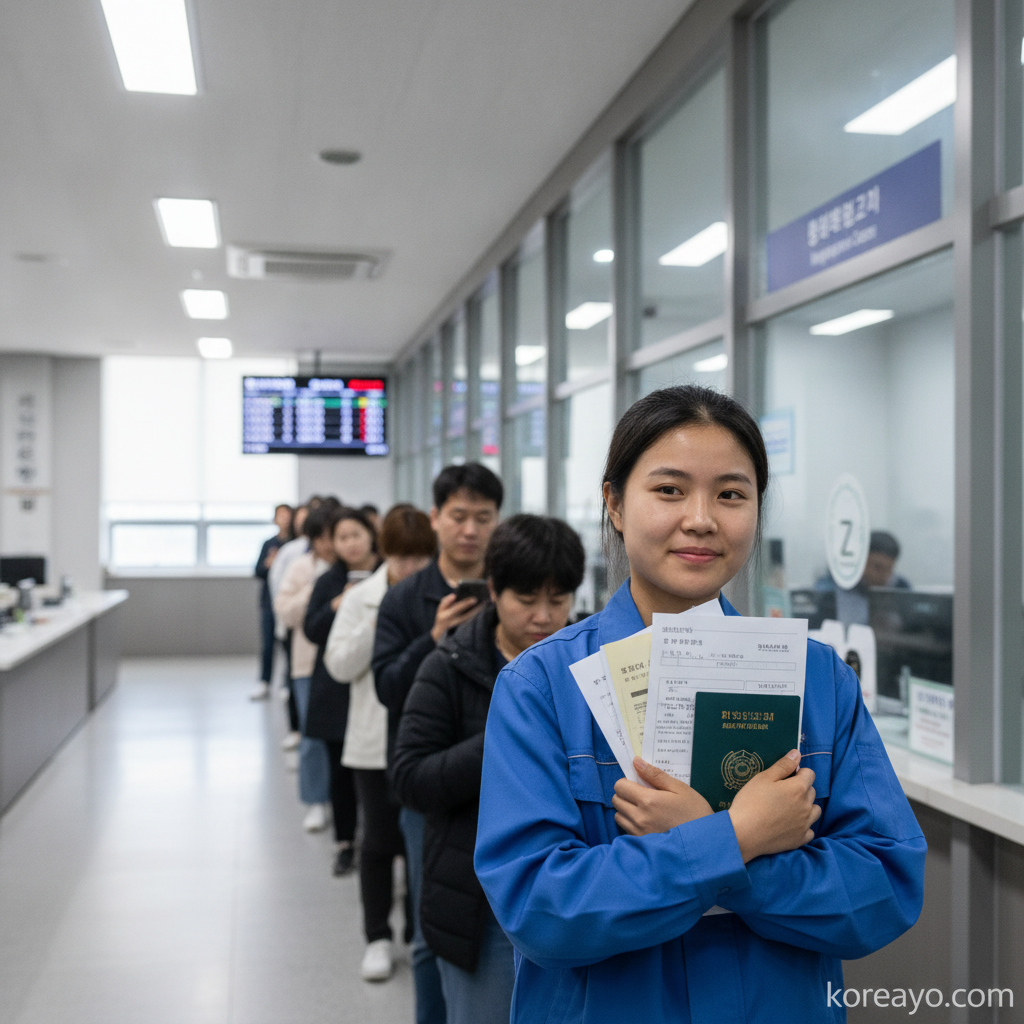
ARC Processing Time in Korea 2026: How Long It Actually Takes
Quick answer: Residence Card (formerly the Alien Registration Card, ARC) processing in Korea typically takes 2 to 4 weeks under normal conditions, but can stretch…

Quick answer: Residence Card (formerly the Alien Registration Card, ARC) processing in Korea typically takes 2 to 4 weeks under normal conditions, but can stretch to 5 to 6 weeks during peak season (spring semester start, major visa-category renewal windows, and periods right after policy changes). Actual timelines vary by your local immigration office, the type of application (new registration, renewal, or reissue), and how complete your documents are on submission day.
What the ARC Is and Why the Wait Matters
Your Alien Registration Card is the physical ID that proves your legal residence status in Korea — you’ll need it to open a bank account, sign a phone contract, sign a lease in many cases, and generally function as a resident rather than a tourist. If you’ve just arrived on a long-term visa, you’re required to register in person at your local immigration office within 90 days, and the card itself doesn’t come out the same day — it’s mailed or made available for pickup after processing.
That gap between “I applied” and “I have the card in hand” is what trips people up, especially first-timers who assume it works like a same-day ID card. It doesn’t, and the wait genuinely varies enough that it’s worth planning around.
Typical Processing Times by Application Type
| Application type | Typical processing time | Notes |
|---|---|---|
| New ARC (first registration) | 2–4 weeks | Can run longer for first-time applicants during peak season |
| ARC renewal | 2–4 weeks | Apply before your current card expires to avoid a gap |
| ARC reissue (lost, damaged, or info change) | 2–4 weeks | Same general window as renewal in most cases |
| Any of the above, during peak season | 5–6 weeks | Spring semester start and other high-volume periods |
The ARC Application Process, Step by Step
- Book an appointment (where required) or check your local immigration office’s walk-in policy — some offices are appointment-only.
- Gather your documents: passport, visa confirmation, a passport-sized photo, proof of address (lease or dormitory confirmation), and the application form, plus any category-specific documents (employment contract for work visas, enrollment certificate for student visas, etc.).
- Submit in person at the immigration office with jurisdiction over your registered address — not just any office.
- Pay the applicable fee at the counter.
- Wait for processing. You’ll typically be given a receipt or reference number to track your application.
- Receive your card — either by mail to your registered address or via pickup, depending on the office.
What Slows Your ARC Down (or Speeds It Up)
- Incomplete documents: the single biggest cause of delay. Missing or expired supporting paperwork means a second trip and a restarted clock.
- Which office you’re assigned to: larger, higher-traffic offices (Seoul, in particular) tend to run slower than smaller regional offices simply due to volume.
- Timing: applying right at the start of a semester, right after a visa policy change, or during other high-volume windows adds to the queue.
- Application type: first-time registrations sometimes require additional verification compared to a straightforward renewal.
- Address changes mid-process: moving between submitting your application and receiving your card can add delay if you don’t update your registered address promptly.
처리기간은 관할 출입국·외국인청 및 신청 유형(신규/재발급)에 따라 달라질 수 있습니다. — 출처: 하이코리아 안내, 최종 확인일: 2026-08-09
(In English: Processing time can vary depending on your local immigration office and application type — new registration vs. reissue. Source: HiKorea guidance. Last verified: August 9, 2026.)
How to Check Your Application Status
If you’re past the estimated window and haven’t heard anything, don’t just wait indefinitely:
- Use the reference number from your receipt to check status through the HiKorea portal, where available.
- Call or visit the specific immigration office where you applied — status lookups are generally faster in person or by phone than trying to track it online.
- If you have an urgent need for proof of registration (e.g., for a bank or employer) before your card arrives, ask the office about a temporary certificate.
Official Sources to Verify Current Timelines
- HiKorea (hikorea.go.kr) — official portal for visa and ARC-related guidance and notices.
- Korea Immigration Service (immigration.go.kr) — for official notices and policy updates that can affect processing volume.
- Your local immigration office (출입국·외국인청) — the most reliable source for real-time status on your specific application.
본 글은 일반 정보 제공 목적이며, 개별 사안은 하이코리아 상담센터 또는 행정사·법무사 확인이 필요합니다.
(This article is provided for general information only. For your specific case, please consult the HiKorea counseling center or a licensed immigration attorney/agent.)
Written by the Koreayo Editorial Team · Reviewed for accuracy on 2026-08-09