How to Order Food in Korea: Restaurant Phrases, Apps, and Delivery Guide
Learn how to order food in Korea with confidence. This guide covers Korean restaurant menus, banchan side dishes, self-service kiosks, food delivery apps, and essential…
Order Food in Korea: Complete Guide
Order food in Korea with confidence. Learning to order food in Korea makes dining much easier. Eating out should be enjoyable, not stressful. This guide covers everything from understanding Korean menus. For more food guides, see our Korean food guide to navigating delivery apps, with the exact phrases and steps you need. Once you know how to order food in Korea, you’ll feel confident anywhere.
Order Food in Korea: Restaurant Basics
Entering a Restaurant
What to expect:
- Enter and wait: Staff will say “어서오세요” (Welcome)
- Indicate party size: Hold up fingers or say number
- Be seated: Staff guides you or you seat yourself
- Receive menu: Sometimes on table, sometimes brought to you
Types of seating:
- 테이블석 (table seats): Regular chairs and tables
- 좌식 (floor seating): Sit on cushions, remove shoes at entrance
Understanding Korean Menus
Menu sections:
- 주메뉴/메인 (main dishes)
- 사이드 (sides)
- 음료 (drinks)
- 주류 (alcohol)
Common menu terms:
| Korean | Meaning | Example |
|---|---|---|
| 인분 (inbun) | Portion/serving | 2인분 = 2 servings |
| 대/중/소 | Large/Medium/Small | Size options |
| 세트 | Set meal | Main + sides + drink |
| 추가 | Additional/Extra | Add-ons |
| 맵기 조절 | Spice level | Adjustable spiciness |
Calling for Service
Methods:
- Call button: Press button on table (most restaurants have these)
- Voice: Say “저기요” (excuse me) loudly—this is normal and not rude
- Hand wave: Raise hand and make eye contact
Note: Servers don’t check on you periodically like in Western restaurants. You call when you need something.
Order Food in Korea: Essential Phrases
Basic Ordering
| English | Korean | Pronunciation |
|---|---|---|
| This one please | 이거 주세요 | Igeo juseyo |
| One of this please | 이거 하나 주세요 | Igeo hana juseyo |
| Two servings please | 2인분 주세요 | I-inbun juseyo |
| One more please | 하나 더 주세요 | Hana deo juseyo |
| Water please | 물 주세요 | Mul juseyo |
| Menu please | 메뉴판 주세요 | Menyu-pan juseyo |
Numbers for Ordering
| Number | Korean (Native) | For Ordering |
|---|---|---|
| 1 | 하나 (hana) | 한 개/하나 |
| 2 | 둘 (dul) | 두 개/둘 |
| 3 | 셋 (set) | 세 개/셋 |
| 4 | 넷 (net) | 네 개/넷 |
| 5 | 다섯 (daseot) | 다섯 개 |
Dietary Requests
| English | Korean | Pronunciation |
|---|---|---|
| Not spicy please | 안 맵게 해주세요 | An maepge haejuseyo |
| Less spicy please | 덜 맵게 해주세요 | Deol maepge haejuseyo |
| No meat please | 고기 빼주세요 | Gogi ppaejuseyo |
| Without this | 이거 빼주세요 | Igeo ppaejuseyo |
| I’m allergic to ___ | ___ 알레르기 있어요 | ___ allergy isseoyo |
| I’m vegetarian | 채식주의자예요 | Chaesikjuuija-yeyo |
During the Meal
| English | Korean | Pronunciation |
|---|---|---|
| More banchan please | 반찬 더 주세요 | Banchan deo juseyo |
| More rice please | 밥 더 주세요 | Bap deo juseyo |
| Tissue please | 휴지 주세요 | Hyuji juseyo |
| Chopsticks please | 젓가락 주세요 | Jeotgarak juseyo |
| Spoon please | 숟가락 주세요 | Sutgarak juseyo |
Order Food in Korea: Paying the Bill
How to Pay
Call for check:
- Say “계산이요” (check please)
- Or go directly to counter/register (common at many restaurants)
Payment methods:
- Card: “카드로 할게요” (I’ll pay by card)
- Cash: “현금이요” (Cash)
- Mobile payment: Samsung Pay, Kakao Pay widely accepted
Important notes:
- No tipping: Never expected in Korea
- Bill splitting: Not common—usually one person pays or split equally later
- Dutch pay: “더치페이” is understood but not traditional
Receipt
- 영수증 주세요: Receipt please (if needed)
- 영수증 필요없어요: No receipt needed
Order Food in Korea: Restaurant Types
Korean BBQ (고기집)
How to order:
- Choose meat type and amount (usually minimum 2 servings per meat type)
- Staff brings raw meat and side dishes
- Grill yourself or staff grills for you (depends on restaurant)
- Lettuce wraps, sauces, and banchan come automatically
Common meats:
| Korean | English | Price Range/Serving |
|---|---|---|
| 삼겹살 | Pork belly | ₩13,000-18,000 |
| 목살 | Pork neck | ₩13,000-17,000 |
| 차돌박이 | Beef brisket | ₩18,000-25,000 |
| 꽃등심 | Ribeye | ₩25,000-40,000 |
| 갈비 | Beef ribs | ₩25,000-35,000 |
Extra items often charged:
- Egg roll (계란말이): ₩5,000-8,000
- Cheese: ₩2,000-3,000
- Fried rice (볶음밥): ₩2,000-3,000
Fried Chicken (치킨집)
Ordering:
- Choose flavor: 후라이드 (fried), 양념 (seasoned), 반반 (half and half)
- Choose size: 한마리 (whole), 반마리 (half)
- Add drinks: Beer is traditional pairing (치맥 = chicken + beer)
Common types:
- 후라이드: Original fried
- 양념: Sweet and spicy sauce
- 간장: Soy garlic
- 뿌링클: Cheese powder
- 순살: Boneless
Kimbap/Bunsik (분식점)
What to expect:
- Casual counter-service style
- Quick meals, affordable
- Menu on wall or laminated sheets
Popular orders:
- 김밥 (kimbap): ₩2,500-4,500
- 라면 (ramyeon): ₩4,000-6,000
- 떡볶이 (tteokbokki): ₩4,000-6,000
- 순대 (sundae – blood sausage): ₩5,000-7,000
Order Food in Korea: Delivery Apps
Major Delivery Apps
| App | Korean Name | Pros | Cons |
|---|---|---|---|
| Baedal Minjok (Baemin) | 배달의민족 | Biggest selection, user-friendly | Delivery fees vary |
| Yogiyo | 요기요 | Good discounts | Smaller selection in some areas |
| Coupang Eats | 쿠팡이츠 | Fast delivery, consistent | Limited to partnered restaurants |
Setting Up Delivery Apps
Requirements:
- Korean phone number
- Korean address
- Payment method (card or Kakao Pay)
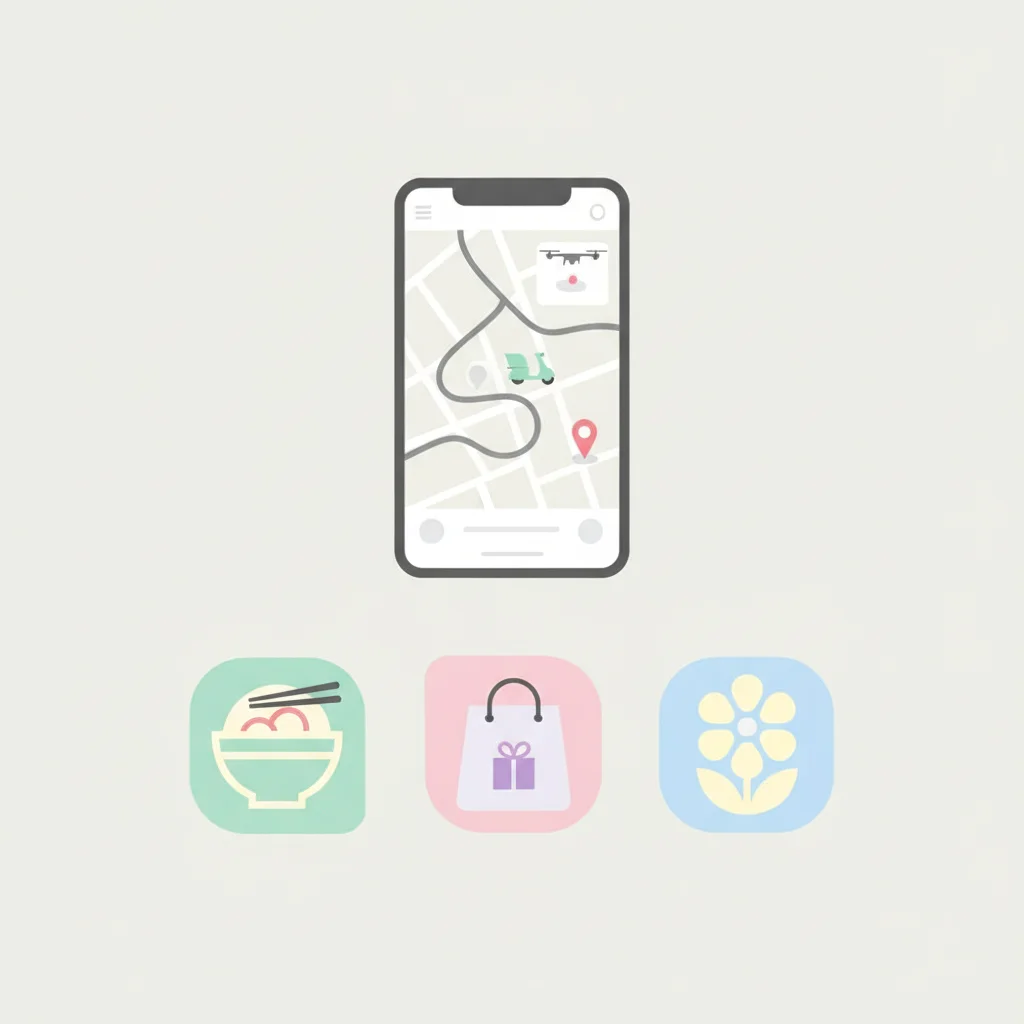
Steps:
- Download app from app store
- Register with phone number (receive verification code)
- Enter delivery address
- Link payment method
Language tip: Apps are primarily in Korean. Use Google Translate camera to read menus, or look for restaurants with photos.
How to Order on Baemin
- Open app and confirm address
- Browse categories or search
- Select restaurant
- Add items to cart (장바구니)
- Check order and add notes if needed
- Select payment method
- Confirm order
- Track delivery in real-time
Useful settings:
- 일회용품 안 받기: No disposable utensils
- 요청사항: Special requests
- 문 앞에 놔주세요: Leave at door
Delivery Fees and Minimums
- Delivery fee: ₩0-5,000 (depends on distance and restaurant)
- Minimum order: Usually ₩10,000-15,000
- Tip: Not expected, but some apps have tipping option
Order Food in Korea: Kiosk Guide
Where You’ll Find Kiosks
- Fast food chains (McDonald’s, Burger King, Lotteria)
- Coffee shops
- Many Korean restaurants
- Food courts
Using a Kiosk (Step-by-Step)
- Language: Press flag icon for English (if available)
- Order type: 매장 (for here) or 포장/테이크아웃 (takeout)
- Browse menu: Touch categories and items
- Customize: Select options (size, extras, etc.)
- Add to cart: Touch 담기 or cart button
- Pay: Card or cash (insert card or bills)
- Get receipt: Shows order number
- Wait: Number called when ready
Common kiosk terms:
- 추가: Add
- 선택: Select
- 결제: Payment
- 취소: Cancel
- 완료: Complete
Order Food in Korea: Convenience Stores
Hot Food
- Counter items: Point and say “이거 주세요”
- Ramyeon station: Buy ramyeon, cook at hot water station
- Microwaving: Staff will heat items, or use in-store microwave

Phrase: “데워주세요” (Please heat this up)
What to Try
- 삼각김밥 (triangle kimbap): ₩1,200-1,800
- 도시락 (lunchbox): ₩3,500-6,000
- 컵라면 (cup noodles): ₩1,000-2,500
- 호빵/만두 (steamed buns/dumplings): ₩1,500-3,000
Order Food in Korea: Traditional Markets
How to Order at Markets
Prepared food stalls:
- Point at what you want
- Say “이거” (this) and amount
- Pay (usually cash preferred)
- Eat at standing tables or take away
Sit-down market restaurants:
- Find empty seat
- Look at what others are eating
- Point or name your order
- Pay when finished
Bargaining
- For food: Not common, prices are set
- For groceries/goods: Possible, especially for large purchases
- Polite approach: “좀 깎아주세요” (Please give a discount)
Order Food in Korea: Troubleshooting
Common Problems
Wrong order:
- “이거 안 시켰어요” (I didn’t order this)
- “주문이 잘못됐어요” (The order is wrong)
Missing item:
- “___ 안 왔어요” (___ didn’t come)
Can’t read menu:
- Use Papago or Google Translate camera
- Point at other tables’ food
- Ask “추천 메뉴 있어요?” (Do you have a recommendation?)
Too spicy:
- Order rice: “밥 주세요”
- Ask for milk: “우유 있어요?”
Ordering food in Korea becomes second nature quickly. Start with pointing and simple phrases, and gradually add vocabulary as you get comfortable. Korean restaurant staff are generally patient and helpful with foreigners—a smile and effort go a long way.
For more about Korean food culture, explore Korean cuisine on Wikipedia.
Related Guides
- Korean Food Guide: What Makes It Unique
- Korean BBQ Guide for First-Timers
- Korean Soups and Stews Guide
- Korea Delivery Services Guide
- Essential Korea Apps