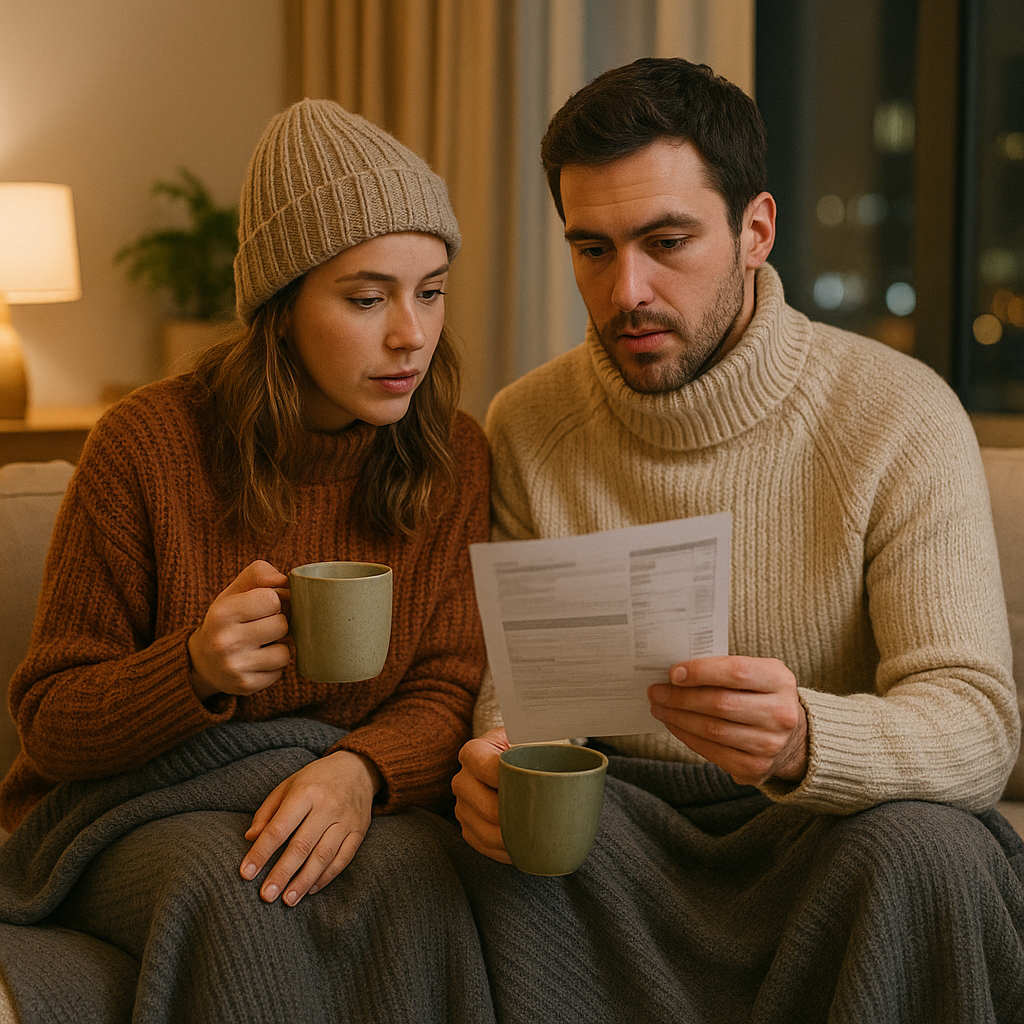
If you’ve ever opened your Korean gas bill in January and immediately wished you hadn’t — welcome to the club. Every expat I know has had that moment of disbelief. You think, “Wait, I barely turned the heat on!” And yet, there it is: ₩150,000 or more, taunting you from the digital abyss of your apartment app.
Korean winters aren’t just cold; they’re expensively cold. Between the infamous “ondol” floor heating system and poorly insulated walls, heat disappears faster than your enthusiasm for living frugally. After too many winters spent freezing or overspending, I started asking around — Reddit, Korean neighbors, even my landlord (who just laughed). Eventually, I pieced together some surprisingly effective hacks that actually make a difference.
Understanding Ondol: The Beautiful but Inefficient Beast
Before we talk about saving money, you’ve gotta understand what’s draining your wallet. The Korean heating system, ondol, warms the floor using hot water pipes beneath it. It’s cozy, but also kind of ridiculous when you think about it — you’re heating the floor, not the air you breathe. It’s ancient tech made modern, and efficiency varies wildly depending on your apartment’s age.
Newer officetels usually have digital thermostats, but older ones? It’s like guessing the weather on Mars. Turn it up slightly, and suddenly your place feels like a sauna; turn it down, and you’re sleeping in a fridge. The heat loss is even worse in “villa” apartments (low-rise buildings) because of thin walls and unsealed windows.
Thing is, once you get how the system works — hot water cycling in a loop — you realize small tweaks go a long way. Running ondol constantly at a low setting is cheaper than blasting it on high for short bursts. The system spends less energy keeping water warm than reheating it from scratch. Took me two winters and one scolding from a Korean ajumma neighbor to learn that.
Seal the Leaks: The War Against Korean Drafts
You’ll hear this from everyone, but it’s true — most heat escapes through windows and doors. Korean apartments love sliding glass windows, which look nice but leak warmth like a sieve. One December, I bought a cheap candle and did the old “flicker test.” The flame tilted every time the wind sneaked in through invisible gaps.
Solutions that actually worked for me:
- Window insulation film (available at Daiso or Coupang). It’s a clear plastic wrap you stick to the frame and heat-shrink with a hairdryer. Looks tacky, saves money.
- Gap foam or weatherstripping for door frames. It’s cheap and surprisingly satisfying to apply.
- Bubble wrap trick — sounds dumb, works great. Stick it on your window with a bit of water. Acts like a mini double-pane system.
- Curtains — not the sheer kind, but thick blackout curtains that reach the floor. Keeps warmth in and blocks the sun-glare too.
I swear, after doing this, my heating bill dropped about 25%. It’s not magic; it’s physics and a bit of tape.
The Ondol Schedule Hack
This one’s not intuitive but works wonders. Most people either leave their heat on all day or turn it off completely when leaving home. Both are mistakes. The system takes time to heat up and cool down, so constant temperature swings waste gas.
What I do:
- Set the temperature around 20°C (feels warm once the floor’s fully heated).
- Use the timer or manual switch to run it for a few hours in the morning and again in the evening.
- During the night, I lower it slightly — around 17–18°C — since the floor retains residual warmth.
If your thermostat has a “boiler mode” option (온수 or 난방), turn off the 온수 (hot water) mode when not showering. It’s easy to forget it’s running all day, secretly sipping your gas like a vampire.
Electric Hacks: The Smart Compromise
Here’s where things get controversial. Some people say, “Never use electric heaters — they cost more.” But the math’s not that simple. In Korea, electricity is billed progressively (the more you use, the higher the rate), but a small heater in a sealed room can still be cheaper than firing up the gas boiler for your entire apartment.
I bought a 300W infrared panel heater last winter — it looks like a flat art frame and barely sips power. I just use it in the bedroom while keeping ondol off in the rest of the house. My bill actually went down.
Also, electric blankets (전기요) are game-changers. Most locals use them religiously. Just make sure you get one with an auto-off timer because they can overheat. Pair that with some hot packs (핫팩) and you’ll basically become a hibernating bear.
Hot Water: The Silent Bill Killer
I didn’t realize how much hot water contributes to gas bills until I saw a breakdown on my utility app. Those long, steamy showers? That’s your money literally evaporating.
So yeah — shorter showers, lower temperature. I started turning off the boiler switch right after showering, and the difference was instant. Some people install a simple digital timer that cuts off the boiler after 20 minutes — worth the ₩15,000.
And washing dishes? Fill a small basin instead of running the tap. It’s very un-American but very Korean-grandma-efficient.
Lifestyle Tweaks (a.k.a. Stuff I Wish I’d Done Sooner)
A few small changes that sound obvious but make a huge impact:
- Wear indoor layers. Heat-tech tops and fleece pants. Not glamorous, but your body is free insulation.
- Slippers. Korean floors get cold around the edges, and feet lose heat fast.
- Use carpets or rugs. Ondol heats the floor evenly, but rugs keep it longer. Bonus: fewer cold shock moments when stepping out of bed.
- Close unused rooms. If you’re alone, don’t heat the whole apartment. Shut doors, keep one room cozy.
- Turn on the fan (briefly). Sounds wrong, but circulating the air helps distribute warmth evenly. Just for a few minutes after ondol heats up.
Also — pro tip I found on a Korean home economics blog — some people place aluminum foil under carpets to reflect heat upward. I tried it out of curiosity; it works… kinda. The floor gets warm faster, though it looks weird when you move the rug.
The Psychological Side of Feeling Cold
Here’s something I didn’t expect: part of “being cold” is mental. In Korea, the air is super dry in winter, which tricks your body into feeling colder because your skin loses moisture faster. Using a humidifier (or even a pot of water near the radiator) can make your room feel warmer at the same temperature.
Lighting also matters — warm, yellowish bulbs make spaces cozier. Sounds like nonsense, but after switching from white LEDs to warm-tone lamps, my brain actually stopped shivering.
It’s all small stuff, but it adds up. The goal isn’t to freeze or to spend — it’s to outsmart the system that seems designed to make you choose between comfort and financial survival.
Random Tips I Stumbled Across
- Korean landlords often underestimate insulation. Ask neighbors which side of the building stays warmer — sometimes higher floors are colder because of wind exposure.
- Coupang sells “thermal curtains” that are ugly but ridiculously effective.
- Use the Kakao Gas app if you’re in Seoul — it gives real-time usage data. I didn’t even know this existed until last year.
- Apartment intercoms sometimes have a “boiler control” setting nobody uses. Hidden feature goldmine.
- There’s a Korean superstition that running the boiler at night causes bad sleep. I tried turning it off once — yeah, no. I froze. Myth busted.
The Bottom Line
You can’t fight Korean winter head-on — it’s dry, windy, and your apartment probably leaks heat like a deflating balloon. But with insulation tricks, smart scheduling, and a bit of behavioral adjustment, you can survive it without selling a kidney for gas money.
The first year, I treated the heating bill like an unavoidable tragedy. Now it’s a game — how low can I get it while still feeling cozy? Last winter, I cut it by 40%. So yeah, it’s possible. Just takes a mix of curiosity, tape, and maybe a few YouTube DIY fails.
FAQ
Do Koreans really use ondol every day?
Most do, especially in winter. But some run it only in the morning and before bed to save money.
Is electricity cheaper than gas?
Depends on your usage. For small spaces, electric heaters can be cheaper. For large ones, gas wins.
Can I leave the heat on all night?
Yes, but keep it low (17–18°C). Floors retain heat, so you won’t freeze.
Is there central heating in Korea?
Not really. Each unit controls its own boiler.
Do newer apartments have better insulation?
Generally, yes. Anything built after 2015 tends to have improved sealing and energy efficiency.
What’s the average winter gas bill in Seoul?
Anywhere between ₩70,000–₩200,000 depending on apartment size and habits.
Can I use portable gas heaters?
Don’t. They’re unsafe indoors unless specifically designed for it.
Why does my boiler make clicking sounds?
Normal — it’s the pipes expanding and contracting. Freaked me out the first time too.
Completely unrelated: why do Korean bathrooms have no separate shower area?
Honestly? Space efficiency and tradition. Once you get used to it, it’s kinda convenient.
Why Does South Korea Feel So Much Colder Than Its Latitude Suggests?
How to Survive Korean Winters: Heating, Clothing, and Home Insulation Tips