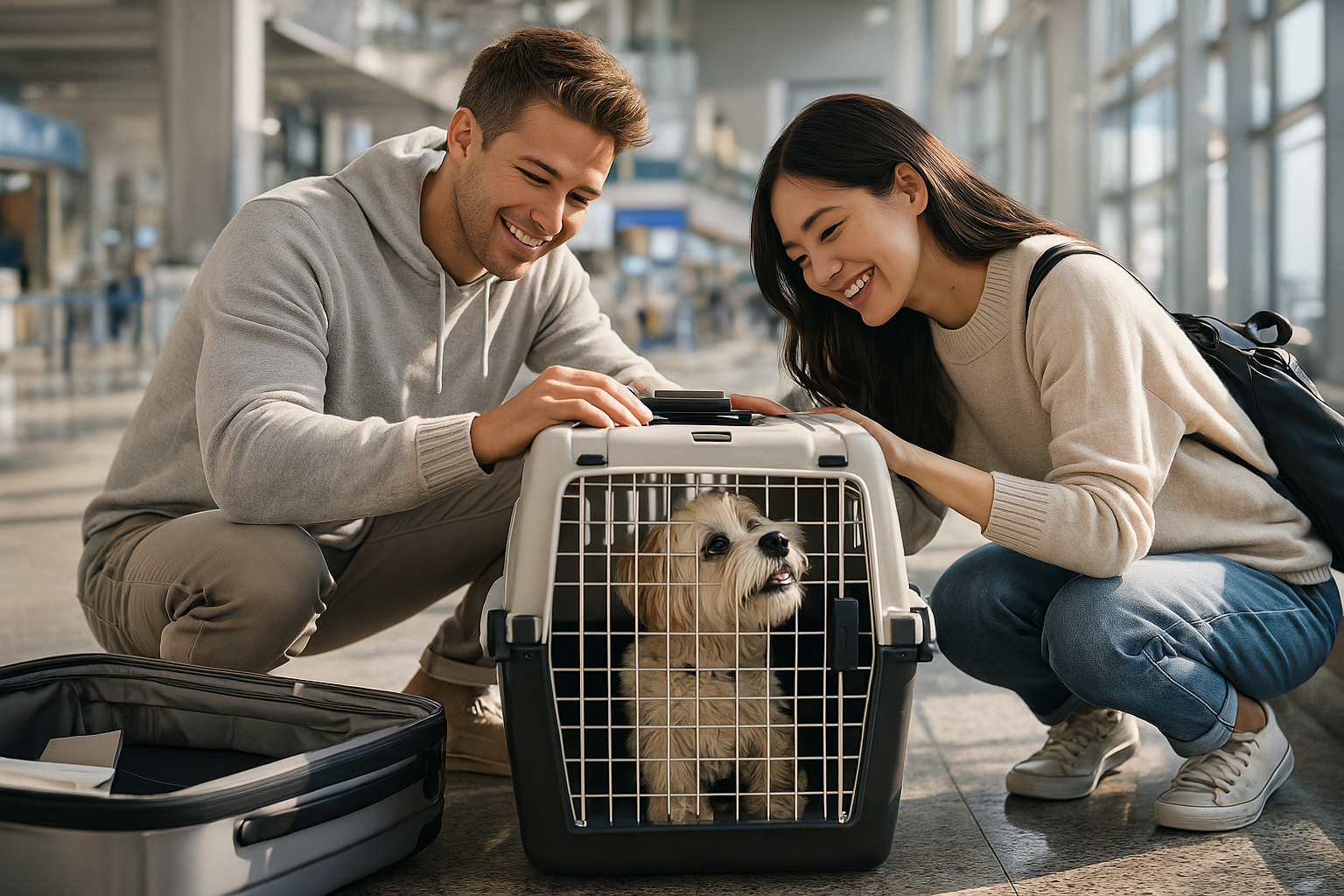
If you’re planning to move to South Korea with your furry friend, brace yourself — it’s not hard, but it’s definitely a process. Between vaccines, microchips, and paperwork, bringing a pet into Korea can feel like trying to get them their own passport. When I first looked into it, I thought, “How complicated could it be?” Fast forward a few weeks and I was knee-deep in forms, government websites, and conflicting advice from travel blogs.
But after sorting through all that chaos, I finally pieced together what you actually need — not just the official rules, but the real-world details that matter when you’re standing at Incheon Airport with a nervous cat and a pile of paperwork.
The Basic Rulebook (and Why It’s Strict)
South Korea takes animal imports seriously. The country has been rabies-free for years, so they’re understandably cautious about any pets entering from abroad. The good news? If you have your documents in order, there’s no quarantine for most pets coming from rabies-free or low-risk countries.
The bad news? If you miss one form or forget to microchip your pet, customs can delay you for hours — or even send your pet to quarantine for a week or more at your expense. So yeah, better to be over-prepared.
Step One: Microchip Comes First
Before anything else, your pet needs a microchip that complies with ISO 11784 or 11785 standards — that’s the 15-digit, non-encrypted kind. Korean customs scans for this upon arrival.
If your pet has an older or non-ISO chip, you’ll need to either:
- Bring your own microchip scanner, or
- Have your vet implant a new ISO-compliant one before travel.
And yes, the microchip must be implanted before the rabies vaccine is given, or it won’t count. Customs is strict about that sequence.
Step Two: Rabies Vaccine (and Timing Matters)
Even if your home country is rabies-free, Korea still requires proof of vaccination for dogs and cats coming from most places.
Key details:
- The vaccine must be given after the microchip is implanted.
- It must be an inactivated (killed virus) or recombinant vaccine.
- You need to wait at least 30 days after vaccination before entering Korea (for countries that aren’t rabies-free).
If you’re coming from a rabies-free country like the UK, Australia, or New Zealand, you don’t need to wait the 30 days — but you still need proof of vaccination or official exemption.
Pro tip: double-check your vet’s signature and vaccine sticker on the form. Korean customs looks at everything.
Step Three: Rabies Antibody Titer Test (If Required)
This one trips up a lot of travelers. The antibody test (often called the FAVN test) is only required if your pet is coming from a country not listed as rabies-free or low-risk.
Here’s the breakdown:
- The test must be done at an approved lab (check the OIE or USDA list).
- The sample must be taken at least 30 days after vaccination and at least 3 months before travel.
- The antibody level must be ≥ 0.5 IU/ml.
If you’re from the U.S., Canada, or most of Europe, you typically don’t need this step. But if you’re unsure, just get it done — the certificate is valid for life as long as you keep up with annual rabies shots.
Step Four: Official Health Certificate
This is the big one. You’ll need an official veterinary health certificate endorsed by your government’s animal health authority (like the USDA in the U.S., DEFRA in the U.K., or CFIA in Canada).
It must include:
- Pet’s identification (species, breed, age, sex, microchip number)
- Rabies vaccination details
- Test results (if applicable)
- A declaration that the animal is healthy and fit to travel
Make sure it’s signed and stamped by the official authority — not just your local vet. Korea only accepts government-endorsed certificates.
This certificate is usually valid for 10 days before departure. So don’t get it too early, or it’ll expire before you arrive.
Step Five: Import Inspection at Arrival
When you land in South Korea, you must declare your pet at customs. There’s a specific Animal and Plant Quarantine Agency (QIA) desk inside Incheon Airport (usually near baggage claim).
You’ll need to present:
- Microchip scan
- Vaccination record
- Health certificate
- (If needed) Rabies antibody test result
If everything checks out, they’ll issue an Animal Quarantine Certificate, and your pet can leave the airport with you immediately.
But — if something’s missing or unclear, they may send your pet to a quarantine facility for testing. This can last from a few days to up to 21 days, depending on what’s missing.
Step Six: Airline and Travel Tips
Honestly, half the stress isn’t customs — it’s the flight itself. Airlines have their own pet policies, and they don’t always match government rules.
A few must-dos:
- Confirm with your airline at least a month in advance. Some limit pets per flight.
- Ask whether your pet will fly in-cabin or as checked cargo (depends on size and airline).
- Use an IATA-approved carrier with good ventilation.
- Label everything — pet’s name, your contact, destination address.
- Bring copies (yes, plural) of every document, plus digital versions on your phone.
Most importantly: schedule your arrival during QIA’s open hours (9 a.m. to 6 p.m.). Arriving at midnight means waiting until morning to clear your pet, which can be stressful for both of you.
Small Details That Matter More Than You Think
These are things I wish someone had told me:
- Korean customs officers are polite but very by-the-book. Don’t argue, just show proof.
- Your vet’s handwriting actually matters. If it’s illegible, customs may question it.
- Pets under 90 days old usually can’t enter — they’re too young for rabies shots.
- If you’re bringing more than four pets, you’ll need to apply for an import permit in advance.
- Keep all your original paperwork — customs may ask to see it again when you leave Korea.
And yes, cats go through the same process as dogs. No special treatment for felines (they just meow louder about it).
After You Arrive: Registration and Vet Visits
Once you’re settled, you’ll need to register your pet with your local city office within 30 days. This is mandatory for all dogs — cats are optional but recommended. It’s basically Korea’s version of pet licensing.
You’ll get a registration number and tag, which you need if you ever use boarding, grooming, or veterinary services.
Also, schedule a vet visit soon after arrival to double-check vaccines and get advice on local conditions — winter dryness, new allergens, etc. Korean vets are generally excellent and many speak basic English, especially in big cities.
Common Mistakes Travelers Make
- Forgetting to microchip before vaccination.
- Getting the wrong type of rabies vaccine (live-virus instead of inactivated).
- Not getting government endorsement on the health certificate.
- Assuming “no quarantine” means “no inspection.”
- Booking late-night flights that arrive after quarantine offices close.
I made one of these mistakes once — I had all my forms but forgot that my cat’s microchip wasn’t ISO-compliant. Customs was kind but firm. Luckily, I had brought my own scanner, or she would’ve gone into quarantine.
The Bottom Line
Bringing your dog or cat into South Korea isn’t impossible — it’s just bureaucratic. As long as your pet is microchipped, vaccinated, and you’ve got a properly endorsed health certificate, you’ll be fine. The process feels overwhelming at first, but once you walk out of Incheon with your pet safe and free, it’s totally worth it.
Just remember: Korea loves pets, but loves paperwork more.
FAQ
Do pets have to quarantine in South Korea?
Not if your documents are correct and you’re from a rabies-free or low-risk country.
What if I’m coming from a high-risk country?
You’ll likely need a rabies antibody test and possibly a short quarantine.
Can I bring multiple pets?
Up to four without special permission. More than that requires an import permit.
How long is the health certificate valid?
Ten days from the date of issue.
Do I need to microchip my pet?
Yes, and it must be done before vaccination.
Are there breed restrictions?
No specific bans, but large or aggressive breeds may face airline restrictions.
Can I bring birds or reptiles?
Different rules apply — you’ll need to contact the quarantine agency directly.
Unrelated, but can I find pet-friendly housing easily in Korea?
It’s possible, but limited. Always check lease terms carefully before moving in.
Complete South Korea Pet Entry Checklist: Microchip, Rabies Certificate, and Quarantine Forms
“What Documents You Need to Bring Your Dog or Cat Into South Korea”에 대한 2개의 생각