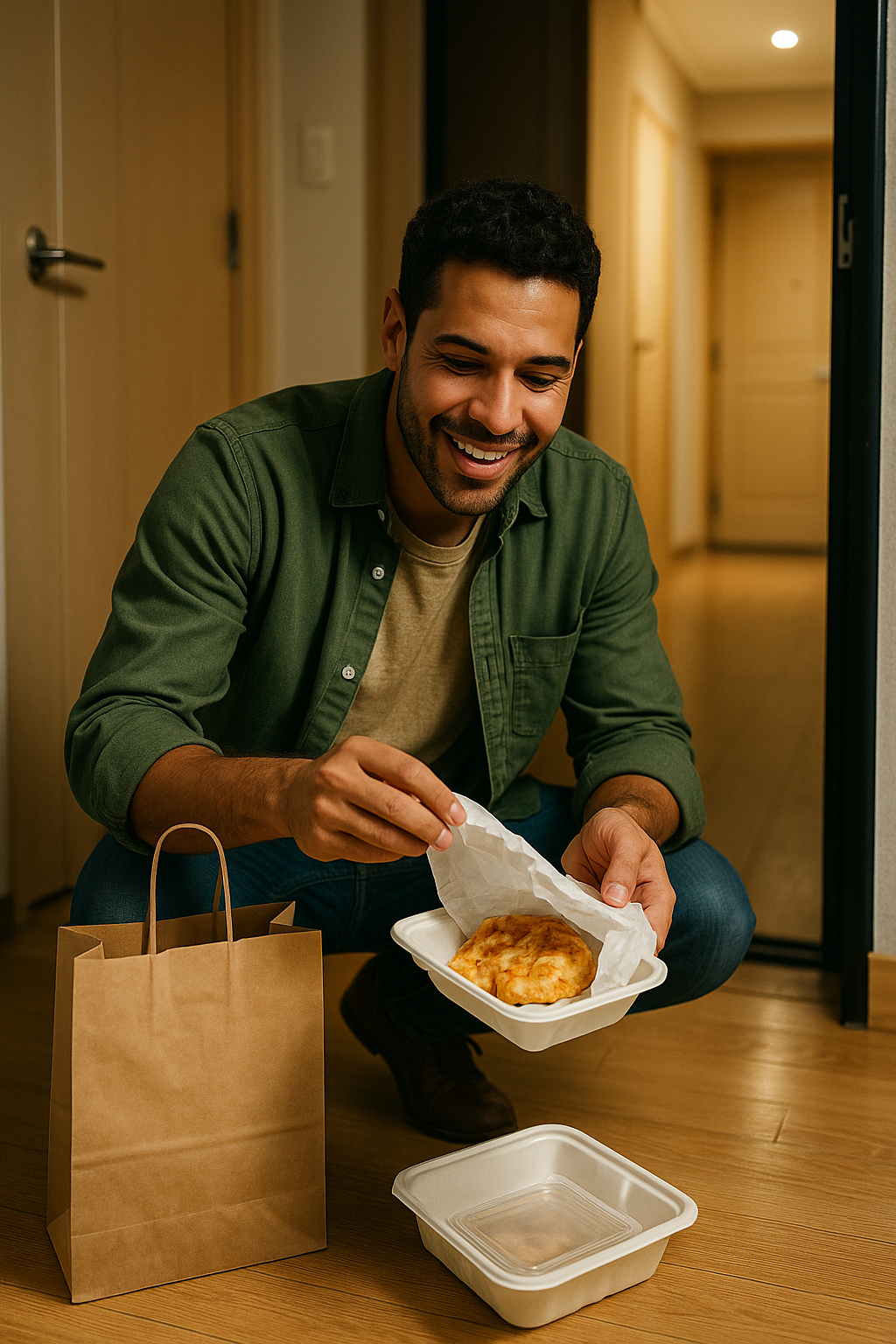
If you’ve lived in Korea long enough, you’ve probably experienced that small moment of magic — the doorbell rings, and there’s a guy in a helmet holding steaming jjajangmyeon like it teleported straight from the kitchen. Ten minutes earlier, it was just a tap on your phone. No awkward calls, no “Where’s my food?” anxiety. Just bam, dinner.
That efficiency didn’t happen overnight. Korea’s delivery culture isn’t just a modern tech miracle — it’s a reflection of national habits, values, and a cultural love affair with speed and service. You could say it’s the country’s unofficial religion: 배달 (baedal), the art of getting things fast.
Let’s unpack how Korean delivery culture became what it is today, why it’s unlike anywhere else, and how to experience it without losing your mind (or your waistline).
The DNA of “Baedal(Delivery)”: Korea’s Obsession with Convenience
Koreans have this word — 빨리빨리 (ppalli-ppalli) — meaning “quickly, quickly.” It’s more than an expression; it’s a mindset. It built the economy, shaped social behavior, and quietly influenced even how people eat.
So when smartphones entered the scene, it was inevitable that this national urgency turned into hyper-efficient delivery apps. But even before the apps, delivery was a thing — old-school Chinese restaurants had their own metal bowls and scooter guys way back in the 1970s.
I once met a taxi driver in Mapo who said, “Back then, if jjajangmyeon wasn’t hot when it arrived, you’d lose customers instantly.” That was the standard: speed + heat + trust. Those three words still define Korean delivery today.
In a way, delivery culture here isn’t about laziness — it’s about optimization. People work late, commute long hours, and live in dense cities. Delivery became not just convenience, but survival.
From Landlines to Algorithms: How It All Evolved
Before smartphones, people ordered through landline menus pinned to their doors. If you grew up in Korea in the early 2000s, your house probably had a fridge covered in paper menus — fried chicken, tteokbokki, pizza, jjajangmyeon, you name it.
You’d call, mumble your address, and 30 minutes later a delivery man would appear balancing metal containers like a magician. Those containers were washed, collected, and reused — no single-use plastic, just old-school steel and trust.
Then apps like BaeMin, Yogiyo, and Coupang Eats digitized everything around 2010. The app ecosystem exploded, offering live GPS tracking, real-time chat, and endless options. Now you can order bubble tea, pet food, or a single toothbrush — and someone on a scooter will still show up.
COVID-19 supercharged it even further. By 2021, delivery had become daily routine, not luxury. Ghost kitchens popped up — no dine-in, just delivery-only brands. The average Seoul resident started ordering 4–6 times a week, sometimes more.
Honestly, the entire food industry here rebuilt itself around one core assumption: no one wants to leave home.
Why Korean Delivery Feels Different (and Better)
If you’ve tried delivery abroad, you know the pain — long waits, cold food, missing items, random driver messages like “I can’t find your house.” Korea? Different universe.
Reasons it works so insanely well:
- Density: Cities are compact, with thousands of restaurants packed within scooter distance.
- CCTV & safety: Riders don’t need to call; every address is precisely mapped.
- Technology: Real-time tracking, AI route optimization, and no-tipping culture streamline everything.
- 24/7 demand: There’s always someone awake, hungry, and online.
The result? A hyper-efficient system that feels like teleportation. Delivery here is so fast it’s almost rude.
There’s even a meme in Korea: “Order a pizza, go shower, it’s already here.” And it’s true — the drivers move like ghosts. I once ordered a sandwich at 1:32 PM and got a text at 1:42 saying “Delivered.” I thought it was a glitch. Nope. Sandwich in hand, still warm.
What You Can Get Delivered
Forget just food. The concept of “Delivery” expanded into everything-life.
You can get:
- Grocery delivery within 10 minutes (Coupang Fresh or Market Kurly).
- Pharmacy items (painkillers, vitamins, even first-aid kits).
- Laundry pickup and return.
- Coffee from a café two blocks away.
- Pet food, flowers, contact lenses, condoms — anything, really.
There’s even a service called delivery proxy where you can pay someone to pick up anything — your shoes from a repair shop, your wallet from a friend’s house, your homework from your dorm printer (don’t ask).
That level of trust only works in a low-crime, high-accountability society. And Korea fits that perfectly.
Experiencing Korean Delivery as an Expat
Using Korean delivery apps can be intimidating at first, especially if your Hangul’s shaky. But it’s easier than it looks.
Here’s the playbook:
- Download Baemin (배민) or Coupang Eats.
- Coupang Eats has more English support; Baemin has wider selection.
- Set your address accurately. Korea’s building system is dense — type carefully.
- Find “배달” (delivery) menus. Categories like chicken (치킨), noodles (면), Korean (한식), Chinese (중식), etc.
- Pay by card or Naver Pay. Cash on delivery is dying out.
- Delivery note phrases:
- “문 앞에 두세요” = Leave it at the door
- “조용히 배달해주세요” = Please deliver quietly
- “감사합니다” = Thank you
And don’t worry about tipping — Korea’s delivery economy works on fixed pricing. Riders are paid per job, not per tip.
Pro tip: check reviews in Korean. If people mention “양 많아요” (big portions) or “사장님 친절해요” (the owner’s kind), it’s usually a solid pick.
It’s easy to romanticize Korea’s delivery scene, but it has its cracks.
Riders face insane pressure — time-based pay systems, late-night rain routes, constant app pings. Accidents happen more than people realize. In 2021, over 1,000 delivery rider injuries were reported in Seoul alone.
Then there’s the environmental cost. The pandemic multiplied single-use packaging waste, and the returnable metal bowls of the past mostly disappeared.
There’s a cultural push now toward “배달 자제” (delivery restraint) and reusable packaging trials, but let’s be honest — it’s an uphill battle in a country where time matters more than trash.
Still, there’s awareness growing. Some newer eco-delivery startups use electric bikes, compostable containers, and shared rider systems. Small steps, but it’s a conversation that didn’t exist five years ago.
Why It’s More Than Just Food
Here’s the thing — Korean delivery culture isn’t really about food. It’s about trust in systems.
Trust that your meal will arrive hot, your address will be understood, your time respected. That trust builds a rhythm that makes life smoother in cities that never stop.
The beauty of it is how personal it feels despite the tech. Behind every app notification, there’s still a human — usually tired, always fast — weaving through traffic so someone else can rest a little longer.
It’s weirdly poetic. You order fried chicken, and somewhere out there, a stranger rides through rain just so you can eat comfortably. That’s Korea’s brand of hospitality: quiet, fast, efficient, and deeply human.
FAQ
Are Korean delivery apps in English?
Coupang Eats has partial English; Baemin is mostly Korean but intuitive once you learn a few words.
Do I need to tip?
Nope. Never. It’s not part of Korean culture.
Can I order from non-Korean restaurants?
Yes! Plenty of Western, vegan, and halal options exist in Seoul’s delivery ecosystem.
What’s the usual delivery time?
10–40 minutes in major cities. Slower during rain or dinner rush.
Is it safe to leave food at the door?
Totally. Korea’s low theft rate makes “door drop” deliveries normal.
I don’t know — do people really order just one drink?
Yes. A single iced latte. Delivered. Because why not?