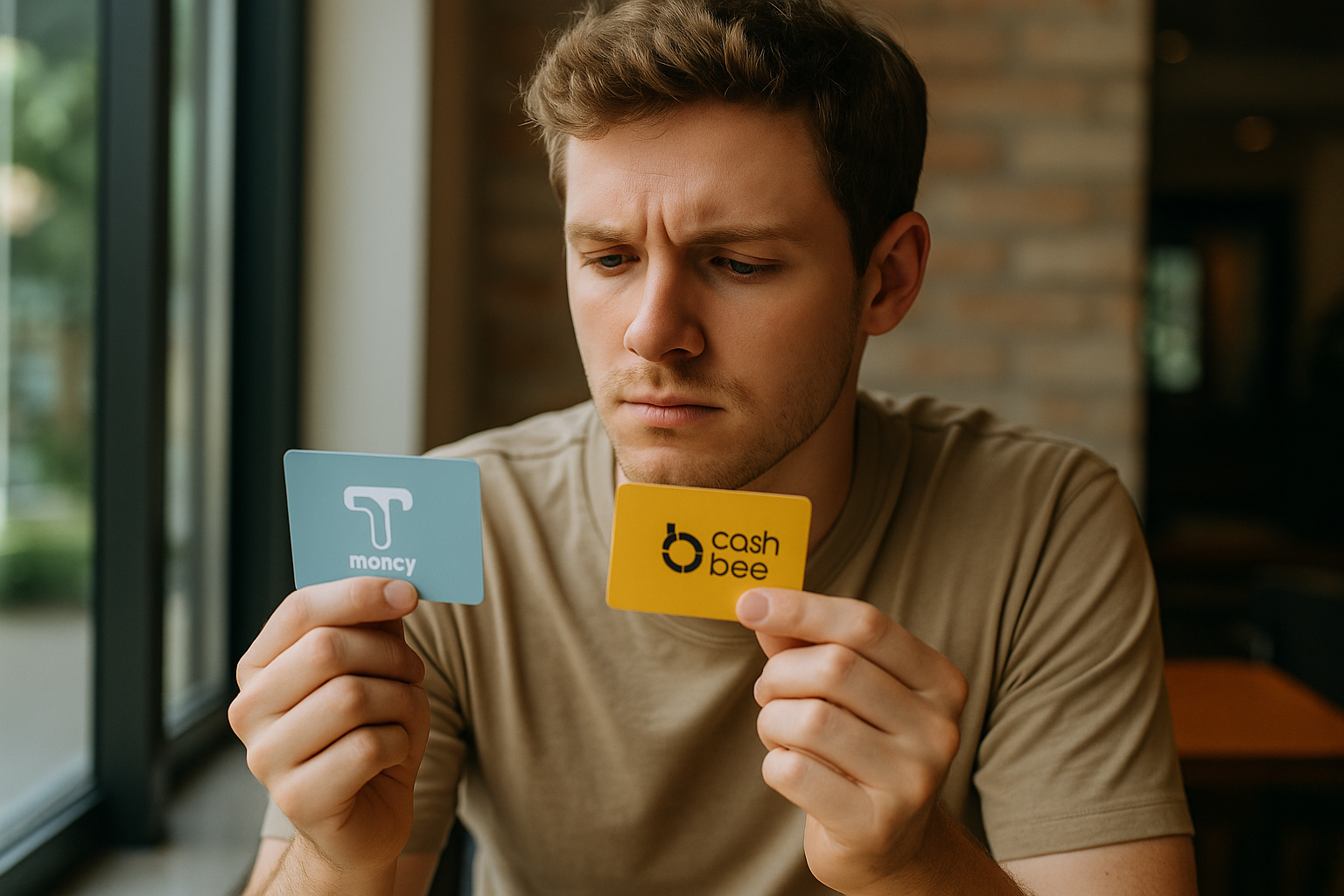
If you’re traveling around Korea, you’ll eventually face this tiny decision most visitors don’t think twice about: T-Money or Cash Bee?
At first, both look identical—same size, same plastic feel, and the same quick beep at subway gates. Even the fares come out the same. So it’s reasonable to assume there’s no real difference.
But after spending time in different cities and reading way too many Korean forum posts, I realized there are distinctions. And depending on where you’re headed, one card may quietly make your trip smoother.
Why Korea Has Two Transit Card Systems
T-Money came first. Back in 2004, it became the default card across Seoul and the surrounding region. By the time Cash Bee appeared around 2010—developed mainly by the Lotte Group—T-Money had already become part of everyday life in the capital area.
Cash Bee didn’t reinvent the wheel. It used the same NFC tap-and-go tech, but Lotte tried to integrate it more deeply into retail stores and non-transit payments.
Now, almost fifteen years after the “card rivalry” began, both coexist without drama. Koreans don’t usually debate which one is better—they just buy whatever the convenience store sells. But foreigners and travelers? They’re the ones who notice when their card suddenly doesn’t work in another region.
Where Each Card Actually Works
If you’re staying mostly in Seoul, this section is simple:
T-Money is everywhere.
But the country isn’t evenly mapped.
- T-Money dominates the Seoul–Incheon–Gyeonggi region.
- Cash Bee is more visible in Busan, Daegu, Ulsan, and parts of Daejeon.
What complicates things is that both cards can work in many of the same cities, but smaller towns sometimes stick to one system. For instance:
- Some Jeju bus routes accept both.
- Others reportedly accept only T-Money.
- A few regional buses still use older machines that only recognize Cash Bee.
It wouldn’t be surprising if even locals aren’t 100% sure—Korean blogs contradict each other often about exact compatibility.
General rule of thumb:
- Staying around Seoul? → T-Money
- Spending most of your trip in the southeast or Busan area? → Cash Bee might cause fewer hiccups
Where You Can Buy Each Card
T-Money is impossible to miss. You can get it at:
- Subway stations
- GS25, CU, 7-Eleven, Emart24
- Airports
- Even some vending machines
Cash Bee, on the other hand, quietly blends in at:
- Lotte Mart
- Lotte Department Store
- Busan Metro stations
- Some convenience stores (more than before)
And lately, many places stock both, sitting right next to each other like Coke and Pepsi.
Reloading and Getting Refunds
Both cards allow quick cash reloading at convenience stores or subway machines. That part is straightforward.
Reloading limitations
- You can’t recharge with a foreign credit card inside the apps.
- Most mobile recharge features require a Korean-issued card.
- Many travelers end up using cash throughout their trip.
Refund differences
- T-Money refunds: Most convenience stores (up to ₩20,000), plus T-Money customer centers
- Cash Bee refunds: Lotte-affiliated stores or specific refund kiosks
- Refund fees: usually around ₩500, though Cash Bee varies a bit
I’ve seen a few Korean forum users claim Cash Bee refunds can be faster for higher balances, but I haven’t personally confirmed that.
Mobile App Support (Not Great for Foreigners)
Here’s where many travelers get confused.
- The T-Money app works only on certain Android phones with Korean SIM cards.
- The Cash Bee app is similar, though the interface is cleaner.
- iPhones can’t scan either card with NFC.
So unless you’re living in Korea long-term with the right SIM, checking your balance usually means finding a recharge machine. It’s not ideal, but most travelers end up doing this anyway.
Using the Cards Outside Transit
You can use both cards to pay at convenience stores or taxis, but each has its “home turf.”
- Cash Bee fits naturally into Lotte’s universe
- Lotteria
- Angel-in-us Coffee
- Lotte Department Stores
- T-Money shows up more frequently at
- CU, GS25
- Emart24
- McDonald’s
And taxi drivers?
Some accept both, some accept one, and a few older card readers seem to prefer T-Money. It’s unpredictable—but usually manageable.
Card Designs & Price
Regardless of the system, cards usually cost:
- ₩2,500–₩4,000 for basic versions
- ₩5,000–₩8,000 for character designs (Kakao Friends, BT21, Pokémon, etc.)
There are also hybrid products—phone cases and prepaid SIMs with built-in T-Money or Cash Bee functions. Some locals even carry two cards without giving it much thought.
So Which Card Is Better for Travelers?
Here’s the simplest answer you’ll find:
- Traveling mainly in Seoul:
Go with T-Money. It’s everywhere, easy to recharge, and well-supported. - Traveling primarily in Busan, Daegu, or southern cities:
Cash Bee can feel a touch more reliable.
Functionally, the two cards are nearly identical. You’re not gaining or losing features by choosing one. The difference is purely regional convenience.
Some travelers even buy both—mostly to avoid the small panic moment when their only card runs out of balance in a station with a broken machine.
A Small Reflection on Korea’s Transit System
I still find it impressive that Korea runs two competing fare systems without confusing daily commuters. In most countries, this would create chaos. In Korea, it just… works. Quietly, efficiently, almost invisibly.
I came across a government report from several years ago showing both cards averaging under 0.4 seconds per tap. That’s faster than many global systems—including London’s Oyster or Tokyo’s Suica.
It says something about how Korea treats efficiency—not loudly, but through tiny optimizations you barely notice.
Just try not to lose your card. If you do, no app will magically recover your balance.
FAQ
Q1. Which is better for travelers in Korea, T-Money or Cash Bee?
T-Money is generally better for travelers staying in Seoul, Incheon, and most of Gyeonggi-do. Cash Bee works smoothly in Busan, Daegu, Ulsan, and other southern cities. Both cards function similarly, but regional compatibility differs.
Q2. Can I use T-Money and Cash Bee on all buses and subways in Korea?
Most major cities accept both cards, but some regional buses still support only one system. Smaller towns or older bus machines may reject Cash Bee or T-Money depending on local operators.
Q3. Where can I buy each card?
T-Money is available at most convenience stores, airports, and subway stations. Cash Bee appears more often in Lotte-affiliated places such as Lotte Mart and Busan Metro stations, though many stores now sell both.
Q4. Can foreigners recharge these cards with international credit cards?
No. Foreign credit cards generally don’t work for mobile recharge inside the apps. You’ll need cash or a Korean-issued card to reload either T-Money or Cash Bee.
Q5. Do both cards offer refunds?
Yes. T-Money refunds are handled through major convenience stores or T-Money service centers, while Cash Bee refunds are usually processed at Lotte-related stores or dedicated kiosks. Refund fees typically apply.
Q6. Can I check my card balance on my phone?
Only partially. Neither card supports iPhone NFC balance scanning. Android phones may work if the user has a Korean SIM and compatible device, but most travelers end up checking balances at subway machines.