
If you’re a foreigner living in Korea, sending money back home is part of life.
You choose a service.
You enter an amount.
You pay the fee.
And you assume that’s the cost.
But for most foreigners in Korea, that visible fee is not the real cost of sending money.
The real cost is hidden — and rarely explained clearly.
The Fee You See Is Only the Surface
When remittance services in Korea talk about cost, they usually highlight one thing:
The fee.
Sometimes it’s:
- A flat fee
- A small percentage
- Or even advertised as “zero”
That’s the number most foreigners focus on.
And that’s exactly why the real cost is easy to miss.
Because the biggest cost often isn’t labeled as a fee at all.
Exchange Rates Are Where Most Money Is Lost
Every international transfer involves an exchange rate.
But here’s what many foreigners in Korea don’t realize:
The exchange rate used by a remittance service is often not the same rate you see online.
The difference might look small:
- A fraction of a percent
- A few won per unit
But on larger transfers, that difference quietly becomes the biggest expense.
And unlike fees, exchange rate costs are rarely shown as a clear number.
“Low Fee” Often Means “Adjusted Rate”
In Korea, many remittance services compete by advertising low or no fees.
That sounds great — until you look closer.
What often happens instead:
- The fee is reduced or removed
- The exchange rate is adjusted slightly
- The total cost is embedded in the rate
From the user’s perspective, it feels cheaper.
In reality, the cost is simply moved to a place that’s harder to notice.
Timing Also Affects the Cost
Another factor that’s rarely explained to foreigners is timing.
- Exchange rates change throughout the day
- Some services lock rates instantly
- Others apply rates later during processing
Two people can send the same amount from Korea on the same day and still end up with different results — simply because of when the rate was applied.
This isn’t obvious unless you’re actively looking for it.
Why Foreigners in Korea Rarely See the Full Picture
In theory, all this information exists.
In practice, it’s hard to access:
- Cost breakdowns are scattered across different screens
- Important details are often written only in Korean
- Each service explains things differently
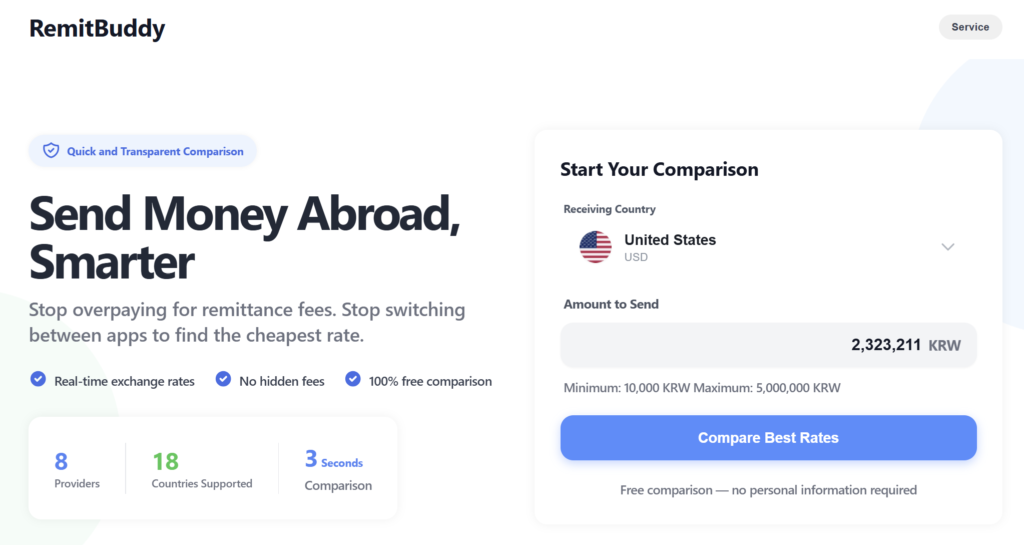
- Side-by-side comparisons are almost impossible to find
For foreigners, the effort required to fully understand the cost often feels higher than the benefit.
So most people stop digging.
Small Differences Feel Invisible — Until They Add Up
Losing the equivalent of:
- 10 USD
- 20 USD
- 30 USD
doesn’t feel dramatic.
But if you send money regularly from Korea, those small differences repeat.
Over months and years, the real cost becomes much larger than most people expect — without ever showing up as a single, obvious charge.
The Real Cost Is a Visibility Problem
This isn’t about blaming remittance services in Korea.
The system works — just not transparently.
The real issue is this:
Foreigners are rarely shown the total cost of a transfer in one clear view.
Without that clarity, it’s easy to believe you’re paying very little — even when you’re not.
What Actually Matters When Sending Money From Korea
Before sending money, it helps to think beyond fees and ask:
- What exchange rate is being applied?
- Is the rate fixed or variable?
- When is the rate locked in?
- How much will my family receive in the end?
Those questions reveal far more about cost than a single “fee” number ever will.
Coming next
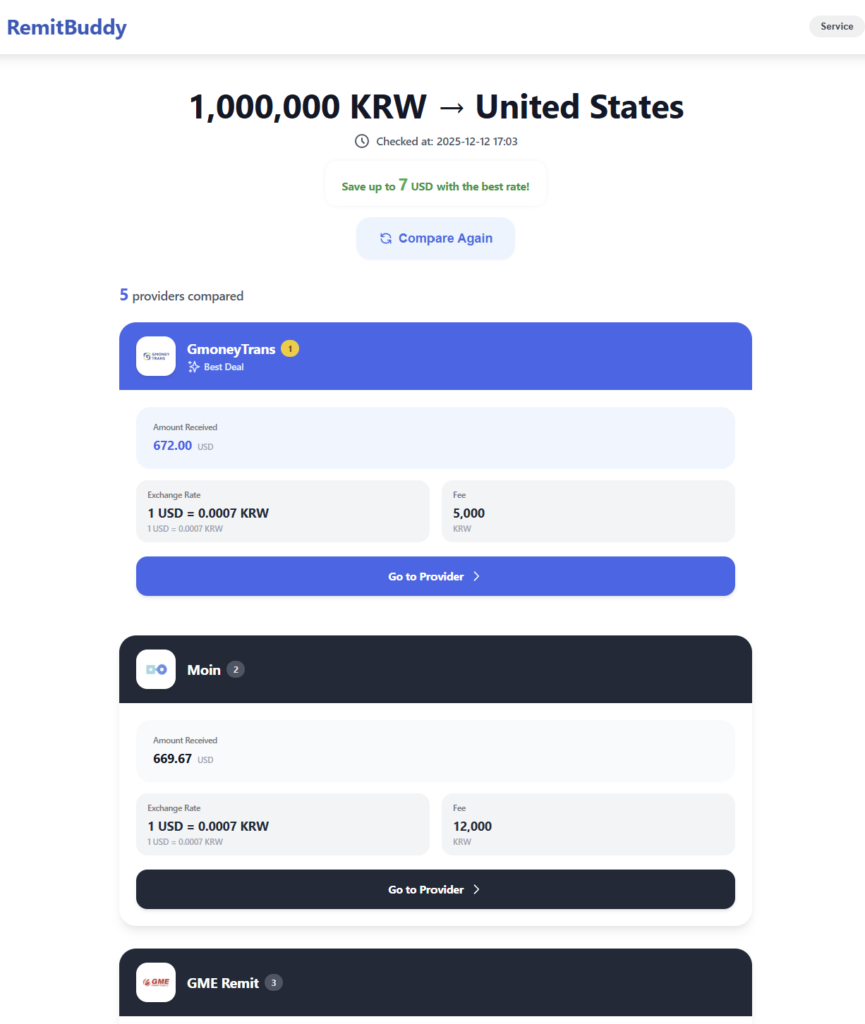
In the next post, we’ll look at a concrete example:
What happens when you send the same amount from Korea using different services — and why the results can be surprisingly far apart.