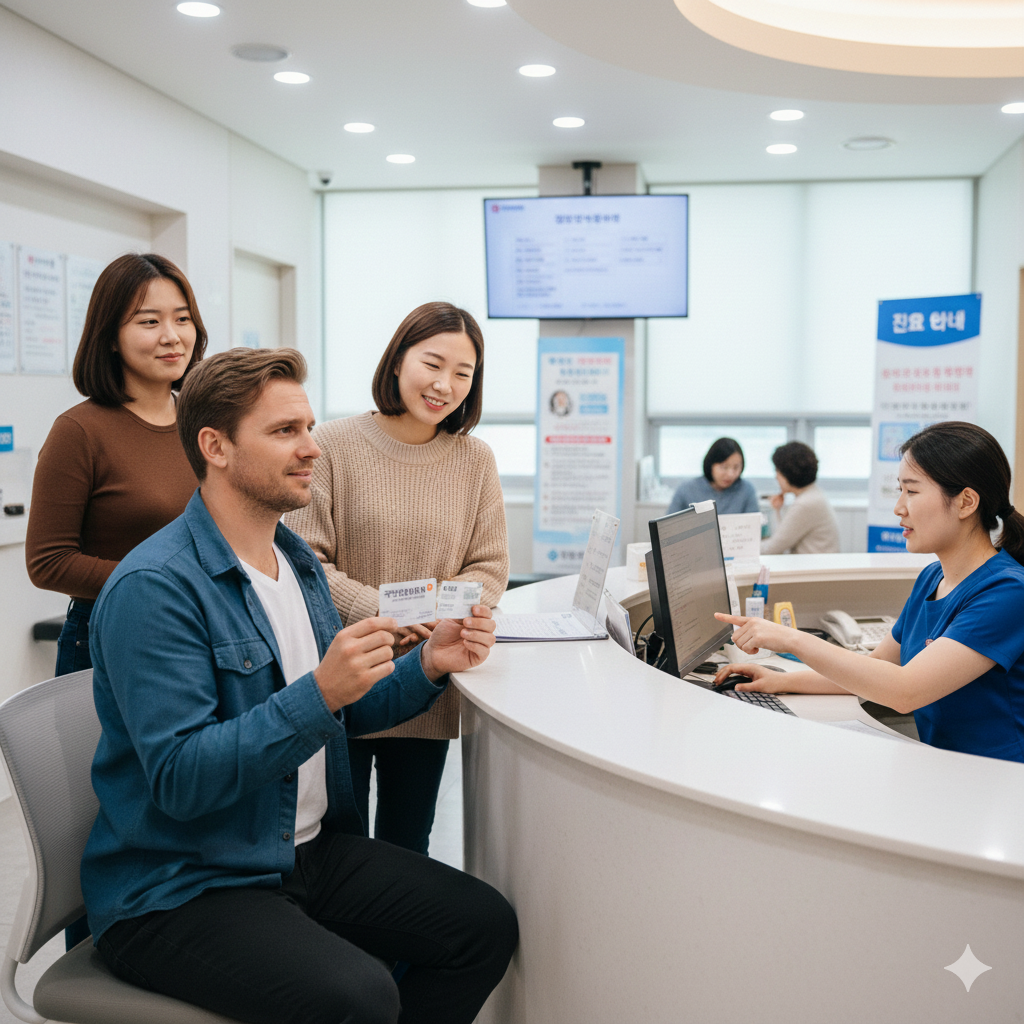
When I first moved to Korea, I thought healthcare would be this bureaucratic labyrinth guarded by forms in Hangul and stern hospital clerks. Not entirely wrong—but not impossible either. The truth is, Korea’s public health system is surprisingly efficient once you understand how the puzzle pieces fit. The problem is, no one really explains it well, especially for foreigners. I only figured things out after a week of coughing, a Reddit post titled “HELP—can’t register for NHIS,” and a very confused phone call with a clinic in Mapo.
Getting into the System: NHIS 101
So, Korea’s main public health safety net is the National Health Insurance Service (NHIS). Everyone’s supposed to be in it—Korean citizens and foreign residents staying over six months. Thing is, nobody tells you that registration doesn’t happen automatically in every case. If you’re on a standard work visa (E-2, E-7, etc.), your employer usually handles it. But if you’re self-employed, a student, or on a D-10 job-seeking visa, you’ll need to apply yourself at the local NHIS office.
That’s where the fun begins. You’ll need your ARC (Alien Registration Card), proof of address, and maybe a bankbook copy. Sometimes they ask for a contract if your visa situation looks vague. When I went, the staff didn’t speak much English, but they were patient—and Google Translate worked better than expected.
Once registered, you’ll get monthly bills. They vary depending on income, but the minimum is around 140,000 won-ish (as of 2025). You can pay online, at a convenience store, or through automatic transfer. Miss a few months, and they’ll freeze your coverage faster than you’d think.
Also, random fact: NHIS coverage usually kicks in right away, not after a long waiting period. Which is great if you’re already dealing with something.
How the System Actually Works When You’re Sick
Korea’s healthcare process feels backwards if you’re from a Western system. You don’t go straight to a hospital unless it’s serious. Instead, you visit a small neighborhood clinic first—called an internal medicine or ENT or whatever fits your issue. These clinics can do a lot: blood tests, minor treatments, prescriptions. The doctor writes a referral only if you need specialized care at a bigger hospital.
And yeah, you pay upfront. Usually between 5,000 and 20,000 won for a visit with insurance. Then you get a tiny slip, walk a few doors down to a pharmacy, and pay maybe another 5,000–10,000 won for meds. That’s it. It’s weirdly fast—like ordering healthcare from a vending machine.
One thing that threw me off: hospitals are categorized. “University hospitals” are massive and expensive but have the best specialists. “General hospitals” are medium-sized. And “clinics” are the mom-and-pop type. If you’re insured, NHIS covers roughly 70% of most treatments. For dental, mental health, and checkups, it’s lower, sometimes barely 30%.
Actually, about mental health—coverage technically exists, but a lot of English-speaking therapists don’t accept NHIS. Many operate privately, so expect 70,000–120,000 won per session out-of-pocket.
What Happens If You Don’t Have Insurance
Here’s where people get burned. Without NHIS, you pay full price for everything. Like, really full price. A basic clinic visit jumps from 10,000 won to maybe 40,000–60,000. Hospital bills can skyrocket if you’re hospitalized.
Foreign students sometimes skip NHIS because it feels optional—but it’s not, really. Since 2021, long-term residents (over six months) are required to join. Some try to dodge it, but NHIS eventually catches up and back-bills you for the unpaid months. I met someone who owed almost a million won in retroactive premiums. Don’t be that person.
If you just arrived and aren’t eligible yet, some universities offer temporary coverage. Or you can buy short-term travel insurance that works at Korean clinics if you pay upfront and file a claim later. Still, it’s messy. Better to just register as soon as you get your ARC.
This was a nice surprise. NHIS actually offers free or low-cost health screenings every year or two, depending on your age and gender. You get a letter (in Korean, naturally) telling you to visit a partner clinic for a health checkup. It’s like a mini physical—blood test, urine test, chest X-ray, vision, BMI.
The whole thing takes 30 minutes and costs nothing if you’re covered. Koreans take it seriously, too. Companies even schedule group checkups for employees. I didn’t go the first year because I thought the letter was junk mail. Learned my mistake when my coworker came back bragging about her “free blood test.”
There’s also a cervical cancer screening for women and colon cancer screening for older adults, all partially or fully covered.
But here’s the catch: foreigners often don’t get the mail notification because of address mismatches. You can still call your local NHIS branch and ask if you’re eligible. Worth it, honestly.
Dealing with Language Barriers and Weird Bureaucracy
Korean healthcare is efficient, but not always foreigner-friendly. Some doctors speak English; many don’t. The government runs a 24-hour hotline called 1339 (KCDC call center) that can connect you with English-speaking assistance during emergencies. There’s also 1345, the immigration hotline, which sometimes helps with NHIS questions.
If you live in Seoul, certain hospitals—like Seoul National University Hospital, Severance, or Asan—have international clinics with translators. They’ll handle everything from registration to post-treatment documents. But you’ll pay slightly higher consultation fees.
Thing is, not all clinics know how to handle foreign IDs. I once had a receptionist squint at my ARC and just type my name as “Michael” in their system. It still worked, somehow.
Oh, and keep your NHIS number saved on your phone. Every clinic asks for it, and if you forget it, they might charge you uninsured rates temporarily.
When Emergencies Happen
Emergency rooms in Korea operate differently. You can go straight to the ER at any large hospital, but expect to wait unless it’s life-threatening. For real emergencies—car accidents, severe injuries—call 119 (yes, that’s Korea’s emergency number). The ambulance is free and fast, but they’ll take you to the nearest ER, not necessarily the one you prefer.
Once there, NHIS still covers part of the cost, but you’ll probably pay 20–30% of the total. If you’re uninsured, that’s… rough. I’ve heard of foreign residents paying several million won after an overnight stay.
After discharge, you get all your medical records automatically. Keep them. If you ever change jobs or clinics, they’re useful for continuity.
FAQ
Do foreigners automatically get NHIS coverage?
No. Only if you’re employed full-time. Otherwise, you must apply manually.
What if I leave Korea before six months?
Then NHIS doesn’t apply, but travel insurance might cover emergencies.
Are medications cheap in Korea?
Yes, with insurance. Without it, they’re still affordable compared to the U.S., but it adds up fast.
Can I use NHIS outside Korea?
Nope. It’s domestic only.
What if I forget to pay my premium?
Your coverage freezes. You can reactivate it by paying the balance.
How do I find English-speaking doctors?
Search “foreigner-friendly hospital” on Google Maps or check local expat Facebook groups.
Does NHIS cover mental health?
Technically yes, but finding English-speaking therapists under NHIS is tricky.
Can tourists use public hospitals?
Yes, but at full price.
What’s the NHIS phone number?
1577-1000, with limited English service.
Do I need to bring ID every time?
Yes. Always carry your ARC. They won’t treat you without it.