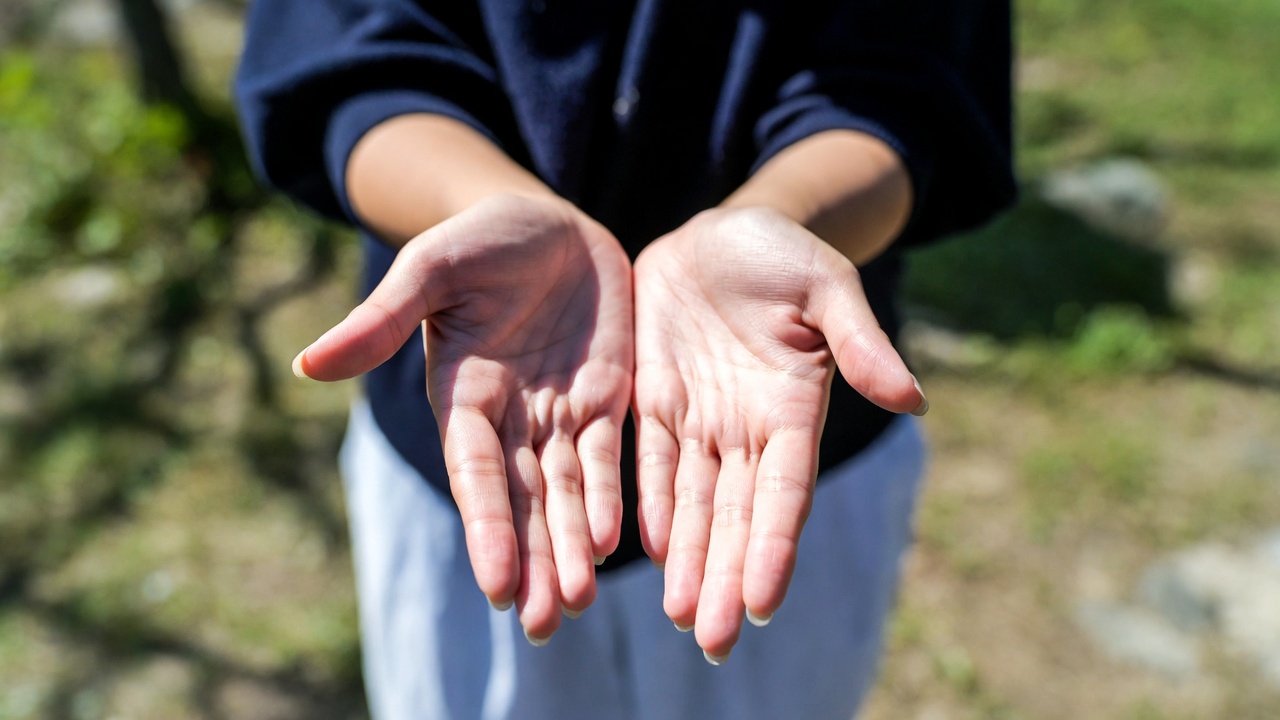
Nobody warned me about the hands thing. My first week in Korea, I handed my boss a document with one hand — like I’d done in every other country I’d lived in. He took it without comment, but the colleague sitting next to me quietly nudged me afterward and said, “Next time, use both hands.” I laughed, thinking she was joking. She wasn’t. That was my introduction to Korean two hand etiquette, and once I started paying attention, I realized this one tiny gesture shows up in almost every interaction in Korean daily life. Handing over a business card. Receiving change at a store. Accepting a drink from someone older. Paying with your credit card. It’s everywhere, and getting it right — or wrong — sends a louder message than you’d expect.
What Korean Two Hand Etiquette Actually Means
At its core, this is simple. When you give or receive something from another person in Korea — especially someone older, senior, or unfamiliar — you use both hands. Not one hand casually extended while you’re looking at your phone. Both hands, with a slight bow or at least a nod. That’s the baseline.
The logic comes from Confucian values that run deep in Korean culture. Using two hands signals that you’re giving the interaction your full attention and respect. One hand suggests casualness, maybe even carelessness. Two hands say, “This moment matters to me, and so do you.” It’s the physical equivalent of making eye contact during a handshake in Western cultures — except in Korea, the hands do the talking.
What catches most foreigners off guard is the scope. This isn’t just a formal business thing. Korean two hand etiquette applies in restaurants, convenience stores, offices, family gatherings, and basically any situation where something passes between two people. A cashier handing you your receipt. A friend passing you a cup of coffee. A stranger returning your dropped phone. The two-hand instinct kicks in across all of these scenarios for Koreans, and they notice when it doesn’t happen.
I’ll be honest — it felt mechanical at first. Like I was performing a ritual I didn’t fully understand. But after a few months, something shifted. I started doing it automatically, not because I was trying to be polite, but because it actually changed how interactions felt. There’s a subtle warmth to receiving something with both hands. It slows the moment down just enough to make it feel human.
Where You’ll See It Every Day
The beauty of Korean two hand etiquette is that it’s not reserved for special occasions. It’s woven into the most mundane, everyday interactions. Once you know what to look for, you’ll spot it constantly.
Business cards are the classic example. In Korean professional settings, you receive a business card with both hands, take a moment to actually look at it, and then place it respectfully on the table or in a cardholder. Grabbing it with one hand and stuffing it in your pocket is a fast way to make a bad first impression. I’ve seen Korean colleagues visibly wince when a foreign visitor does this — they won’t say anything, but the damage registers.
Payments are another constant. Watch what happens next time you pay at a restaurant or cafe. The server will hand you the card reader or return your card with two hands. You’re expected to receive it the same way. At convenience stores, the pace is faster and people are more relaxed about it, but even there, you’ll notice many Koreans instinctively using both hands when the cashier is older.
Gifts and presents absolutely require two hands. If someone gives you anything — a birthday present, a souvenir, even a snack they brought to the office — receive it with both hands and a slight bow. This applies regardless of the size or value of the item. I once saw a Korean coworker receive a single tangerine from a senior colleague with both hands and a bow. The tangerine wasn’t the point. The respect was.
Food and drinks follow the same principle. When someone pours you a drink, receive the glass with two hands. When someone passes you a side dish or serves you rice, accept it with both hands. At restaurants, when the server places a dish on the table, many Koreans will instinctively reach out with both hands to acknowledge the gesture, even if they’re not actually taking the plate.
Documents, papers, and even receipts at offices, banks, and government buildings all get the two-hand treatment. If you’re at immigration dealing with your visa paperwork, handing your documents to the officer with two hands is a small but smart move. Same goes for the bank — when the teller slides your new debit card across the counter, receive it with both hands. It takes half a second longer and costs nothing, but the teller notices.
And here’s one that surprised me: apartment keys. When my landlord handed me the keys to my first apartment in Korea, he used both hands with a slight bow. I grabbed them one-handed like I was picking up takeout. Looking back, I cringe a little. It was his way of marking the moment — handing over responsibility for his property — and I treated it like a vending machine transaction. Small moments like these are where cultural understanding lives.
The One-Hand Workaround Everyone Uses
Obviously, there are situations where two hands aren’t practical. You’re carrying a bag. You’re holding your phone. Your other hand is occupied with a coffee cup. Life doesn’t always cooperate with etiquette rules.
Koreans have a built-in solution for this, and it’s elegant. If you can only use one hand, you place your other hand on the forearm, elbow, or wrist of the hand that’s doing the giving or receiving. This “supporting touch” counts as a two-hand gesture. It signals the same respect without requiring you to actually grip the object with both hands.
You’ll see this constantly. A server returning your card with one hand while their other hand lightly touches their forearm. A colleague handing you a stack of papers with their right hand, left hand resting on their right wrist. It’s so common that most Koreans don’t even think about it consciously — it’s muscle memory from childhood.
I’ve also seen a variation where people place their free hand on their chest while handing something over. This is less common but also accepted, especially among older Koreans. The underlying message is the same: I’m not being casual about this. I’m present.
For foreigners, the forearm touch is the easiest to adopt. It’s natural-looking, doesn’t require you to rearrange whatever you’re carrying, and Koreans immediately recognize the intention behind it. I started doing it within my first month in Korea, and it quickly became second nature. Now I accidentally do it in other countries too, which gets me some confused looks.
When Korean Two Hand Etiquette Relaxes
Here’s the nuance that no guidebook tells you: the rule isn’t absolute. Context matters. Relationship matters. Age gap matters. Understanding when to dial it up and when it’s okay to relax is what separates “foreign person following a rule” from “foreign person who actually gets the culture.”
Among close friends of similar age, the two-hand thing mostly disappears. You’ll see Korean friends in their twenties tossing each other phones, passing snacks, and exchanging items one-handed without anyone blinking. The formality scales with the social distance and hierarchy between people. The wider the gap, the more the hands matter.
At work, it depends on company culture. In traditional Korean corporations — banks, law firms, conglomerates — Korean two hand etiquette is still very much enforced, even among people who’ve worked together for years. In startups and tech companies, things are noticeably looser. I’ve worked in both environments, and the difference is striking. At the traditional company, people used two hands to pass a pen. At the startup, the CEO once slid a contract across the table with one hand while eating lunch. Different worlds.
Age is the strongest variable. When interacting with anyone visibly older — a boss, a client, a stranger at a government office, even a restaurant owner — the two-hand norm kicks in regardless of context. This doesn’t mean every single interaction requires the full formal gesture, but defaulting to two hands with older people is always the safer bet. Nobody has ever been offended by someone being too respectful.
Among foreigners specifically, Koreans tend to have relaxed expectations. They know you weren’t raised with these norms, and most people won’t judge you harshly for a one-hand handoff. But — and this is the key part — when you do use two hands, the reaction is disproportionately positive. It’s like tipping well in a country where tipping isn’t expected. It stands out because it’s voluntary.
Why This Matters More Than You Think
It’s easy to dismiss Korean two hand etiquette as a minor cultural quirk — something to note and move on from. But I’d argue it’s one of the most important social signals you can learn as a foreigner living here.
Here’s why: Korea is a high-context culture. People communicate as much through body language, tone, and unspoken gestures as through words. The two-hand practice is part of that nonverbal communication layer. When you use two hands, you’re not just following a rule — you’re speaking the same social language as everyone around you. You’re saying, “I understand how things work here, and I respect it.”
This has practical implications. At work, it affects how colleagues and superiors perceive your professionalism. In service interactions, it affects how much patience and helpfulness you receive. At immigration offices — where patience from staff can be in short supply — handing your documents over respectfully can genuinely improve the tone of the entire encounter. I’ve experienced this firsthand, and other expats have told me similar stories.
It also compounds over time. One two-hand gesture means nothing on its own. But doing it consistently — at work, at stores, at restaurants, with neighbors — builds an accumulative impression of someone who cares about the culture they’re living in. And in Korea, that impression opens doors. People become warmer. Help comes more easily. The invisible social friction that foreigners often complain about starts to smooth out.
None of this is guaranteed, obviously. And you shouldn’t treat Korean etiquette as a cheat code for social acceptance. But as low-effort gestures go, this one has an unusually high return on investment.
Common Mistakes Foreigners Make
After a few years of watching fellow expats navigate this, I’ve noticed some patterns worth flagging.
The overcorrection. Some people learn about the two-hand rule and then apply it with so much intensity that it becomes awkward. Grabbing a pen from a peer with both hands and a deep bow isn’t respectful — it’s theatrical. Match the formality to the situation. A casual two-hand receive with a nod is usually enough.
The phone problem. You’re holding your phone in one hand when someone hands you something. Rather than scrambling to pocket the phone, just use the forearm touch. It’s literally designed for this situation. Don’t stress about it.
Forgetting at the critical moment. You nail the two-hand thing at the office all week, then absent-mindedly grab your boss’s business card with one hand at a dinner event. It happens. Don’t apologize — it draws more attention. Just reset and do it right next time.
Assuming it doesn’t apply to you. Some foreigners think, “Well, they know I’m not Korean, so they won’t expect it.” That’s technically true — expectations are lower. But the positive impact of doing it well is exactly the same. Lower expectations mean bigger upside when you exceed them.
Not extending it beyond objects. Korean two hand etiquette isn’t only about physical items. The underlying principle — giving someone your full, respectful attention — applies to handshakes, bows, and even how you hand someone your phone to show them a photo. Think of it as a philosophy more than a rule.
FAQ
Does the two-hand rule apply when I pay at a convenience store? Technically yes, but convenience stores are the most relaxed setting. Most people don’t strictly follow it there, especially during busy hours. With an older cashier, a quick forearm touch is a nice gesture.
What if the other person only uses one hand? That’s their call based on the social dynamic. If they’re senior to you, they might use one hand while you use two — that’s normal. Hierarchy flows one way. You don’t need to mirror their casualness.
Do I need to do this with people my own age? Among close friends or peers, no. It’s nice but not expected. The rule mostly activates with age gaps, seniority, or unfamiliar people.
Is this the same as the drinking etiquette with two hands? Same principle, different application. Receiving a drink with two hands and pouring with two hands are specific extensions of the broader Korean two hand etiquette system.
Should I use two hands when giving tips? Tipping isn’t common in Korea, but if you’re leaving a gratuity at a hotel or special service, handing it over with two hands and a slight bow is appropriate.
What about shaking hands? Korean handshakes often involve the left hand supporting the right forearm — same principle. In formal settings, a slight bow accompanies the handshake.
Will Koreans correct me if I forget? Almost never directly. Koreans generally avoid publicly correcting someone’s etiquette. You might get a quiet tip from a close colleague later, but most people will just note it internally.
Does the forearm touch really count as two hands? Yes, absolutely. It’s the standard workaround and universally understood. Nobody will think less of you for using it instead of both hands fully on the object.
Is this etiquette fading among younger Koreans? Among peers, yes — younger Koreans are more casual with each other. But cross-generational interactions still follow the rule strongly. It’s not disappearing, just becoming more situational.
Unrelated but — why do Korean store clerks always use two hands to return my credit card? It’s the same etiquette applied professionally. Service staff are trained to treat customers with formal respect, and the two-hand return is part of that standard. It’s one of the small things that makes Korean service culture feel distinctly polished.