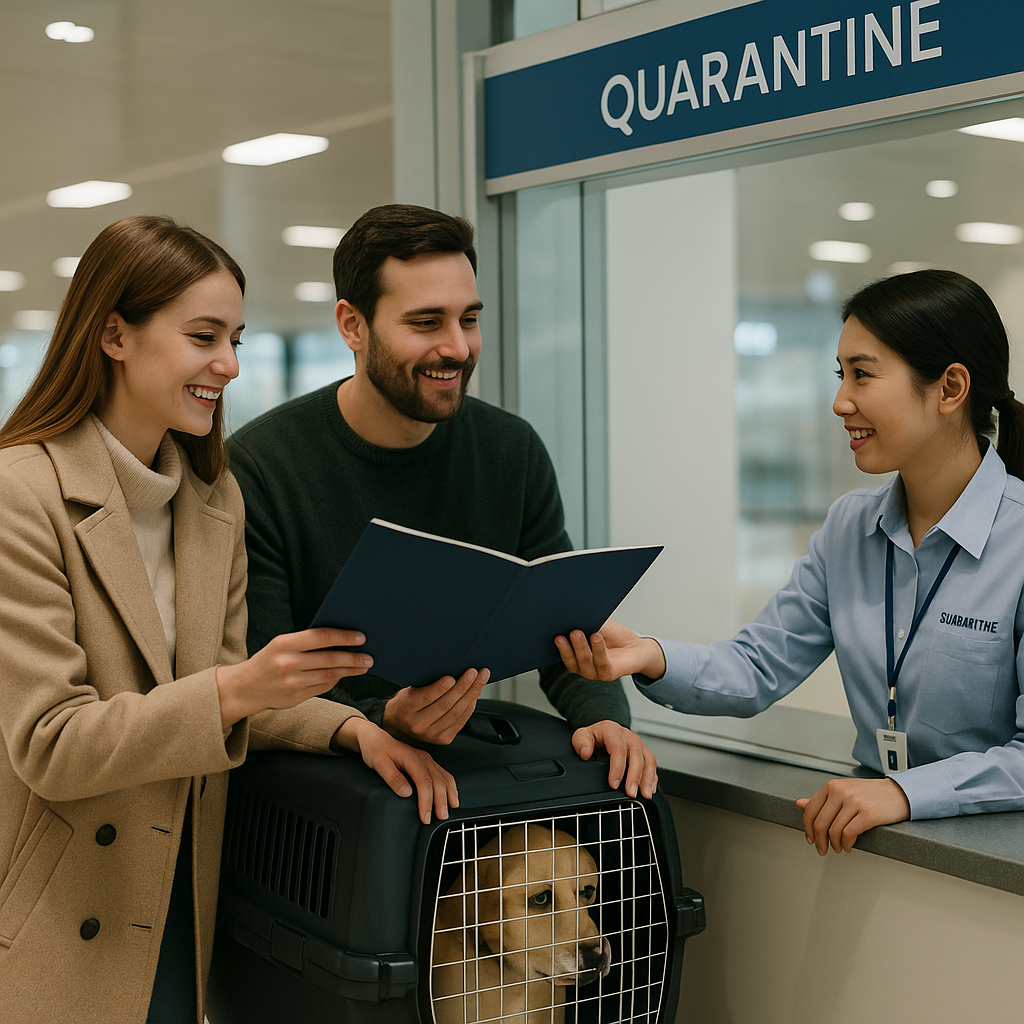
If you’ve ever tried to bring a dog or cat into South Korea, you’ve probably met your new best frenemy: the Animal and Plant Quarantine Agency, better known as APQA. It’s the government body that decides whether your pet gets to walk out of Incheon Airport with you—or spend a few unexpected nights in quarantine.
I still remember the mild panic when I first saw the official APQA forms: pages of dense bureaucratic English, lab test codes, and words like “serological titer.” I had no clue what half of it meant. So I spent a week calling hotlines, emailing APQA staff, and scrolling through Reddit threads written by equally confused expats.
The good news? Once you understand how APQA’s system works, it’s actually pretty logical. Strict, but logical. Here’s what you really need to know about Korea’s pet quarantine rules—minus the government-speak.
What the APQA Actually Does
APQA (Animal and Plant Quarantine Agency) is part of South Korea’s Ministry of Agriculture, Food and Rural Affairs. Their main job is to protect the country from imported diseases—especially rabies, which South Korea officially eliminated years ago.
Every dog or cat entering the country must go through APQA’s entry inspection process. Think of it as your pet’s immigration interview. If the paperwork checks out, they’re cleared immediately. If not, they go into temporary quarantine while APQA runs tests.
It’s not just a formality—they really do inspect every animal. Even service dogs, cats in handbags, and pets coming from rabies-free countries get scanned and checked.
The Three Core Requirements
APQA’s rules center around three main things: microchip identification, rabies control, and official documentation. Miss any one of these and you’re in for a headache.
1. Microchip Identification
Your pet must have a microchip that meets ISO 11784 or 11785 standards. It’s a 15-digit, scannable chip that links directly to your paperwork.
- It must be implanted before your pet gets vaccinated for rabies.
- APQA officers will scan the chip when you arrive.
- If the number doesn’t match your documents, they’ll reject it or send your pet for verification.
If your chip isn’t ISO-compatible, bring your own scanner or have a new one implanted before traveling.
2. Rabies Vaccination (and Maybe a Blood Test)
Every pet must be vaccinated against rabies, regardless of where you’re from.
Rules are simple:
- Vaccine must be an inactivated (killed) or recombinant type.
- It has to be administered after microchipping.
- For most countries, it needs to be given at least 30 days before entry.
If you’re from a country not classified as rabies-free or low-risk, APQA requires an additional rabies antibody titer test (the FAVN test).
- This test must be done by an approved lab.
- The antibody level must be ≥ 0.5 IU/ml.
- It must be completed at least 30 days after vaccination and within 12 months of travel.
Countries considered rabies-free (like Japan, the U.K., Australia, and New Zealand) usually skip this step.
3. Official Veterinary Health Certificate
This document proves your pet’s identity, vaccination history, and health condition. It must be endorsed by your home country’s animal health authority (USDA, DEFRA, CFIA, etc.).
It must include:
- Owner and pet details (breed, sex, microchip number, age)
- Rabies vaccination information (including manufacturer and lot number)
- Results of antibody test (if required)
- Statement that your pet is free from infectious diseases
The certificate must be issued within 10 days before your flight. Anything older is automatically invalid.
APQA Inspection Process at the Airport
When you land at Incheon (or any major airport), you’ll go through immigration as usual—but your pet has its own stop.
Here’s what happens:
- You head to the APQA Quarantine Office located near baggage claim.
- Officers scan your pet’s microchip and verify the number.
- They check all documents: vaccination record, health certificate, antibody test result.
- If everything matches, they issue an Animal Quarantine Certificate on the spot.
The process usually takes 15–30 minutes if you have your paperwork ready.
But if something’s missing or unclear, your pet might be detained in a quarantine facility for testing. That can last anywhere from a few days to three weeks. You’ll be billed for food, care, and testing—easily several hundred dollars.
One more thing: APQA’s office hours are typically 9 a.m. to 6 p.m., Monday through Saturday. Arrive outside those hours, and your pet waits in holding until they reopen.
Quarantine: When It Happens and What It’s Like
If APQA decides your pet needs quarantine, don’t panic—it’s not a punishment. It’s just bureaucracy.
Reasons for quarantine include:
- Missing or mismatched microchip information
- Invalid or expired vaccine certificate
- Missing antibody test
- Illegible or incomplete health documents
During quarantine, APQA veterinarians inspect your pet, verify vaccines, and may run a rabies antibody test. You can’t stay with your pet, but you can call or sometimes visit.
It’s usually not long—three to seven days for minor issues, longer if testing is needed. When cleared, you’ll receive a release notice and can pick them up directly at the facility.
APQA’s Official Paper Trail
Here’s what you’ll need to show APQA on arrival:
- Microchip number certificate or scan result
- Rabies vaccination certificate (with batch info)
- Rabies antibody test result (if required)
- Government-endorsed veterinary health certificate
- Flight and arrival details
- Owner ID or passport
Print everything, even if you have digital copies. APQA officers still love actual paper.
Import Permit? Only for Some Cases
Most pet owners don’t need to apply for an import permit before travel. However, you must apply in advance if:
- You’re bringing more than four pets.
- You’re importing animals for commercial or breeding purposes.
- You’re bringing birds, reptiles, or exotic species.
For dogs and cats under the personal pet category, all you need is the entry inspection upon arrival.
After Arrival: Registering Your Pet in Korea
Once you’ve cleared APQA inspection, you’ll need to register your pet locally within 30 days. This is mandatory for dogs and optional (but wise) for cats.
You’ll need:
- Your passport or Korean Alien Registration Card
- The pet’s microchip number
- Proof of rabies vaccination
You’ll get an official tag or registration number from your city office. Some pet hotels, groomers, and vets will ask for it.
Common Mistakes That Get Pets Stuck in Quarantine
- Microchip implanted after rabies vaccination
- Missing microchip number on the health certificate
- Rabies vaccine not recognized by APQA (live-virus type)
- Rabies titer test done by a non-approved lab
- Health certificate issued too early (more than 10 days before travel)
- Illegible vet handwriting or missing official stamp
Double-check every document before you fly. I mean really double-check — mismatched dates or numbers are the number one reason pets get delayed.
Final Thoughts: The Bureaucracy Is Worth It
South Korea’s pet quarantine rules might feel like overkill, but they exist for good reason. The country hasn’t had a rabies outbreak in years, and APQA’s strict process is why.
Once you’ve gone through it, the reward is huge — walking out of Incheon with your pet safe, legal, and microchipped for life. Just keep your copies, stay calm at the counter, and remember: the officers aren’t being mean. They’re just meticulous.
And once you’re past them, you and your furry companion can finally start your next chapter — whether that’s chasing snow in Seoul or lazy park afternoons in Busan.
FAQ
Do all pets have to go through APQA inspection?
Yes. Every cat or dog entering Korea must pass through APQA at the port of entry.
Do pets always go into quarantine?
No. If all documents are correct, they’re released immediately after inspection.
What if my pet’s rabies vaccine was given before microchipping?
It won’t count. You’ll need to revaccinate after the microchip is implanted.
How long does APQA inspection take?
Usually 15–30 minutes, depending on line and paperwork.
Can I pre-submit documents to APQA?
Yes, via email or fax, though it’s optional. Some travelers do it for peace of mind.
Are emotional support animals treated differently?
No. They follow the same import rules as regular pets.
Can I bring birds or reptiles?
Yes, but they require an import permit and additional veterinary documentation.
Unrelated but curious — do Korean vets speak English?
In major cities, many do. Smaller towns, not as much. Bring translated documents just in case.
Complete South Korea Pet Entry Checklist: Microchip, Rabies Certificate, and Quarantine Forms
What Documents You Need to Bring Your Dog or Cat Into South Korea