Banchan Guide: Korean Side Dishes Explained with Names and Photos
Banchan are the small side dishes served with every Korean meal. Learn why these dishes are essential to Korean food culture and how they create…
What Are Banchan?
Banchan (반찬) are the small side dishes served alongside rice and soup at every Korean meal. Unlike Western appetizers, banchan aren’t ordered—they come automatically and for free. A typical restaurant meal includes 3-5 banchan. See our kimchi guide for the most famous banchan; traditional Korean restaurants (hanjeongsik) may serve 10-20 or more.
The Most Common Banchan You’ll Encounter
Kimchi – 김치
The most essential banchan. You’ll receive kimchi at every single meal without exception. Usually it’s baechu kimchi (napa cabbage), but restaurants may serve kkakdugi (cubed radish) or other varieties depending on the main dish.
Refill tip: “Kimchi deo juseyo” (김치 더 주세요) – More kimchi please
Kongnamul (Soybean Sprouts) – 콩나물
Blanched soybean sprouts seasoned with sesame oil, garlic, and salt. Slightly crunchy, mildly nutty flavor.
Variations:
- Kongnamul muchim – Cold, dressed with sesame
- Kongnamul-guk – Served as soup
- Spicy kongnamul – With gochugaru (chili flakes)
Sigeumchi Namul (Spinach) – 시금치나물
Blanched spinach seasoned with soy sauce, sesame oil, and garlic. A protein-rich staple in Korean vegetable side dishes.
How to eat: Pick up a small bundle with chopsticks and eat in one bite
Musaengchae (Radish Salad) – 무생채
Julienned radish in a sweet, sour, and spicy dressing. Refreshing contrast to rich main dishes.
Best paired with: Korean BBQ, fried foods
Gyeran Mari (Rolled Omelette) – 계란말이
Rolled egg omelette, often with vegetables or cheese inside. Sliced into bite-sized rounds.
Price if ordered as extra: ₩5,000-8,000 (some BBQ restaurants charge for this)
Japchae (Glass Noodles) – 잡채
Sweet potato noodles stir-fried with vegetables, beef, and soy-sesame sauce. Can be served warm or cold as banchan.
Also served as: Main dish at celebrations (larger portion, ₩10,000-15,000)
Dubu (Tofu) – 두부
Served various ways as banchan:
- Dubu jorim – Braised in soy sauce (most common)
- Steamed dubu – Plain with soy dipping sauce
- Fried dubu – Crispy exterior
Gamja Jorim (Braised Potatoes) – 감자조림
Small potatoes braised in sweet soy sauce until glazed. Often includes whole garlic cloves.
Taste: Sweet, savory, slightly sticky
Myeolchi Bokkeum (Stir-fried Anchovies) – 멸치볶음
Tiny dried anchovies stir-fried with soy sauce, sugar, and sesame. Sweet-savory crunch.
Tip: Eat them whole—head, bones, and all. They’re tiny and fully edible.
Eomuk Bokkeum (Fish Cake) – 어묵볶음
Fish cake strips stir-fried in sweet soy sauce with vegetables. Chewy texture.
Ojingeo Jeotgal (Salted Squid) – 오징어젓갈
Fermented salted squid, intensely savory and slightly spicy. Strong flavor—a little goes a long way.
Best for: Eating with plain rice (steals the show from other banchan)
Gaji Namul (Eggplant) – 가지나물
Steamed eggplant dressed with soy sauce and sesame. Silky texture, mild flavor.
Hobak Bokkeum (Zucchini) – 호박볶음
Sliced zucchini stir-fried with garlic and sesame oil. Simple and light.
Understanding Banchan Categories
| Category | Korean | Description | Examples |
|---|---|---|---|
| Namul | 나물 | Seasoned vegetables (blanched or raw) | Spinach, bean sprouts, fernbrake |
| Bokkeum | 볶음 | Stir-fried dishes | Anchovies, fish cake, zucchini |
| Jorim | 조림 | Braised in sauce | Potatoes, tofu, eggs |
| Jeon | 전 | Pan-fried pancakes | Kimchi jeon, hobak jeon |
| Jeotgal | 젓갈 | Salted/fermented seafood | Squid, shrimp, fish roe |
| Jangajji | 장아찌 | Pickled vegetables | Garlic, perilla leaves, peppers |
| Saengchae | 생채 | Raw dressed vegetables | Radish salad, cucumber |
Banchan Etiquette Guide
The Rules
- Free refills: Banchan refills are free at all Korean restaurants. Don’t hesitate to ask for more.
- How to ask: Point at empty dish and say “deo juseyo” (더 주세요) – more please
- Don’t over-order: Take small portions. You can always get more.
- Sharing is expected: Banchan dishes are communal. Use the serving utensils if provided, otherwise your own chopsticks (this is normal in Korea)
- Don’t pick through: Take what’s nearest to you rather than digging for specific pieces
What If You Don’t Like Something?
Simply don’t eat it. Leave it on the table—there’s no expectation to finish everything. However, repeatedly refusing all banchan might seem odd, so try at least a bite when possible.
How Much to Eat
Banchan are designed to be eaten in small amounts throughout the meal, not devoured quickly. Take a bite of banchan, then rice, then main dish—alternating creates the intended flavor experience.
Banchan by Restaurant Type
Korean BBQ Restaurants (고기집)
Expected banchan:
- Kimchi (always)
- Lettuce and perilla leaves (for wrapping meat)
- Ssamjang (wrapping sauce)
- Sliced garlic and peppers
- Kongnamul or other namul
- Musaengchae (radish salad)
- Pickled onions
Often extra charge: Gyeran mari (egg roll), cheese, corn
Jjigae/Gukbap Houses (찌개/국밥집)
Expected banchan:
- Kimchi
- Kkakdugi (especially with soup)
- 2-3 simple namul
Note: Less variety than BBQ restaurants—focus is on the main soup
Hanjeongsik (Korean Course Meal) – 한정식
Expected banchan: 10-20+ dishes depending on price tier
Price ranges:
- Basic: ₩20,000-30,000 per person (8-12 banchan)
- Mid-range: ₩40,000-60,000 per person (12-15 banchan)
- Premium: ₩80,000-150,000+ per person (15-25 banchan)
Where to try in Seoul:
- Korea House (한국의집) – Touristy but authentic, ₩60,000-90,000
- Samcheonggak (삼청각) – Traditional setting, ₩70,000-100,000
- Myeongdong Hanjeongsik – Accessible price point, ₩25,000-40,000
Bunsik (분식) – Casual Eateries
Expected banchan:
- Kimchi
- Kkakdugi or danmuji (yellow pickled radish)
Note: Minimal banchan—these are budget casual spots
Regional Banchan Specialties
| Region | Famous Banchan | Description |
|---|---|---|
| Jeonju | Kongnamul muchim | Famous for soybean sprouts, served with bibimbap |
| Jeollanam-do | Multiple varieties | Known for abundant banchan—20+ dishes common |
| Gangwon-do | Gondre namul | Mountain vegetable specialty |
| Busan | Gijang miyeok | Famous seaweed from Gijang district |
| Andong | Andong jjimdak (as banchan) | Braised chicken served as side |
Buying Banchan for Home
Supermarket Banchan
All major supermarkets have banchan sections:
- Emart, Homeplus, Lotte Mart: Prepared banchan sold by weight or in packages
- Price range: ₩3,000-10,000 per container
- Quality: Consistent, preservative-added for longer shelf life

Department Store Banchan
Locations: Basement food halls of Shinsegae, Lotte, Hyundai department stores
- Price: 20-50% more expensive than supermarkets
- Quality: Premium ingredients, often made fresh daily
- Best for: Gifts, special occasions
Traditional Market Banchan
Where: Gwangjang Market, Namdaemun Market, Mangwon Market
- Price: Often cheaper than supermarkets
- Quality: Varies by vendor—taste before buying when possible
- Experience: Most authentic, can negotiate on large purchases
Banchan Delivery
Apps: Coupang, Market Kurly, SSG
- Order banchan sets online for next-day delivery
- Price: ₩15,000-30,000 for 5-8 banchan set
- Convenient for apartment living
Storing Banchan at Home
| Banchan Type | Refrigerator Life | Storage Tips |
|---|---|---|
| Kimchi | Months | Airtight container, gets sourer over time |
| Namul (vegetable) | 3-5 days | Airtight container, don’t freeze |
| Bokkeum (stir-fried) | 5-7 days | Reheat before serving |
| Jorim (braised) | 1-2 weeks | Sauce preserves longer |
| Jeotgal (fermented) | Weeks to months | Keep cold, lasts long due to salt |
| Jeon (pancakes) | 2-3 days | Reheat in pan for crispiness |
Making Simple Banchan at Home
Easy Kongnamul Muchim (10 minutes)
Ingredients:
- 200g soybean sprouts
- 1 tablespoon sesame oil
- 1 teaspoon soy sauce
- 1 clove garlic, minced
- 1 teaspoon sesame seeds
- Pinch of salt
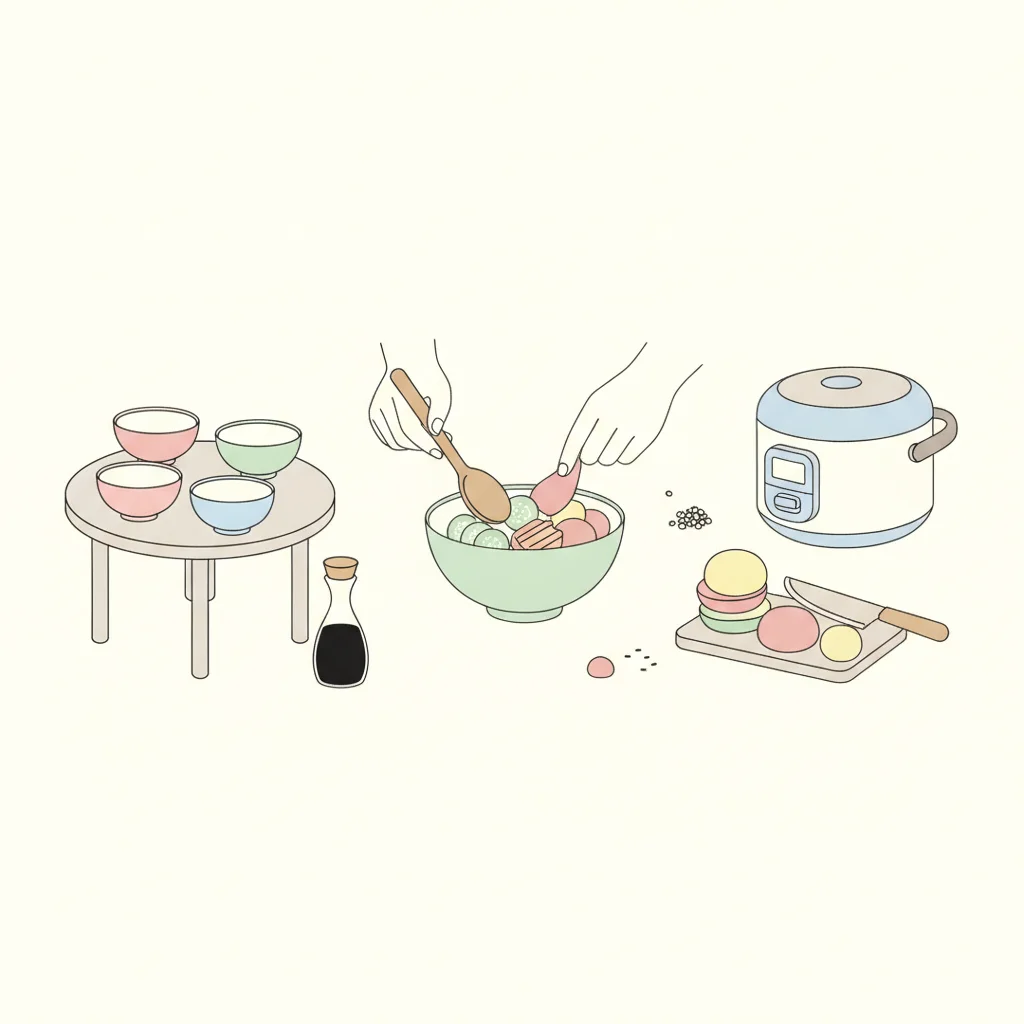
Method:
- Boil sprouts 5 minutes, drain, rinse with cold water
- Squeeze out excess water
- Mix with all seasonings
- Serve cold
Easy Sigeumchi Namul (10 minutes)
Ingredients:
- 1 bunch spinach (200g)
- 1 tablespoon soy sauce
- 1 tablespoon sesame oil
- 1 clove garlic, minced
- 1 teaspoon sesame seeds
Method:
- Blanch spinach 30 seconds, shock in cold water
- Squeeze out all water (very important)
- Cut into 5cm lengths
- Mix with seasonings
Banchan Phrases for Restaurants
| English | Korean | Pronunciation |
|---|---|---|
| More banchan please | 반찬 더 주세요 | Banchan deo juseyo |
| More kimchi please | 김치 더 주세요 | Kimchi deo juseyo |
| What is this? | 이게 뭐예요? | Ige mwoyeyo? |
| Is this spicy? | 이거 매워요? | Igeo maewoyo? |
| Delicious! | 맛있어요! | Mashisseoyo! |
| No meat/fish? | 고기/생선 없어요? | Gogi/saengseon eopseoyo? |
Why Banchan Culture Matters
Banchan represents core Korean values:
- Community: Sharing from common dishes builds connection
- Balance: Multiple flavors and textures create nutritional harmony
- Generosity: Free refills reflect hospitality culture
- Seasonality: Banchan change with available ingredients
Understanding banchan transforms your Korean dining experience from simply eating food to participating in a cultural tradition that has sustained Korean tables for centuries. Take your time, try everything at least once, and don’t be shy about asking for more of your favorites.
Learn more about Korean side dishes at Banchan on Wikipedia.
Related Guides
- Korean Food Guide: What Makes It Unique
- Kimchi Guide: Types and Taste Levels
- Korean Soups and Stews Guide
- Korean Rice Guide
- Korean BBQ Guide