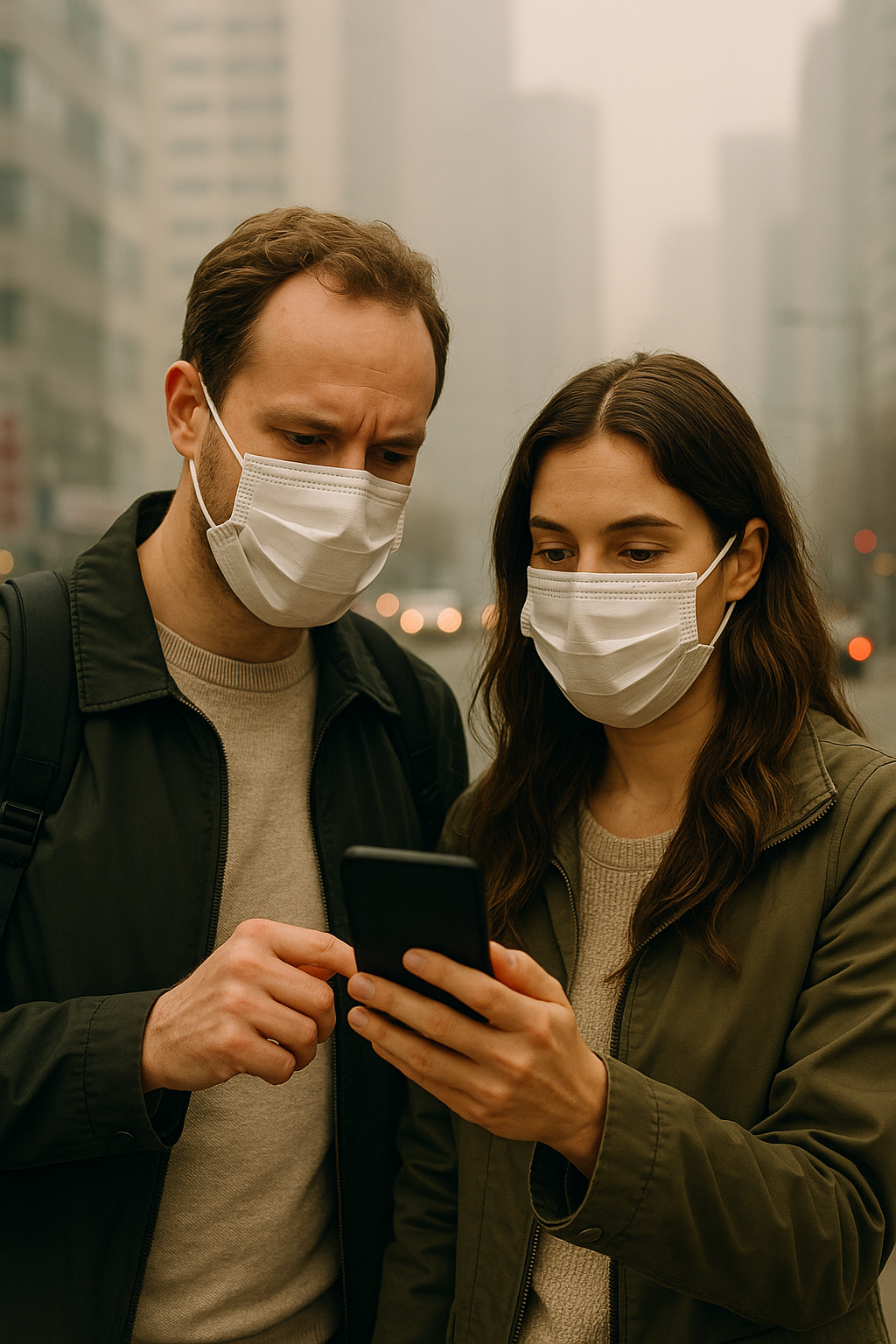
The air in Korea has moods. Some days it’s crisp, bright, and clear. You can see mountains miles away. Other days it’s like someone put a beige Instagram filter over the whole sky.
That’s mise monji. Fine dust. Korea’s least favorite seasonal visitor.
When I first moved here I thought people were exaggerating. “It’s just smog” I told myself. Then spring hit and I couldn’t stop coughing. The air tasted metallic. My phone kept sending ominous “air quality alert” notifications. And I finally understood why every Korean family owns an air purifier.
If you’re new here managing fine dust isn’t just a health precaution. It’s survival.
What Fine Dust Actually Is (and Why It’s Everywhere)
Fine dust in Korea comes from a cocktail of sources. Domestic pollution. Industrial output from China. Car exhaust. And weirdly yellow dust from Mongolia’s deserts. These particles — called PM10 and PM2.5 — are so tiny they can slip into your lungs and bloodstream. Invisible invaders.
PM2.5 is the real villain. It’s about thirty times thinner than a strand of hair. Linked to everything from headaches to long-term respiratory issues. And Korea especially Seoul struggles with it from late fall to early spring. The government even has a name for the worst days. “High concentration fine dust emergency reduction measure.”
Sounds dramatic because it is.
Read a Korean government report once claiming up to thirty percent of fine dust blows in from abroad. The rest local. But depending on which scientist you ask that number flips. Nobody fully agrees. What’s certain is it’s getting better slowly. But not fast enough.
Checking Air Quality Like a Local
Every Korean checks air quality like the weather. Practically a ritual. There are several apps and websites for this but not all are foreigner-friendly. The best ones are:
AirVisual – English interface, global coverage, super reliable.
Korea Air Quality (by Plume Labs) – Simplified and color-coded. Easy to read.
Naver Weather or Kakao Map – If you’re comfortable with Korean menus.
You’ll see numbers like PM10 and PM2.5 listed. Often color-coded:
Good – Blue sky days. Rare but magical.
Moderate – You can breathe. No worries.
Bad – Mask up.
Very Bad – Stay indoors. Cancel hikes. Surrender.
Pro tip. Many locals also install small indoor air sensors. Gadgets that monitor your apartment’s air in real time. Mine once hit “red” after I cooked kimchi jjigae with the windows closed.
Lesson learned.
Masks: Not Just for Pandemics
If you thought masks disappeared after COVID think again. Koreans were wearing them for fine dust long before. On bad days everyone pulls out KF94 masks. Korea’s gold standard. Equivalent to N95 in the U.S.
KF stands for “Korea Filter” and the number indicates filtration efficiency. KF80 blocks eighty percent of particles. KF94 blocks ninety-four percent. You’ll see them everywhere. Pharmacies, convenience stores, even vending machines. Prices range from five hundred to one thousand won each. Cheap insurance.
Foreigners sometimes resist masks out of habit. But honestly? It makes a huge difference. Without one you’ll feel dryness in your throat by afternoon. With one the day feels normal. Worth the minor discomfort.
A lot of Koreans match their mask color to their outfit. There’s fashion in function here. Once saw someone wearing a designer KF94 with gold trim.
Korea man.
Air Purifiers: Your New Best Friend
If you plan to live here longer than a few months get an air purifier. You’ll find models from Coway, LG, Samsung. And cheaper brands like Winix. Even budget ones around one hundred thousand won work decently for small studios. Investment pays off.
The key is to check the CADR rating. Clean air delivery rate. And filter replacement cost. Cheap purifiers with expensive filters are a trap. Hidden costs hurt.
Place it near where you sleep. Bedrooms collect dust faster than you think. And if your apartment came with a built-in air system clean the filter regularly. Landlords rarely mention that. Can get nasty.
I also keep a humidifier running in winter because dry dusty air wrecks your throat. Korea’s indoor heating dries everything out. Combine that with dust and you’ll sound like you swallowed sandpaper. Not fun.
Small Daily Habits That Help (More Than You’d Think)
Keep windows closed on “bad” days. Especially in the morning when pollution peaks. Counterintuitive but necessary.
Wipe surfaces often. Fine dust settles fast. Especially near windows.
Use wet cleaning methods. Sweeping just redistributes dust. Mop or wipe instead. Actually effective.
Change clothes after coming indoors. Dust clings to fabric. More than you’d expect.
Don’t air-dry laundry outside on high-dust days. It’ll come back dirtier. Ironic.
Drink lots of water and eat fruits. Vitamin C and hydration help your body process pollutants. Small boost.
And yeah you’ll feel slightly paranoid doing all this. But once you breathe clean air again it’s worth it. Every precaution justified.
Managing Air Quality at Work and School
Most Korean offices and schools now have air purifiers installed. But they’re not always enough. If you work in an older building consider keeping a desk purifier or mini humidifier nearby. They’re cheap. And no one will question it. Half your coworkers probably have one too. Normalized.
Students often carry masks year-round. Schools even announce “fine dust days” canceling outdoor PE classes. Seen kids cheering for canceled sports because of bad air.
Only in Korea.
Some companies take it seriously. Offering “fine dust leave” or sending alerts through office chat. Others just shrug. Really depends on management’s attitude. Luck of the draw.
The Emotional Side: Fine Dust Fatigue
There’s a kind of low-grade sadness that comes with consecutive “very bad” air days. You wake up. Check your phone. See another red icon. And sigh.
Plans get canceled. Windows stay closed. The world feels smaller.
Even Koreans complain constantly about it. On Naver News you’ll see endless comment threads like “When will this end?” or “I miss fresh air.” You’re not being dramatic. Fine dust genuinely affects mood. Real psychological weight.
I deal with it by planning “clean air days.” When the forecast says “good” I go outside immediately. Hike, sit by the Han River, anything. It’s like celebrating temporary freedom. Small joys magnified.
Apps, Gadgets, and Weird Tricks
If you’re tech-inclined Korea’s got you covered:
Smart Air Purifiers – Connect to Wi-Fi. Adjust automatically when dust rises. Future living.
KakaoTalk Dust Alerts – Yes you can set notifications for fine dust levels. Everything integrated.
Window filters – Mesh-like sheets you can attach to open windows. Filtering out most particles.
Some locals even tape wet gauze to their fans as DIY filters. Tried it once. Looked ridiculous but worked surprisingly well. Don’t knock it.
Also plants help. A little. Snake plants, spider plants, and peace lilies are popular for filtering small indoor toxins. Don’t expect miracles though. They’re more mood boosters than actual solutions. Psychological comfort counts.
Long-Term Outlook: Is It Getting Better?
Kind of. The Korean government and local cities have invested in green zones. Electric buses. And emission controls. Seoul even bans old diesel vehicles on bad days now. Progress happening.
But weather patterns and industrial factors across the region mean it’s an ongoing battle. Not a quick fix.
Good news? Awareness is sky-high. Pun intended. You’ll rarely meet a Korean who doesn’t track air quality daily. The culture around managing it — masks, apps, purifiers — is already deeply ingrained. So even as a foreigner you’re stepping into a society that’s adapted impressively well to invisible pollution. System in place.
The Bottom Line
Fine dust won’t ruin your life in Korea. But it will shape your habits. You’ll develop a sixth sense for clean air. Learn to check PM2.5 before brunch. And appreciate the rare crisp-blue mornings like never before. New normal.
And honestly there’s something bonding about it. Everyone — locals, foreigners, students, grannies — facing the same invisible enemy. You start to feel part of the rhythm. Even if it’s one that makes you sneeze sometimes. Shared struggle creates connection.
FAQ
When is fine dust worst in Korea? Usually between November and April. Peaking in spring. Brutal season.
Is it safe to go outside on bad days? Short trips are fine but wear a KF94 mask and avoid exercise. Minimal exposure.
Can I open windows for ventilation? Only when levels are “moderate” or better. Otherwise sealed shut.
Are air purifiers expensive? Not really. Decent ones start around one hundred to one hundred fifty thousand won. Affordable.
Do all apartments have air systems? Newer ones do but older officetels don’t. Bring your own purifier. Safety net.
Does the fine dust really come from China? Partly. But local emissions also play a big role. It’s complicated. No simple answer.
Can plants clean the air? A bit but not enough to replace a real purifier. Marginal help at best.
Weird question — can you feel fine dust? Yeah. Your eyes sting slightly and the air smells faintly burnt. You’ll know. Physical sensation undeniable.