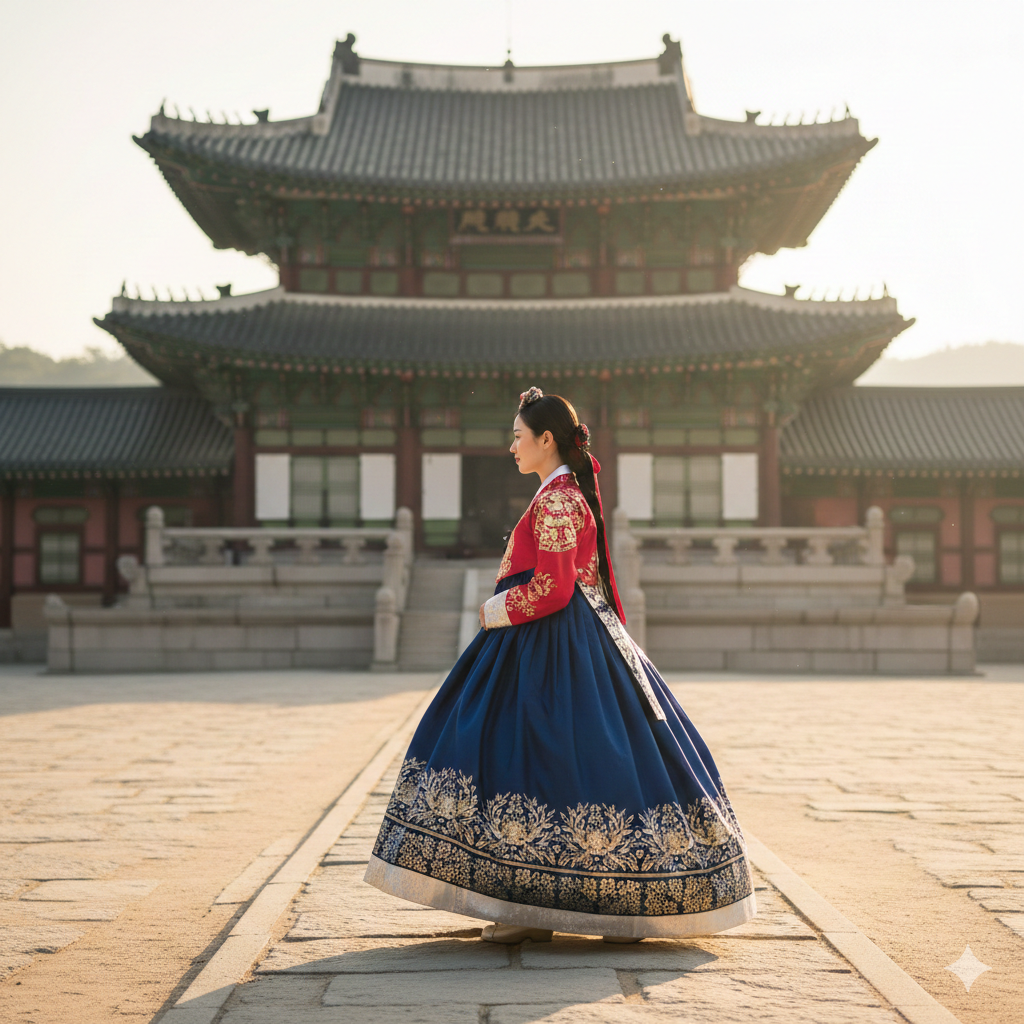
The first time I wore a hanbok, I felt ridiculous for about thirty seconds. Standing in a rental shop near Gyeongbokgung Station, layers of fabric draped over my regular clothes, a ribbon being tied at my chest by a staff member who’d done this ten thousand times — it felt like playing dress-up. Then I stepped outside, walked through Gwanghwamun Gate, and everything shifted. People smiled. A Korean grandmother gave me a thumbs up. Other tourists asked to take photos. And at the ticket booth, the attendant waved me through without charging a won.
That’s the magic of a hanbok experience Korea visitors talk about for years. It’s part cultural immersion, part time travel, and part surprisingly practical hack — because wearing hanbok gets you free entry to Seoul’s five major royal palaces. Whether you’re a tourist passing through or a foreigner living here, it’s one of those things you should do at least once. And honestly, once you’ve done it, you’ll probably want to do it again in a different season.
What Hanbok Actually Is — And Why It Still Matters
Hanbok (한복) is Korea’s traditional clothing. The name literally means “Korean clothes” — 한 (han, Korean) and 복 (bok, clothing). While its origins trace back to the Three Kingdoms period over two thousand years ago, the style most people recognize today was shaped during the Joseon Dynasty.
For women, the basic set is a 저고리 (jeogori, a short jacket) paired with a 치마 (chima, a high-waisted wraparound skirt). For men, it’s a jeogori with 바지 (baji, wide-legged pants). The lines are deliberately soft and flowing — Korean aesthetics have always favored curves that echo nature over sharp, structured tailoring.
What’s interesting is that hanbok wasn’t just fashion. During Joseon, the color, fabric, and style of your hanbok communicated your social class, marital status, and even your mood. Bright colors for children and young women, muted tones for older adults, white for mourning. The clothing was a social language.
Today, most Koreans wear hanbok only on special occasions — Seollal (Lunar New Year), Chuseok (harvest festival), weddings, and first birthday celebrations. But it hasn’t faded into a museum piece. Thanks to the hanbok rental boom near Seoul’s palaces, it’s become a living, everyday sight again — mostly powered by tourists, but increasingly embraced by young Koreans rediscovering traditional aesthetics through modern reinterpretations.
The Free Palace Entry Deal — How Your Hanbok Experience in Korea Saves You Money
Here’s the practical perk that makes the hanbok experience in Korea genuinely worth it beyond the photos. Since 2013, the Cultural Heritage Administration (now Korea Heritage Service) has offered free admission to visitors wearing hanbok at Seoul’s major royal heritage sites. The policy was designed to encourage direct engagement with traditional culture, and it’s still going strong in 2026.
The sites where hanbok gets you free entry are Gyeongbokgung Palace, Changdeokgung Palace, Deoksugung Palace, Changgyeonggung Palace, and Jongmyo Shrine. That’s essentially all of Seoul’s “Big Five” royal sites. Normal adult admission is ₩3,000 per palace, so if you’re palace-hopping across multiple sites in a day, the savings add up quickly — especially for families or groups.
There’s one important rule, though: you need to be wearing the full set. Pairing a jeogori top with jeans, or wearing just the skirt with a T-shirt, doesn’t count. The palace ticket staff will check, and partial hanbok won’t get you through. Both the upper and lower garments need to be on. Accessories like headpieces and shoes are nice extras but not required for the free entry.
A couple of notes on specific palaces. Gyeongbokgung is closed every Tuesday (unless Tuesday falls on a public holiday, in which case it opens Tuesday and closes Wednesday instead). Changdeokgung’s Secret Garden (후원, Huwon) requires a separate reservation even with hanbok — it runs guided tours four times daily with a limit of about 50 people per session. And Gyeonghuigung is already free to everyone regardless of what you’re wearing, so hanbok there is purely for the aesthetic.
Oh, and one more thing — admission is also free for everyone on Culture Day (문화의 날, Munhwa-ui Nal), which falls on the last Wednesday of every month. So if your visit happens to land on that day, you get in free whether you’re wearing hanbok or a hoodie.
How Hanbok Rental Works — What to Expect
If you don’t own a hanbok (and most foreigners don’t), renting one is dead simple. The area around Gyeongbokgung Station (Line 3, Exit 4) is packed with rental shops — you’ll see them lining both sides of the street, impossible to miss. There are also clusters near Anguk Station for Changdeokgung and Bukchon, and near Jeonju Hanok Village if you’re traveling outside Seoul.
Prices typically range from ₩15,000 to ₩35,000 for a 2–4 hour rental. Some shops offer full-day or 24-hour options if you want more time. The rental usually includes the full outfit, an underskirt for volume (the poofy silhouette is part of the look), and basic hair styling — simple updos, braids, or decorative pins. Premium packages with elaborate hairstyles, accessories like embroidered pouches, and higher-end fabrics cost more.
The process goes like this: you walk in, browse the racks, pick a color and style you like, and the staff helps you get dressed. They’re fast — most places can have you ready in about 15 minutes. You don’t need to bring anything special. Just wear comfortable clothes underneath (the hanbok goes right over them) and — this is a crucial tip — wear your most comfortable shoes. The women’s chima skirt goes all the way to the ground, so nobody can see your footwear. Sneakers under a royal-looking hanbok is the unspoken secret of every palace visitor.
Most shops require you to leave an ID (passport or ARC) as a deposit, which you get back when you return the hanbok. Some accept a credit card hold instead. Return times are strict — if you’re late, expect an overtime charge.
One thing I’d recommend: go early. The hanbok experience Korea rental shops and palaces get crowded after 11 AM, especially on weekends. Arriving when shops open around 9 AM means shorter lines, better outfit selection, and softer morning light for photos.
Best Places for Your Hanbok Experience in Korea — Beyond Seoul
While Gyeongbokgung is the most iconic spot, a hanbok experience in Korea extends far beyond Seoul’s palaces. Here are some of the best locations where traditional clothing and traditional landscapes come together beautifully.
Bukchon Hanok Village (북촌한옥마을) in Seoul sits between Gyeongbokgung and Changdeokgung. The narrow alleyways lined with preserved traditional Korean houses (한옥, hanok) create perfect backdrops for hanbok photos. It’s walkable from either palace, so many people combine a palace visit with a Bukchon stroll. Just be mindful — this is a residential neighborhood. Keep noise down and be respectful of the locals who actually live there.
Jeonju Hanok Village (전주한옥마을) is arguably the best hanbok destination outside Seoul. With over 700 preserved hanok buildings, it’s the largest traditional village in Korea. The rental shops are everywhere, prices are often cheaper than Seoul, and the atmosphere feels more relaxed. Jeonju is also famous for bibimbap, so you can combine your hanbok stroll with one of Korea’s best meals.
Gyeongju (경주) is sometimes called “the museum without walls.” The Daereungwon Royal Tombs area, with its massive grass-covered burial mounds, creates a surreal landscape that pairs perfectly with hanbok. The Cheomseongdae observatory and Donggung Palace ruins are also popular photo locations.
Korean Folk Village (한국민속촌) in Yongin, about an hour south of Seoul, is a living museum that recreates Joseon-era village life. Wearing hanbok here feels less like cosplay and more like blending in — the entire environment is designed around traditional architecture, farming demonstrations, and cultural performances.
Ikseon-dong (익선동) in Seoul has become a trendy spot where hanbok meets modern cafe culture. The neighborhood preserves unique 1920s–30s urban hanok buildings that have been converted into retro cafes, bars, and boutiques. The aesthetic contrast of traditional hanbok against vintage interiors makes for photos that feel uniquely contemporary.
Practical Tips for Getting the Most Out of Your Hanbok Day
A few things I wish someone had told me before my first hanbok outing:
Check the weather. Hanbok isn’t exactly designed for modern comfort. In summer (June–August), the layers can get uncomfortably hot — try to go early morning or late afternoon. In winter (December–February), bring a padded coat to throw over the hanbok between photo spots. Spring (April–May) and autumn (October–November) are ideal — comfortable temperatures, and cherry blossoms or fall foliage add incredible color to your photos.
Plan your route. If you’re starting at Gyeongbokgung, a natural flow is: palace grounds → exit through the east gate → walk to Bukchon Hanok Village → continue down to Changdeokgung. That’s easily a half-day in hanbok without backtracking. If you’re doing multiple palaces, there’s a combined palace ticket that covers all four palaces plus Jongmyo for ₩10,000 — though wearing hanbok makes the ticket unnecessary.
Be careful on stairs and uneven ground. Palace grounds have stone steps, gravel paths, and raised thresholds everywhere. The long chima skirt can catch on things. Lift it slightly when walking over uneven surfaces. And watch out for wind — an unexpected gust and a billowing skirt can create, let’s say, memorable moments.
Don’t skip the Changing of the Guard ceremony at Gyeongbokgung. It happens at 10 AM and 2 PM at Gwanghwamun Gate and lasts about 20 minutes. Watching it while you’re also wearing traditional clothing adds a layer of immersion that’s hard to replicate. And it’s free — you don’t even need to enter the palace to watch it.
Photos with Koreans. Don’t be surprised if Korean visitors — especially older ones — want to take photos with you in hanbok. Foreigners wearing hanbok tend to get a warm reception. It’s a small cultural bridge that works both ways. I’ve had complete strangers compliment my outfit, help adjust my ribbon, and even suggest better angles for photos. The hanbok experience Korea locals appreciate most is when visitors genuinely engage with the tradition rather than treating it like a costume.
FAQ
How much does hanbok rental cost near Gyeongbokgung?
Most shops charge between ₩15,000 and ₩35,000 for a 2–4 hour rental. Basic packages include the outfit, underskirt, and simple hair styling. Premium options with fancier fabrics, elaborate hairstyles, and accessories like headpieces and embroidered pouches run higher. Some shops also offer couple or family packages at a slight discount.
Do I need a reservation to rent hanbok?
Generally, no. Most rental shops around Gyeongbokgung and Anguk operate on a walk-in basis. However, during peak seasons — cherry blossom season (April), autumn foliage (October–November), and Korean holidays — popular shops can get crowded. If you have a specific shop or outfit style in mind, booking online through Naver or Klook in advance isn’t a bad idea.
Can men wear hanbok too?
Absolutely. Men’s hanbok is available at every rental shop and includes a jeogori jacket with baji pants, often paired with a vest (조끼, joggi) and a traditional hat called a 갓 (gat) for an extra fee. It’s less common to see male tourists in hanbok than female, but it’s becoming more popular — and the free palace entry applies regardless of gender.
Does modern or fusion hanbok count for free palace entry?
The palace policy requires traditional-style hanbok — specifically, both the upper garment (jeogori) and lower garment (chima or baji). Modern reinterpretations that clearly resemble hanbok generally pass, but heavily modified designs that look more like regular modern clothing might not. When in doubt, stick with the traditional-style rentals available near the palaces — those are designed to qualify.
Which palace is best for hanbok photos?
Gyeongbokgung is the most popular for a reason — the scale is grand, the architecture is stunning, and the Geunjeongjeon throne hall and Gyeonghoeru Pavilion provide iconic backdrops. Changdeokgung’s Secret Garden offers a more intimate, nature-heavy aesthetic. Deoksugung’s stone wall path is particularly beautiful in autumn. If you want fewer crowds, Changgyeonggung is often the quietest of the five.
Is the Changdeokgung Secret Garden free with hanbok?
The general admission to Changdeokgung is free with hanbok, yes. However, the Secret Garden (후원) requires a separate reservation and additional fee — typically ₩5,000 for adults — even if you’re wearing hanbok. Tours run four times daily with limited spots, so book ahead through the Korea Heritage Service website.
Can I wear hanbok in the rain?
You can, but most rental shops prefer you don’t — the fabric can get damaged, and you may be charged for cleaning or repair. If rain is in the forecast, check with the shop about their weather policy before heading out. Some offer rain covers or suggest rescheduling. An umbrella works in light drizzle, but heavy rain and hanbok don’t mix well.
Are there hanbok rental options outside of Seoul?
Yes, widely. Jeonju Hanok Village has dozens of rental shops, often cheaper than Seoul (around ₩10,000–₩20,000). Gyeongju has rentals near the Daereungwon area. The Korean Folk Village in Yongin also offers rentals on-site. Even smaller cities like Andong and Suwon have options near their traditional villages and fortresses.
Is wearing hanbok culturally appropriate for foreigners?
Absolutely — and it’s actively encouraged. Koreans generally love seeing foreigners in hanbok. It’s seen as a sign of respect and interest in Korean culture, not appropriation. The entire rental industry exists to make the experience accessible to visitors. If anything, you’ll get more positive attention and warmer interactions than usual.
What’s the most unique hanbok experience Korea offers?
For something beyond the standard palace visit, try a nighttime hanbok experience during one of the seasonal palace night tours. Gyeongbokgung and Changdeokgung both offer limited-run moonlight tours where the palace grounds are lit up with traditional lanterns. Walking through in hanbok at night is genuinely magical — but tickets sell out months in advance, especially for spring and autumn sessions.
There’s a reason the hanbok experience Korea travelers rave about has become one of the most-recommended activities for anyone visiting. It’s not just about the photos — though yes, the photos are incredible. It’s the feeling of walking through spaces that are 600 years old while dressed in something that connects you to the people who built them. For an afternoon that costs less than a nice lunch, you get a cultural experience that’s hard to find anywhere else. And the free palace entry? That’s just the cherry on top.