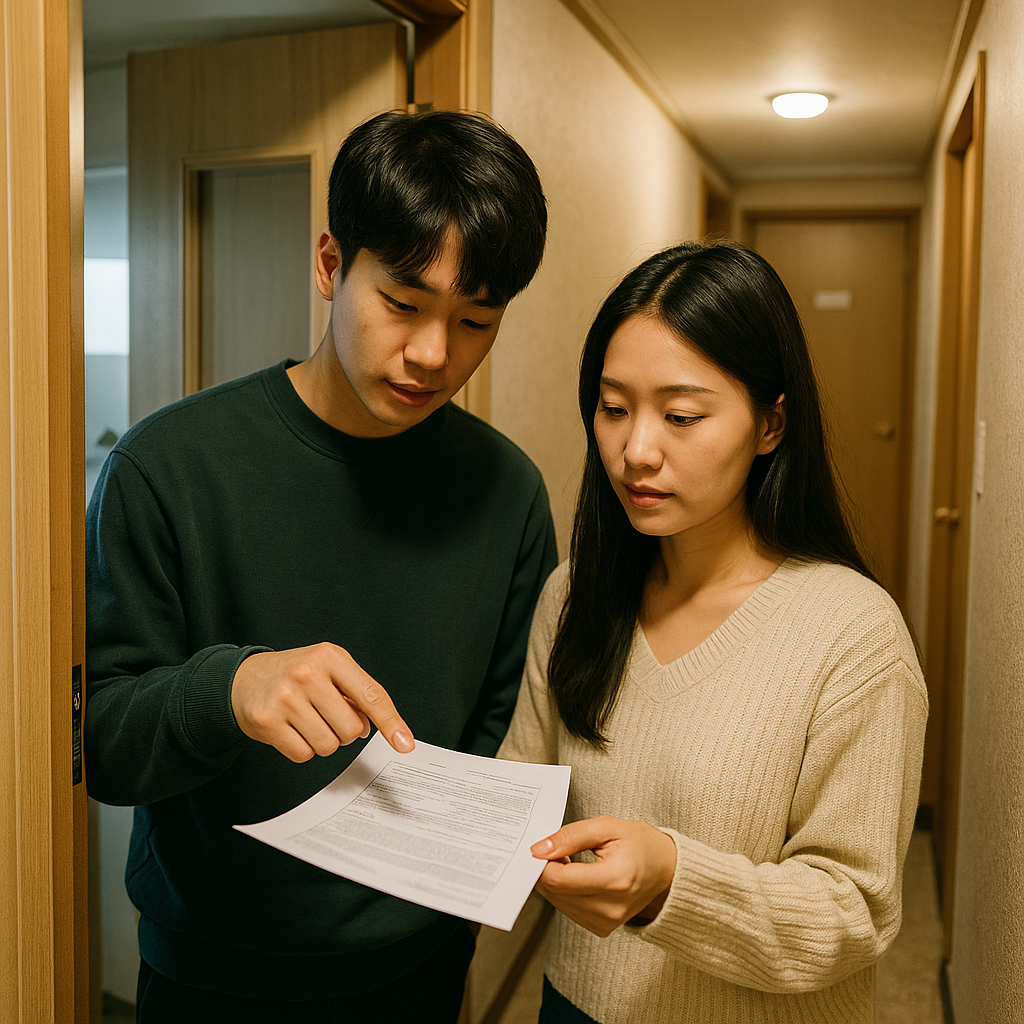
When I first tried to rent a goshiwon in Seoul, I expected something like a normal lease. You know, a deposit, a monthly rent, a paper contract. But no. What I got was a mix of verbal agreements, faded printouts, and rules that were half unwritten. Turns out, goshiwon contracts are their own little ecosystem — shaped by old-school Korean housing culture, convenience, and sometimes, pure chaos.
Some goshiwons give you a neat little contract form, others just point to a notice board and say “same for everyone.” But underneath that informal surface, there’s a structure. It’s just… different.
What a Goshiwon Contract Usually Includes
Thing is, a goshiwon contract is technically a lease agreement, but most aren’t registered like normal apartments. They’re more like room rentals — private dorms, kinda. Usually, you get a short written contract or sometimes just a confirmation message on KakaoTalk. Yeah, that’s legally valid here.
You’ll see sections for:
- Monthly rent (most of the time)
- Move-in and move-out dates
- Rules about noise, cooking, guests, etc.
- Payment schedule
- Penalties for damage
But the interesting part? There’s almost never a deposit. Or maybe a small one, like ₩100,000. The rent already includes utilities, internet, and rice (yep, rice).
I once stayed in a goshiwon near Sillim where the “contract” was literally a printed A4 sheet with hand-written numbers. The owner said, “No problem, just pay on time.” Later I found out that was pretty standard. Some newer goshiwons in places like Hongdae have digital forms and even e-signatures — especially if they’re run like mini-officetels.
Also, since goshiwons are often classified as “lodgings” under local law, the rules differ from residential leases. This means if something goes wrong — like if the owner suddenly kicks you out — tenant protection laws don’t always apply in the same way. That’s where things get fuzzy.
How Long You Can Stay (and Why It’s Flexible to a Fault)
Most contracts are month-to-month. You pay your rent at the beginning of the month, and if you don’t say otherwise, it auto-renews. Super easy, which is why students and short-term workers love it.
But the flip side is that the owner can also ask you to leave with minimal notice — sometimes just a week. Technically, that’s not legal for longer-term tenants, but goshiwons exist in this weird gray zone. When I talked to a friend who manages one in Daehakro, he said, “We try to give at least two weeks, but if someone breaks rules, they’re gone next morning.”
So if you’re planning to stay for, say, six months or a year, you can. Just make sure that’s written somewhere. Otherwise, your “contract” might vanish as fast as your rice cooker privileges.
Another quirk: some goshiwons raise the rent slightly during exam seasons — especially in cities with big universities like Daejeon or Busan. I couldn’t confirm if that’s legal, but I’ve seen price lists change mysteriously around April and October. Coincidence? Maybe.
When Things Go Wrong: Cancellations, Deposits, and Weird Disputes
If you decide to leave early, there’s usually no penalty — unless the owner’s mood says otherwise. Some will keep one week’s rent as a “cleaning fee.” Others just shrug and say okay. I once read a Reddit thread where someone said their goshiwon owner refused to return the key money (₩200,000) because they “didn’t clean properly.” No cleaning standard was mentioned in the contract, of course.
And because most goshiwon deals are informal, taking disputes to court is rare. People just move out and warn others online. On Korean Naver Cafés like goshiwon.net , you’ll find tons of reviews complaining about mold, noise, or sudden eviction — but hardly anyone mentions legal action.
Some owners are fair, though. I met one in Gangnam who gave me a printed refund policy: leave early, get 50% of the unused days back. Very un-Korean in its precision.
If you’re a foreigner, they might ask for your passport or ARC number. Don’t freak out — it’s usually for registration. But always make sure you take photos of your payment receipts or transfer records. That’s your only “proof” if something happens.
Actually, that reminds me — one goshiwon even had a clause about “no foreign food with strong smell.” I asked what counts as “foreign.” The ajumma just said, “Curry.”
Why Goshiwon Contracts Survive in the Modern Era
You’d think with officetels, share houses, and apps like Zigbang, goshiwons would fade away. But they haven’t. Mainly because they’re cheap, flexible, and require zero bureaucracy.
Most tenants don’t want the hassle of signing a 1-year lease, paying a deposit, or dealing with building management. Goshiwons are still the fastest way to get a private room in Korea — especially for students, exam takers, and people between jobs.
And since most contracts are off-the-books, it also means fewer taxes and less paperwork for owners. Win-win, sort of. Though, legally, it’s a ticking time bomb.
What’s funny is how goshiwon culture has started merging with modern co-living trends. Some places now call themselves “Goshitel” or “Mini Studio,” but the contracts? Still the same one-page wonders. A few lines, a signature, and trust. Or blind faith, depending on your luck.
I can’t say goshiwon contracts are fair or safe. They’re just… uniquely Korean — built on convenience, informal trust, and a dash of chaos that somehow keeps functioning.
FAQ
Do goshiwons require a deposit?
Not usually. Some might ask for a small refundable amount like ₩50,000–₩200,000.
Can I get kicked out without warning?
Technically, yes. It’s rare, but owners have that power if you break house rules.
What if I lose my room key?
You’ll pay a replacement fee. Sometimes ₩10,000, sometimes ₩50,000, depending on the mood.
Are goshiwon contracts legally binding?
Yes, but weakly. They fall outside some standard tenant protections.
Can I cook in my room?
Almost never. Most places ban it due to fire safety.
I don’t have an ARC yet. Can I still rent?
Often yes, though some may require ID or a deposit first.
Unrelated but… do goshiwons smell weird?
Some do. Older ones especially. Newer ones usually smell like detergent and kimchi.
I don’t know — is there a government site for checking contract safety?
Not really for goshiwons. They’re treated more like accommodations than residences.