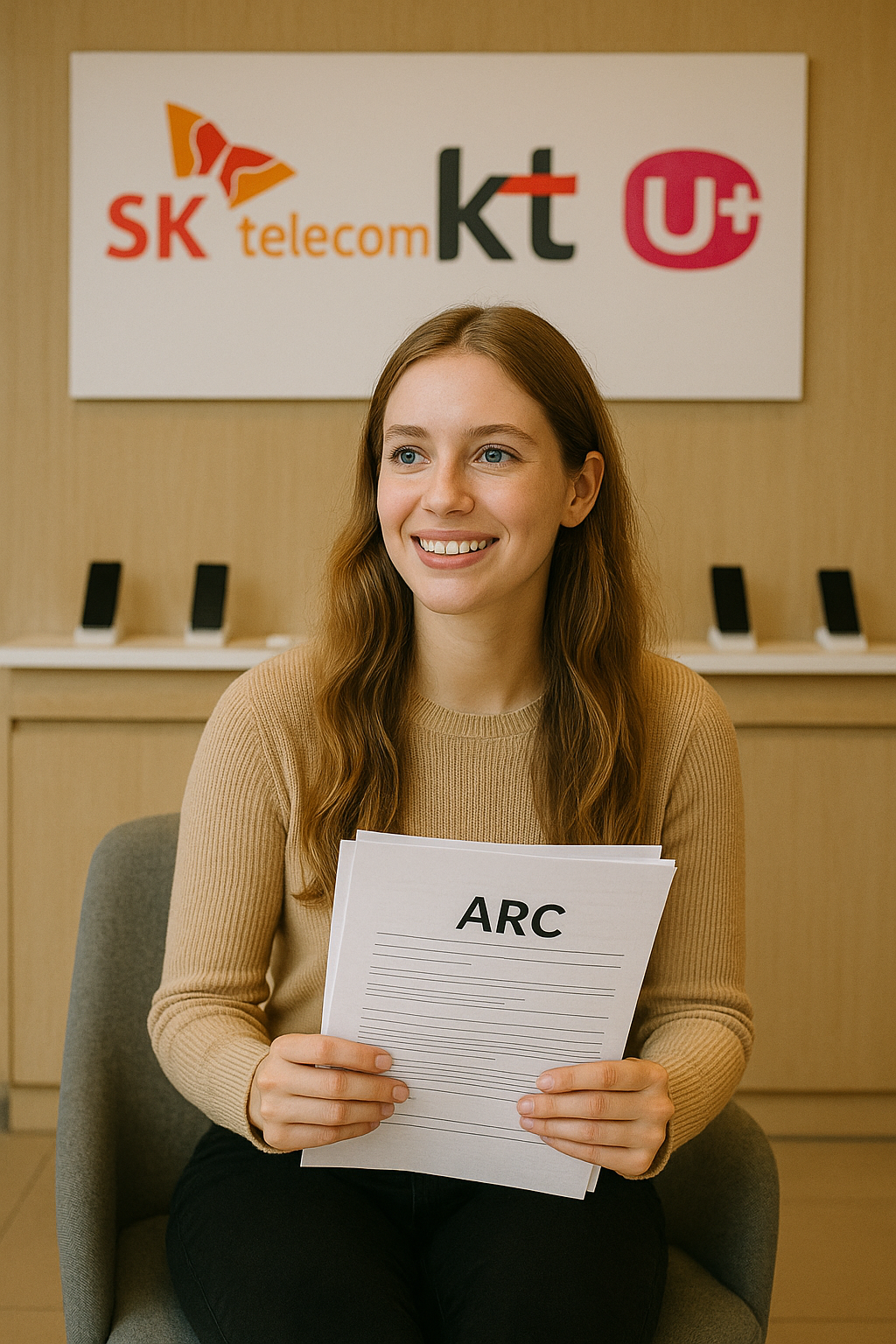
I didn’t expect buying a phone on installment as a foreigner to feel like solving a side quest, but that’s honestly how it went. One shop told me one thing, another shop told me something else, and then a random commenter on a Korean expat forum said the exact opposite. And the funny part? Some of them were all kinda right.
It turns out the whole “what documents foreigners need for phone installment” puzzle isn’t as neatly packaged as people imagine. You’d think there would be a government page with clean answers. I looked. Sorta. Didn’t find one. What I did find was a mix of personal stories, carrier-specific rules, and a few policies that change depending on the staff’s mood (or… my vibe that day).
I’ll piece together the most realistic version of the truth I’ve gathered. Might not be perfect. But it’s real.
Let’s just wander into it.
The Basic Docs Everyone Says You Need
Most shops will immediately ask for three things, and honestly, they’re not wrong. But there were random exceptions during my little research dive, so don’t tattoo this list on your arm.
Passport
And oddly, even when they technically don’t need it, they kinda want you to show it. I guess it just reassures them you’re a real human and not someone testing out deepfake IDs.
ARC (Alien Registration Card)
This one is basically non-negotiable if you’re in Korea. I heard one dude on Reddit say he got a phone plan without it, but later he admitted it was prepaid, so that didn’t help at all. For installments, the ARC is the golden ticket — but not because of your name. It’s because of that tiny expiration date printed on it, which quietly controls whether they’ll approve you.
Korean Bank Account + Debit Card
Or sometimes credit card, or sometimes both, depending on whether the carrier slept well that morning. Thing is, the bank account proves you can autopay. At least, that’s what the employee told me before staring at my name for a long moment like he was decoding runes.
But here’s something annoying: some carriers require the bank account to be at least 90 days old. I tried confirming this. Couldn’t. Found contradictory posts. But it happened to at least two people who messaged me, so I’m mentioning it.
Why Your Visa Type Suddenly Matters
I didn’t expect visa types to play such a petty role, but wow, they do. F-type visas? Carriers practically roll out a little emotional welcome mat. Short-term visas? They hesitate like you’ve asked to borrow their car.
Longer Stays, Easier Approvals
If your visa has a longer period of stay — like a year or more — the installment approval seems to magically get smoother. One staff member explained (in a very tired voice) that the installment plan technically lasts 24–36 months, so if your visa expires before that, the carrier sees you as someone who might leave early.
Is that fair? Not really. But it’s a system, and systems aren’t famous for nuance.
Short-Term Visa? Brace Yourself
Someone on a Telegram group told me they were denied by three different stores because their visa had only five months left. Another guy said the fourth store approved him anyway. I don’t know if the fourth store had a more optimistic view of humanity or if the guy just got lucky.
All I know is: visa length feels like a floating rule. Sometimes strict. Sometimes nobody cares.
When They Ask for “Extra Documents” (This Part Gets Messy)
Here’s where the whole story stops being clean and starts being human. I’ve seen people asked for:
- proof of employment
- business registration (for freelancers)
- a Korean guarantor
- income statement printouts
- and honestly, one guy said they asked for his university enrollment certificate
I couldn’t verify that last one. Might’ve been a bored staff member. Or an overeager one.
Employment Contract
If you’re on an E-2, E-7, D-series visa, or anything remotely job-related, some shops ask for your work contract. It’s not written anywhere official; it’s more like a “we want proof you’re staying” thing.
Korean Credit Card
This isn’t exactly a document, but sometimes it replaces all the other stuff. A Korean credit card is basically the carrier’s way of saying, “Okay, you exist in the system now.”
If you have one, your chances go way up.
If you don’t, nobody tells you directly that it’s a disadvantage, but you’ll feel the vibe.
Guarantor
This only comes up occasionally, and usually when everything else is borderline. It’s rare, but it pops up enough that I think shops keep it in their back pocket for difficult cases.
The Strange Truth About Different Carriers
This part surprised me the most. You’d assume SKT, KT, and LGU+ all follow the same government guidelines. I assumed that too. Was wrong.
SKT
Feels the strictest. They rejected someone I know even though his visa had 11 months left. No explanation. Just a simple “불가요.”
KT
Weirdly flexible in some neighborhoods and super intense in others. There’s a rumor they’re more foreigner-friendly. My experience didn’t confirm it, but I get why people say it.
LG U+
People love to say they’re the easiest for foreigners. I don’t fully believe that — but a surprising number of expats do walk out with successful applications here after getting rejected elsewhere. So maybe there’s truth to it… kind of.
And then there are the reseller shops (알뜰폰), which are the wild west. Some of them approve you with practically nothing. Some of them refuse to do installments for foreigners entirely. It’s chaos.
My Own Small Conclusion (Not Universal. Not Perfect.)
After collecting random stories, digging through forums, and bothering more friends than necessary, here’s what feels like the closest thing to a practical reality:
- ARC with at least 6+ months remaining
- Korean bank account
- A job contract OR stable visa type
- A dash of staff mood
- And sometimes a second shop (or third)
Installment approval for foreigners is less like a formal checklist and more like a “case-by-case” situation nobody officially acknowledges.
But honestly, trying a different branch sometimes works like magic. Maybe we should all do that before stressing too much.
FAQ
Do I need a Korean credit card?
No, but it helps a lot. Think of it as skipping the suspicious eyeballing phase.
Short answer: required docs?
ARC, passport, bank account. Everything else is optional-ish.
Why did one store reject me but the next store approved me?
Because inconsistency is the unofficial national policy for phone installments.
Can tourists do installments?
No. Or maybe yes for one very specific scenario I heard about but couldn’t verify. So mostly no.
Do I have to prove income?
Sometimes. Not always. Depends on how complicated your situation looks.
My visa ends in 3 months. Any hope?
Probably not. But try LG U+. I’ve heard surprising stories.
What about using a prepaid SIM instead?
You can. But no installments there.
Unrelated but… what’s the best Korean convenience store snack?
Honey-butter chips. Don’t argue with me.
I don’t know which carrier is best.
Same. Still figuring it out.