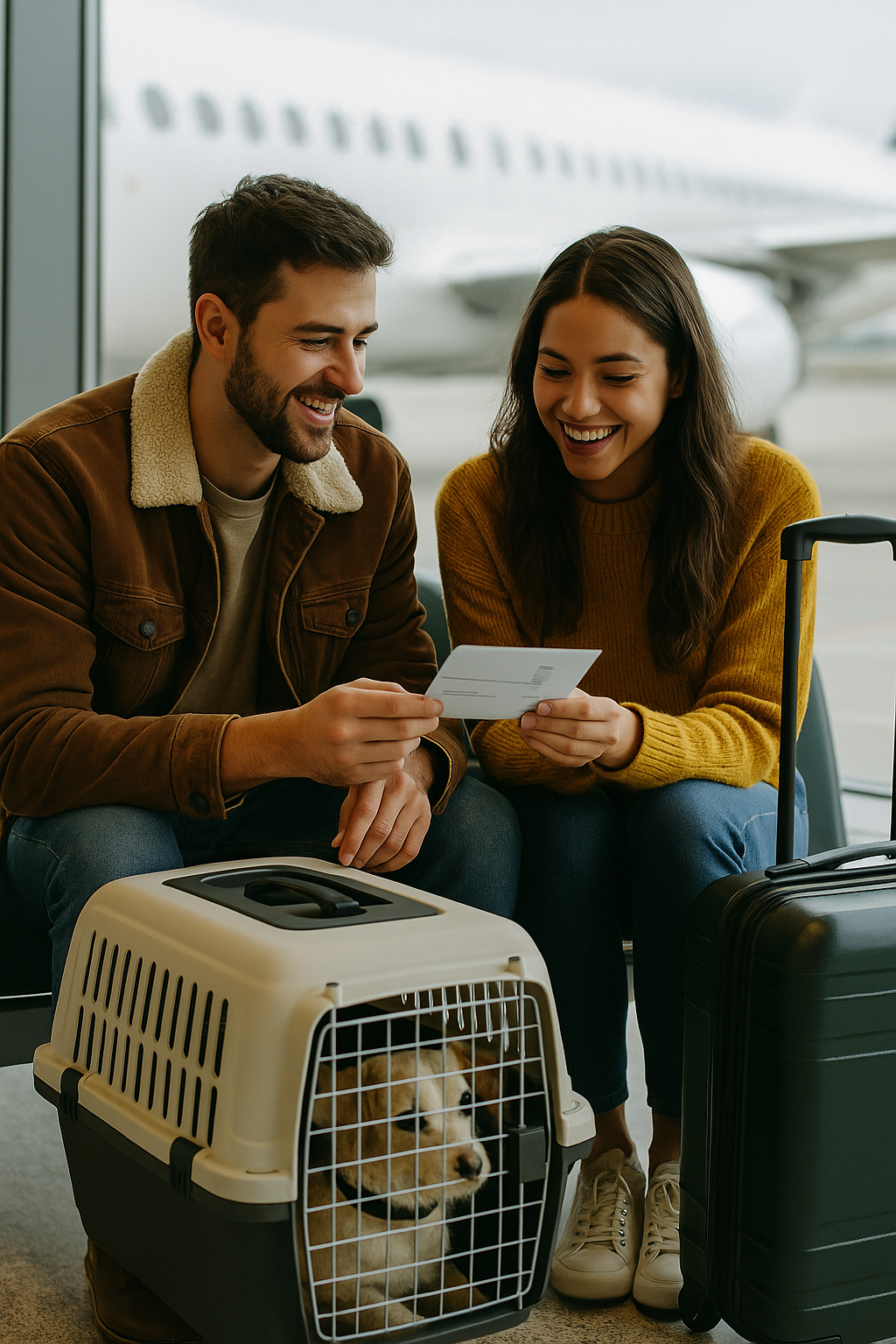
Flying with pets is never relaxing — not when you’re worrying about temperature limits, paperwork, and whether your furry best friend will actually make it on the same flight as you. Add South Korea’s famously detailed import rules on top of that, and it can feel like a logistical nightmare.
When I moved to Korea with my dog, I spent more time comparing airline pet policies than booking my own ticket. Some carriers acted like bringing a Chihuahua was an act of terrorism. Others were surprisingly chill. After a few years of helping other expats navigate the same journey, I’ve realized that the right airline can make or break the experience — not just for your wallet, but for your pet’s sanity.
So, let’s talk about which airlines actually do this well, which ones to avoid, and the sneaky details you’ll want to check before you click “book.”
The Short Answer (and Long Flight Reality)
The two airlines that consistently handle pet travel to Korea the best are Korean Air and Asiana Airlines. They’re the only major carriers based in Korea that have established systems for processing animal passengers — both in-cabin and in cargo.
That said, some international airlines (like Lufthansa, Air France, and Delta) also do a solid job, depending on your route. What matters most is matching your pet’s size and weight to the airline’s policies, and booking early enough to secure a pet slot (yes, there’s a quota).
Here’s the breakdown — with real traveler impressions and a few cautionary notes I wish someone had told me earlier.
Korean Air: The Gold Standard for Pet Travel
Korean Air has been the go-to choice for pet owners for years, and for good reason. Their “Skypets” program is one of the most organized systems I’ve seen.
Cabin travel:
- Pets under 7 kg (including carrier) can travel in-cabin.
- The carrier must fit under the seat and be soft-sided.
- Fee: around $100–$200 USD per pet, depending on route.
Checked baggage:
- Medium pets (7–45 kg including carrier) go in the temperature-controlled hold.
- You’ll need an IATA-approved crate.
- Fee: roughly $200–$400 USD, again depending on route and weight.
Why it’s good:
- Staff are trained for pet handling — they don’t panic when you show up with a live animal.
- You can track pets in cargo for long-haul flights.
- Their website clearly lists pet restrictions and documents needed for Korean import clearance.
Why it’s not perfect:
- Only one pet per cabin passenger.
- Larger breeds can’t always be accommodated on smaller planes.
- Not every route allows in-cabin pets — some long-haul flights limit it.
Still, if your pet meets the weight limit, Korean Air is your safest bet for a smooth arrival and a pet-friendly customs experience at Incheon.
Asiana Airlines: The Reliable Runner-Up
Asiana is another major Korean airline that handles pet travel quite well. The rules are similar to Korean Air’s, though slightly stricter in terms of space and scheduling.
Cabin travel:
- Pets under 7 kg (including carrier) allowed.
- Dimensions of the carrier must be small enough to fit under the seat.
- Fee: around $100–$150 USD depending on route.
Checked baggage or cargo:
- Pets between 7–45 kg allowed as checked baggage.
- Larger pets must go as air cargo through Asiana’s cargo division.
- Fees vary but usually land between $200–$350 USD.
Traveler impressions:
Asiana’s ground staff tend to be very gentle with animals, but communication can be hit or miss if you’re not fluent in Korean. I once saw a passenger using Google Translate to explain his cat’s medication — the staff were patient and helpful. So, overall, a strong option, especially for flights within Asia.
Air Seoul: The Budget Option That Surprises You
If you’re traveling regionally — say, from Japan, Vietnam, or Thailand — Air Seoul is a lesser-known but fairly pet-friendly budget carrier.
In-cabin only:
- Pets under 7 kg including carrier.
- Must book early; limited slots per flight.
- Fee: roughly ₩150,000 (~$110 USD).
They don’t accept pets as checked baggage or cargo, so it’s only for small animals.
What’s nice is how straightforward they are: you call or email, get confirmation, and that’s it. They’re used to expats traveling with pets around East Asia. But remember — budget carriers mean fewer amenities, more rigid space limits, and stricter enforcement of carrier sizes.
International Airlines That Handle Korea Routes Well
If you’re flying from the U.S., Europe, or beyond, these airlines also rank highly for pet transport:
- Lufthansa: excellent cargo pet care program (they even have an “Animal Lounge” in Frankfurt).
- Air France/KLM: solid in-cabin pet options for small animals, but confirm connections carefully.
- Delta: consistent with documentation checks, decent customer service at Incheon.
- Singapore Airlines: often praised for professionalism, though in-cabin pet travel is rare.
- Qatar Airways: good cargo facilities, but make sure to double-check transfer country regulations.
If possible, avoid excessive layovers — especially in hot or cold climates where pets may have to wait outside climate-controlled zones. Korea’s winters and summers are brutal enough without adding unnecessary risk.
Things Airlines Won’t Tell You (But You Should Know Anyway)
- There’s a pet limit per flight.
Usually 2–4 in-cabin pets per aircraft. If you don’t book early, they’ll simply refuse your request. - Pet + carrier weight includes everything.
That soft blanket? It counts. So does a water bowl. Keep it lean. - Temperature restrictions exist for cargo.
Airlines may refuse to check in pets if the departure or arrival temperature is too high (often above 29°C) or too low. - Your paperwork matters more than your pet’s cuteness.
Even if the airline approves your pet, Korean customs will turn you away without proper microchip, vaccination, and health certificates. - Arrive early.
Like really early — two to three hours before departure minimum. Pet inspection and documentation take time.
My Honest Ranking (After Too Many Flights with Animals)
Here’s how I’d personally rank airlines for pet travel to Korea, based on reliability, care, and ease of process:
- Korean Air — best overall for safety and organization.
- Asiana Airlines — solid alternative with similar standards.
- Lufthansa — great for long-haul cargo pets.
- Air France/KLM — decent choice for small pets in cabin.
- Air Seoul — convenient for regional or budget travel.
If you’re flying from North America, choose Korean Air whenever possible. From Europe, Lufthansa or KLM are great. Within Asia, Asiana or Air Seoul will save you a headache.
Pro Tips for a Smooth Pet Flight
- Call the airline directly. Don’t rely on website booking tools — confirm pet spots with a human.
- Ask for cabin temperature details if your pet is going in cargo.
- Label your carrier with your name, contact info, and destination address in Korea.
- Carry digital and paper copies of your pet’s import documents (APQA loves physical proof).
- Keep calm. Pets pick up on stress faster than you think.
And if you’re the anxious type (like me), track the flight on the airline’s app. Korean Air even updates pet handlers through their cargo system, which helped me sleep during my 14-hour trip.
Final Thoughts
There’s no such thing as a perfect pet airline — just the one that treats your animal like more than a piece of luggage. The key to a smooth journey to Korea is combining the right airline with the right documents. If you prepare properly, you’ll breeze through customs while your pet gets greeted with the same polite efficiency as every other Korean arrival.
Just remember: pets can’t choose their airline — but you can.
FAQ
Which airlines allow pets in-cabin to Korea?
Korean Air, Asiana, and Air Seoul all allow small pets under 7 kg in-cabin.
Can large dogs fly to Korea?
Yes, but they must travel as checked baggage or cargo with an IATA-approved crate.
Is it safe to fly pets to Korea in cargo?
Generally yes, especially with Korean Air or Lufthansa, which have climate-controlled cargo holds.
Do budget airlines in Korea take pets?
Air Seoul does, but others like Jeju Air or Jin Air typically do not for international routes.
Can pets transit through Korea?
Yes, but you must confirm transfer regulations with both the airline and APQA beforehand.
Do airlines check vaccination and microchip records?
Yes, at check-in — and again by Korean customs on arrival.
Unrelated but curious — can pets earn miles on Korean Air?
Not yet, though the Skypets program does have a small rewards system for frequent travelers.