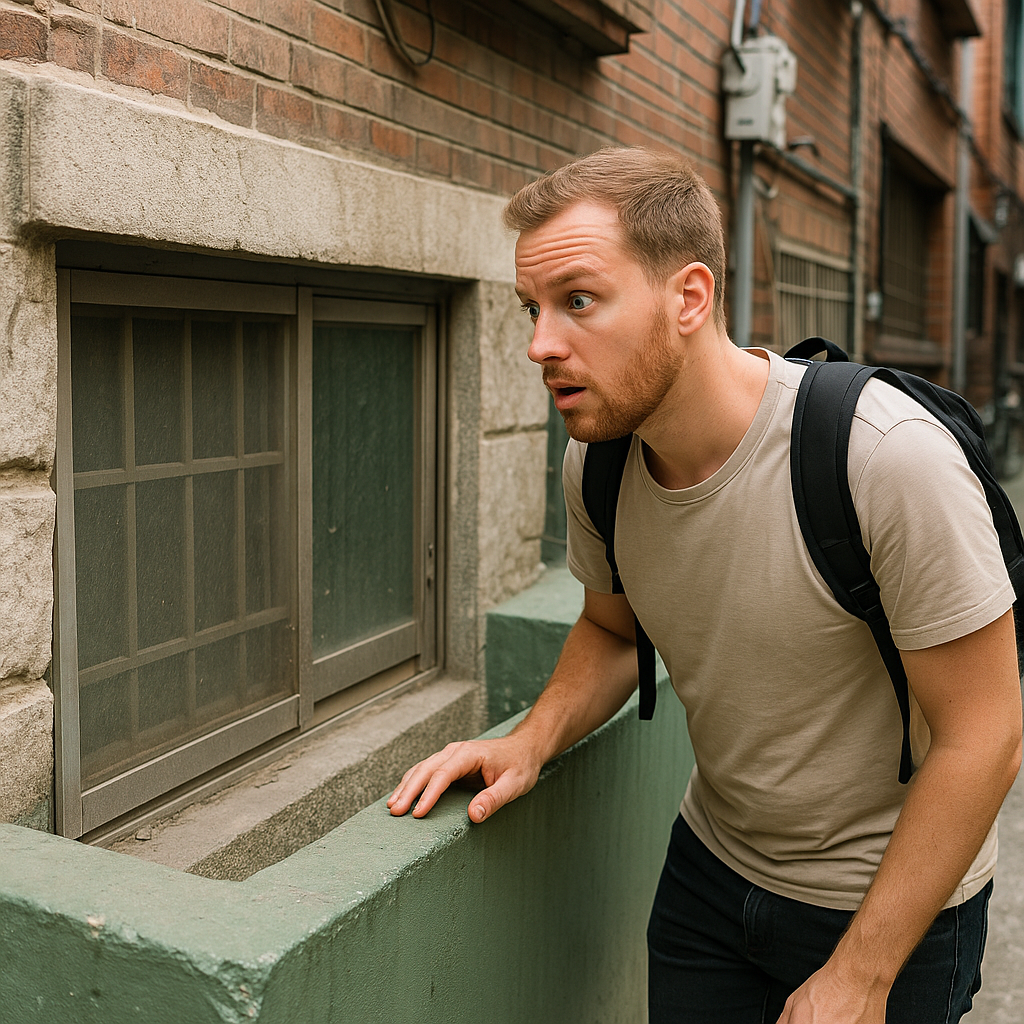
I never understood why this keeps resurfacing. Every time people talk about banjiha units, someone swears they’re borderline unlivable, and someone else says they’re totally fine. After checking a few myself, I kinda realized both sides are right and wrong at the same time. It’s one of those housing types that refuses to fit neatly into “good” or “bad.”
And funny thing—on real estate apps, banjiha listings often look surprisingly clean. Bright walls, tidy floors, decent layout. Then you show up in person and the window faces a drainage trench where water plinks nonstop like a budget ASMR track. Except it doesn’t relax you at all.
Why some banjiha(반지하) are terrible… but not all
Moisture is the classic complaint. Everyone talks about it. But not every banjiha is humid. Newer buildings hold up fine without a dehumidifier running 24/7. But the older ones… you walk in and instantly feel like summer humidity has been waiting there since April.
And oddly enough, people say they’re quiet. Well—not exactly quiet. It’s more like you trade upstairs footstep noise for street-level chaos. Strollers, scooters, random shouting, someone dragging recycling at 6 a.m. You hear all of it. Just a different flavor of noise.
I couldn’t verify this, but I did see a post somewhere claiming banjiha units get more bugs. Maybe. But ground-floor studios get them too, so it probably depends more on the building than the underground factor.
People pick banjiha for the price, but that’s the trap
Everyone assumes banjiha = cheap. But lately? Not really. I checked one place and the monthly rent difference between the basement unit and the upstairs room was maybe 150-ish. At that point, you’re basically paying normal prices for worse ventilation.
I even asked one landlord why the banjiha wasn’t cheaper. He just shrugged and said, “That’s how it is these days.” That kind of answer usually means something else is off.
The real risk nobody likes to discuss
Flooding. Nothing fancy here. After the 2022 disaster, some buildings upgraded drainage, some didn’t, and there’s no easy way to tell unless you ask awkward questions. Ask about pumps or flood history and some landlords suddenly become… vague. Which is never a good sign.
And surprisingly, low light becomes mentally draining. Not dramatic depression-level stuff (at least not for everyone), but the weird fatigue that comes from having to turn on lights at noon.
So is banjiha a bad housing choice?
Not always. But rarely great. Some units genuinely aren’t bad—dry, safe, quiet, decently bright. Those exist, but they’re rare. Most banjiha require a bit of compromise; a few demand a lot of compromise.
Honestly, the value of a banjiha mainly depends on one thing: how cheap it is. If it’s cheap enough, you can live with the flaws. If it’s not cheap, the flaws scream louder.
Quick, messy FAQ
Is it dark?
Yeah, somewhat. Some units are okay. Some feel like dusk all day.
Does it smell damp?
After rain, sometimes. Randomly, sometimes. Never, sometimes.
How is it in winter?
Weirdly warm. Summer gets stuffy.
Is flooding the only major problem?
Nope. Light, moisture, bugs, noise—everything piles up.
Would I recommend it?
Only if the price is genuinely lower than above-ground rooms.