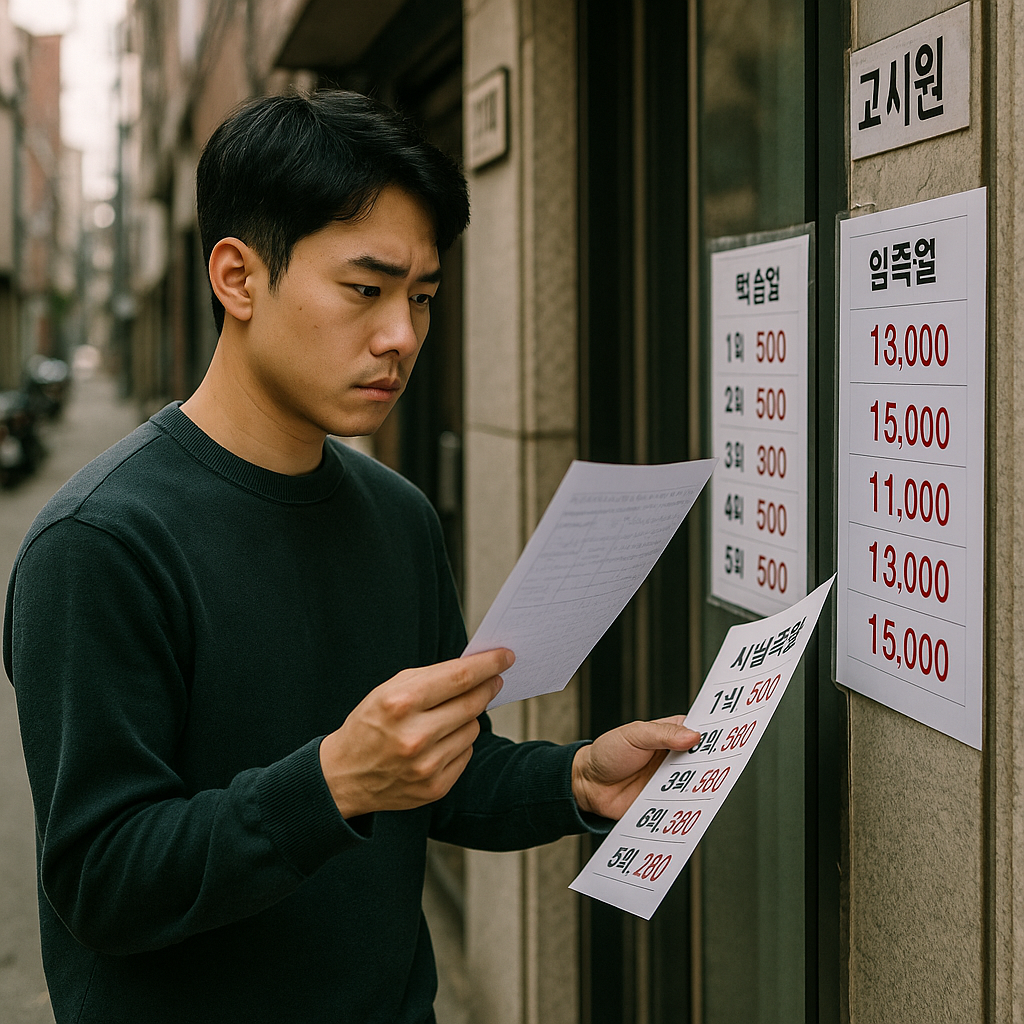
I once paid ₩550,000 a month for a goshiwon room that barely fit my suitcase. No window, no privacy, just the faint smell of instant noodles at 3 AM. The funny part? The place next door was ₩100,000 cheaper and twice as nice. That’s when I realized: there’s no clear system behind goshiwon pricing — it’s vibes, timing, and how desperate you look when you walk in.
Avoiding overpriced goshiwons isn’t about hunting for discounts on NAVER. It’s about understanding how owners think, how seasons mess with rent, and how to spot the subtle red flags that scream “rip-off.”
What Makes a Goshiwon “Overpriced” Anyway
It’s not just about the rent. Some goshiwons throw in free meals, others charge extra for laundry or air conditioning. You have to do a quick math comparison.
For example, ₩500,000 might sound fair until you realize:
- The room has no window.
- There’s no private bathroom.
- The rice cooker is broken half the time.
- The aircon uses coins.
Suddenly, that “affordable” room costs the same as an officetel when you add up all the hidden bits.
Thing is, goshiwons don’t follow a market standard. The same-sized room in two buildings on the same street can differ by ₩200,000 — purely based on how modern it looks or if it’s near a subway exit.
I asked a goshiwon owner in Sinchon about his pricing logic once. He just said, “Students pay more during exams.” That was it. No shame. So, yeah, “overpriced” is relative, but the pattern’s clear: if it looks new, smells clean, and you didn’t negotiate — you probably overpaid.
When to Look (Timing Is 90% of the Game)
I didn’t believe this until I saw it. Around February and August — right before university semesters start — rent shoots up. The same goshiwon that costs ₩420,000 in June will suddenly jump to ₩500,000. Owners know students flood in, and they milk that window.
So, the golden rule: avoid moving during semester starts or exam seasons.
Late March or mid-September? Perfect time. Prices calm down and owners become flexible.
Actually, some people on Korean forums say they book a cheap goshiwon temporarily for one month, then move to a better one after the rush ends. A bit of a hassle, but it works.
Also, if you’re using sites like goshi1.net or Zigbang, check how long listings have been up. A room that’s been posted for weeks usually means the price is too high — which means they might drop it if you message directly.
And here’s a random trick I found: go see the room late in the evening. Empty rooms mean the owner’s losing money daily. You can sometimes knock off ₩30,000–₩50,000 just by saying, “I can pay right now.”
How to Negotiate Without Sounding Like a Jerk
Negotiating rent in Korea feels awkward, especially for foreigners. But goshiwon owners expect it more than you think.
Try soft phrasing like:
- “Is the price fixed?”
- “If I stay longer, could it be a bit cheaper?”
Even if they say no, they usually offer something — like a free laundry card or a bigger room. One guy in Mapo upgraded me for free just because I asked nicely.
But you’ve gotta read the room. If the owner’s older and traditional, don’t push hard. Just smile and seem hesitant. If they’re younger (or it’s a chain goshiwon), you can be more direct.
Weirdly, some foreign tenants get charged more simply because owners assume they won’t compare prices. So, drop the names of other goshiwons casually. Like, “I just saw a similar one near Ewha for ₩450,000…” That line alone saved me ₩30,000 once.
Also — always ask for the exact square meters. A “medium” room can mean anything from 2.5 ㎡ to 5 ㎡.
Sometimes you can tell before you even sit down.
- If the goshiwon advertises itself in English only — higher prices.
- If they show you the smallest room first — that’s their “bait” room.
- If Wi-Fi, air conditioning, or rice aren’t included — it’s outdated (and overpriced).
- If the deposit is more than ₩200,000 — that’s rare, ask why.
One guy on Reddit mentioned that newer “premium” goshiwons often use words like “residence,” “studio,” or “smart room.” It’s the same old format, just rebranded with fancy wallpaper and a 10% markup.
Also, check the bathroom. If you see black mold or rusty faucets, but the rent’s ₩500,000+, it’s a bad deal. Seoul mold is not worth your money.
Another subtle red flag — if they refuse to show you multiple rooms. That usually means they’re hiding the cheaper or worse ones. Insist politely.
Oh, and this one’s weird: if they have TVs in rooms but no remote, it’s a shared control system. You’ll be stuck on one channel. Not a pricing clue, but it says a lot about their priorities.
A Weirdly Simple Rule That Works: Count the Windows
I can’t prove this statistically, but every reasonably priced goshiwon I’ve found had one thing in common — windows that actually opened.
The ones that didn’t? Always overpriced, no exceptions.
It’s almost symbolic. A real window means proper ventilation, better building standards, and usually, fairer pricing.
I once stayed in a ₩430,000 goshiwon in Jongno with a tiny but real window. Next door, a “premium” no-window room was ₩520,000. The difference? Marketing.
So yeah — count the windows. It’s dumb, but it works.
FAQ
Can I negotiate goshiwon rent even as a foreigner?
Yes, most owners expect it. Be polite but confident.
Are online prices accurate?
Not always. They’re often outdated or set higher for first-timers.
What’s the average rent for a decent goshiwon in Seoul?
Around ₩400,000–₩550,000, depending on location and size.
Should I pay before moving in?
Only after you’ve seen the room and confirmed the exact details in writing or on KakaoTalk.
Is it okay to move out early?
Usually yes, but clarify refund policies first — some owners keep a week’s rent.
Do female-only goshiwons cost more?
Sometimes, yes. Better security, but also limited availability.
Unrelated but — do goshiwon owners actually live in the building?
Weirdly often, yes. Many live in the same hallway, usually near the kitchen.
I don’t know — are there apps for comparing reviews?
Not many in English. Korean ones like goshi1.net is your best bet.