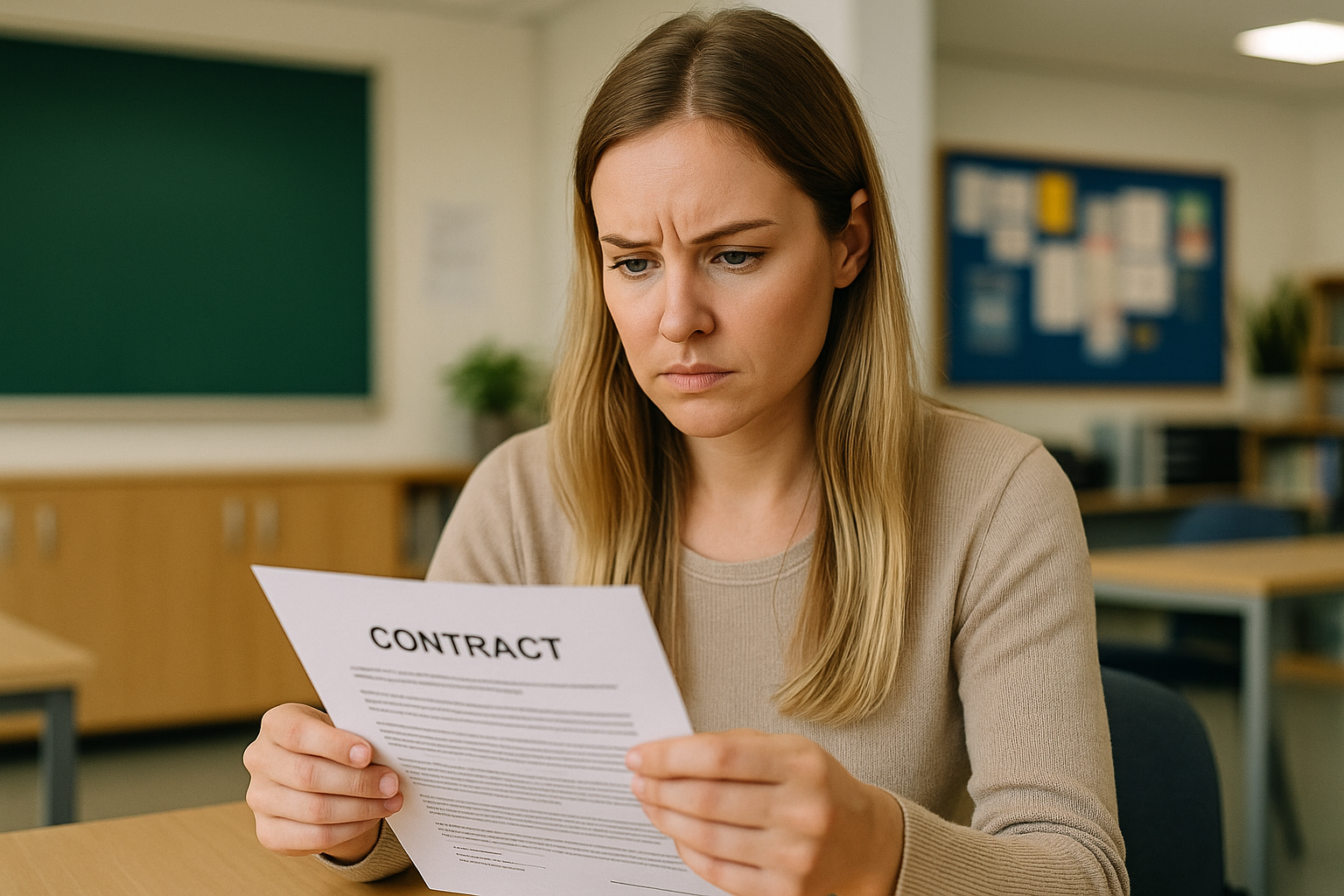
Almost every foreign teacher in Korea has a story that starts with: “My hagwon seemed great… at first.” Then comes the twist — unpaid overtime, canceled vacation, random fines for “electricity use,” or directors who vanish mid-payday. The sad truth? Some hagwon contracts look fine on paper but hide clauses that quietly wreck your sanity later.
When I first signed my hagwon contract, I skimmed it like a Netflix terms-of-service — huge mistake. I learned that “8 teaching hours” actually meant 8 classes (40–50 minutes each) plus endless prep time. By month three, I was exhausted and technically underpaid. It wasn’t malicious — just the industry’s built-in vagueness.
So if you’re about to sign a contract in Korea, stop scrolling and read this slowly. I’ll walk you through how to spot red flags, what terms really mean, and how to dodge the kind of “bad hagwon” people rant about on Reddit at 2 AM.
Why Bad Contracts Happen So Often
Hagwons (private language academies) are businesses first, schools second. They live or die based on student retention, not teacher happiness. That’s why directors sometimes overpromise — they’re trying to fill classes fast, even if they can’t actually meet every term.
Korea’s hagwon industry is massive — over 70,000 registered academies — and regulation varies wildly. Some are amazing, family-run schools that treat teachers like gold. Others? Revolving doors with shiny websites and unpaid wages.
Most “bad contracts” happen not because of outright scams, but because of ambiguity — vague job descriptions, undefined working hours, and misunderstood benefits.
Thing is, Korean work culture often runs on assumptions, not details. A phrase like “You’ll work 8 hours a day” might mean teaching from 1–9 PM plus admin tasks. That’s not lying — it’s just the cultural habit of leaving interpretation flexible. And that flexibility always favors the employer.
The Big Red Flags to Watch For
If a contract has any of these, either renegotiate or walk away. Seriously.
1. No Clear Definition of Teaching Hours
If it says “40 hours per week” but doesn’t specify “teaching vs. office hours,” assume it means both. Always clarify:
“Are 30 hours total or 30 teaching hours?”
A good contract defines each clearly.
2. Overtime With No Rate or Definition
Korean labor law requires overtime pay — but many contracts bury it. Look for a line like:
“Overtime will be paid at ₩20,000 per class.”
If it just says “overtime as assigned,” that’s a trap.
3. Vague Vacation Terms
If it says “Vacation in accordance with the school schedule,” that often means: when they feel like it. You might get random days between semesters, not actual rest. Make sure the number of vacation days (not “weeks”) is listed clearly — ideally 10+ paid days.
4. Housing Deposit or Deduction Without Detail
Some schools hold ₩400,000–₩600,000 as a “housing maintenance fee.” Fine — if they return it when you leave. Ensure the return conditions are written clearly, like:
“Deposit refunded within 30 days of contract completion, barring damages.”
5. Penalty Clauses for Quitting Early
If a contract says you’ll “forfeit your final month’s pay” for early termination — that’s illegal under labor law. Early termination penalties are common, but they must be proportional (like covering a replacement teacher’s cost, not your entire salary).
6. Payment Delays or Split Salaries
Avoid any clause suggesting “monthly salary may be paid in two installments.” That’s code for “we might run out of cash mid-month.”
7. “Probationary Period” Without Full Pay
Some schools use “probation” to underpay your first 1–3 months. Unless it’s explicitly stated how much less and why, that’s not normal.
8. No Mention of Pension or Health Insurance
Legally, full-time foreign teachers must be enrolled in the National Pension and Health Insurance systems. If your contract offers “private insurance instead,” it’s a red flag. Some hagwons pocket those contributions.
How to Read Between the Lines (Konglish Edition)
Korean contracts often sound polite but hide vague loopholes. Here are a few phrases that look harmless but deserve suspicion:
- “Teacher will perform additional duties as requested.”
→ Expect unpaid marketing events, demo classes, or weekend camps. - “Working hours may vary depending on schedule.”
→ You’ll have a constantly changing timetable. - “Vacation days are determined by the school.”
→ Translation: they pick your break days, not you. - “Salary is based on teaching performance.”
→ That’s a subjective loophole for cutting pay.
If you see these, ask for clarification in writing. Korean employers respect written records — they’ll often adjust phrasing if you ask politely.
How to Vet a School Before Signing
Before you even get to the contract, do a background check on the school itself.
- Ask for the school’s full legal name and registration number.
You can Google hagwon registration number to confirm if they’re licensed. - Request contact info of a current or former foreign teacher.
A legit school will provide this easily. If they hesitate — bad sign. - Search on Reddit or Facebook (ESL Korea, Hagwon Blacklist, etc.)
Real teachers will mention the school by name if it’s notorious. - Check payment schedule online reviews.
Look for phrases like “always paid on time” — the surest indicator of stability. - Ask how long their current teachers have stayed.
If everyone leaves after 6 months, it’s not coincidence.
Also, small red flag: if they pressure you to “sign quickly” or say “the visa process is urgent,” that’s manipulation. Korean immigration is slow by nature; there’s no true rush.
What to Negotiate (and How to Do It Without Offending Anyone)
Korean employers appreciate politeness but respect assertiveness — especially in writing.
You can say:
“I’m very interested in joining your school. I just want to clarify a few small details in the contract for transparency.”
Then list questions calmly, one by one. Never phrase it like a threat — more like teamwork. Most directors aren’t trying to scam; they just follow vague templates from old contracts.
Things you can negotiate:
- Overtime rate (try ₩20,000–₩25,000 per class)
- Housing stipend if you find your own apartment
- Vacation days (especially for longer contracts)
- Flight reimbursement terms (get “paid upon arrival,” not “after 12 months”)
And don’t be shy about small corrections. Korean schools respect teachers who read carefully — it signals reliability, not arrogance.
What to Do If You Already Signed a Bad Contract
It happens. Maybe you didn’t notice a clause, or the reality just didn’t match what was promised. You’re not stuck.
1. Document everything.
Keep screenshots of messages, copies of contracts, pay slips, and schedules.
2. Try calm communication first.
Most issues get solved through polite, private talks. Koreans value saving face — go direct to the manager, not public complaints right away.
3. If serious (like missing pay), contact labor authorities:
- Ministry of Employment and Labor: 1350 (English available)
- HiKorea or Seoul Global Center can help file reports or mediate.
4. If things go south:
You can transfer your visa to a new school — but you’ll need a letter of release (LOR) from your current employer. They’re legally not required to give it, but many do if you remain polite and cooperative.
Worst case, you can leave and reapply from home later — inconvenient but doable.
A Final Thought: It’s Not All Doom and Gloom
For every bad hagwon story, there’s a good one. I’ve met directors who personally helped teachers move apartments, hosted Chuseok dinners, and paid bonuses unprompted. The good schools exist — they just rarely advertise loudly.
The key is patience and skepticism. Read, ask, confirm, and never assume “standard contract” means “fair.” Korea’s ESL world rewards teachers who prepare — and punishes those who rush.
If you sign the right one, a hagwon can be an incredible first step into Korean life. If you sign the wrong one… well, at least you’ll have an epic Reddit story later.
FAQ
Can I change schools if I hate my hagwon?
Yes, but you’ll need a letter of release from your employer or wait until your contract ends.
How many vacation days should I expect?
At least 10 paid days per year — public schools offer more.
Should I have my contract reviewed by someone?
Absolutely. Have a current teacher or expat friend look it over before signing.
What if my hagwon doesn’t pay on time?
Document everything and contact the local labor office (call 1350).
Is it normal to work evenings?
Yes, most hagwons teach kids after school, usually 1 PM–9 PM.
I don’t know — are all hagwons bad?
Not at all. Some are fantastic. The trick is learning to tell the difference early.