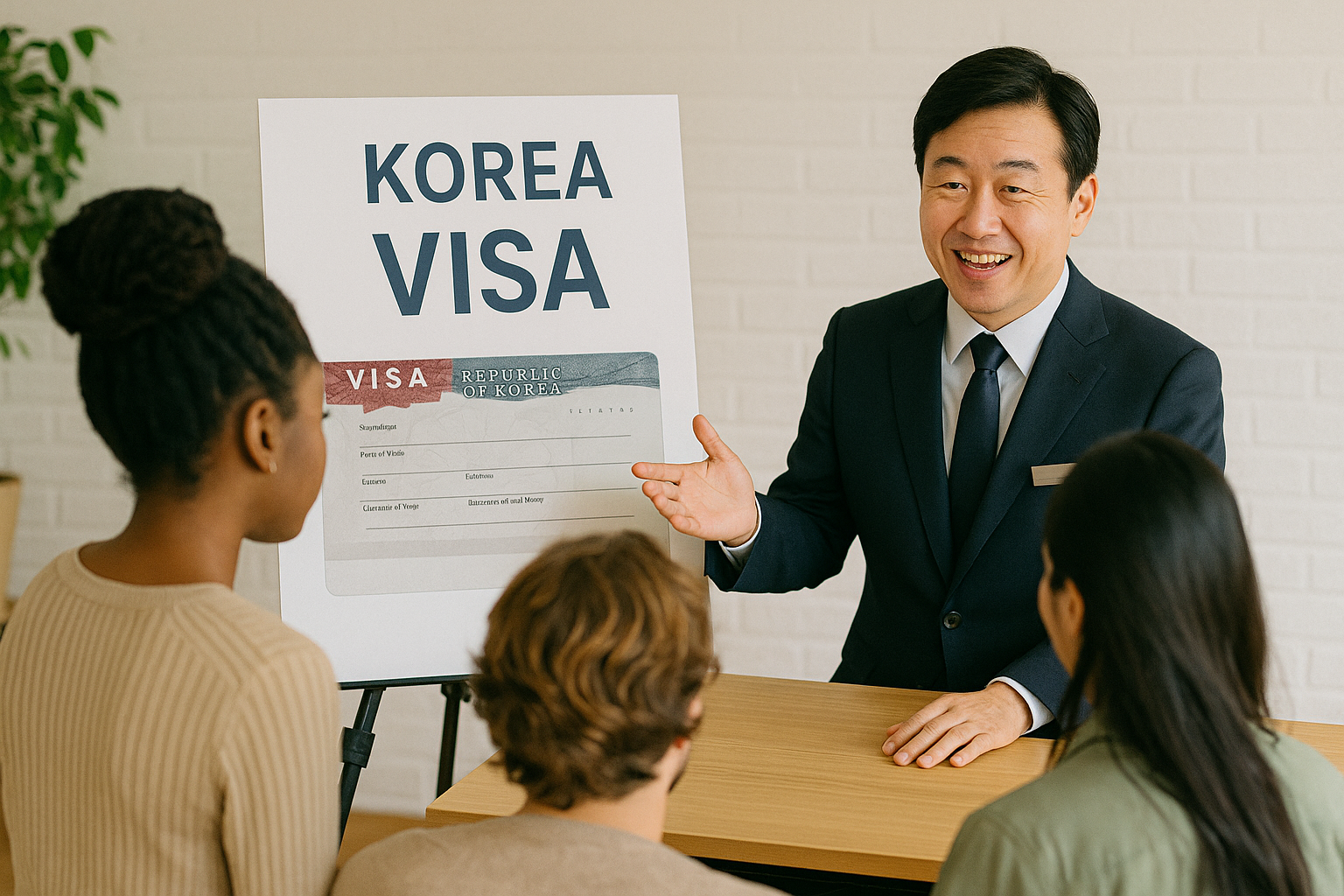
South Korea offers a wide range of visa options depending on your purpose of stay — study, employment, or residence. Understanding the main Korean visa types helps you select the right one and maintain lawful status during your stay.
1. Introduction – Why Understanding Korean Visa Types Matters
For anyone planning to live, work, or study in South Korea, knowing the Korean visa types is essential. Each visa determines what activities you are legally allowed to do and how long you can stay.
Many foreign residents find the Korean immigration system detailed but well-structured. However, choosing the wrong visa type can cause delays or rejection. By learning how different Korean visa categories work, you can prepare better for a smooth relocation and stay.
2. Overview of Korean Visa Types and Main Categories
The Korean visa system is divided into several main groups — A (Diplomatic), B (Temporary Visitor), C (Short-Term), D (Study and Culture), E (Employment), F (Residency and Family), G (Miscellaneous), and H (Working Holiday).
Below are the most common Korean visa types that foreign students, professionals, and families apply for.
2.1. D-Series Visas – Study, Training, and Cultural Exchange
The D-series visas are Korean visa types designed for education and research.
- D-2 (Student Visa): For university or graduate students enrolled in degree programs.
- D-4 (General Training Visa): For Korean language learners or trainees in non-degree programs.
- D-1 (Cultural/Art Visa): For individuals participating in recognized artistic or cultural projects.
Duration: Usually 6 months to 2 years.
Extension: Possible through immigration offices with proof of continued enrollment.
2.2. E-Series Visas – Employment and Professional Work
Among all Korean visa types, the E-series covers foreign professionals working in Korea.
- E-1 (Professor) – For teaching at higher institutions.
- E-2 (Language Instructor) – For native speakers teaching at schools or academies.
- E-3 to E-7 – Include specialized research, technical guidance, professional services, and skilled occupations.
Each E-visa requires a sponsor from a Korean institution or employer, and activities must match your job description.
2.3. F-Series Visas – Residency and Family
The F-series represents long-term Korean visa types for residents, families, and ethnic Koreans.
- F-1 (Visiting Family) – For family members living with a foreign resident or Korean national.
- F-2 (Resident Visa) – For individuals who meet income, education, or social integration standards.
- F-4 (Overseas Korean) – For ethnic Koreans with foreign citizenship.
- F-5 (Permanent Residency) – For those who meet continuous stay and stability conditions.
- F-6 (Marriage Migrant) – For spouses of Korean citizens.
These visas often allow unrestricted work and long-term residence benefits.
2.4. H-Series and Other Korean Visa Types
Other Korean visa types include short-term and special categories:
- H-1 (Working Holiday): For young travelers from partner countries, valid up to 1 year.
- C-3 (Short-Term Visit): For tourism, business, or short family visits up to 90 days.
- A/B Visas: For diplomats and temporary official visitors.
- G-Series: For humanitarian or exceptional cases (e.g., medical stay, asylum).
3. How to Apply for the Right Korean Visa Type
Applying for a visa in Korea follows a clear process:
- Identify the Correct Korean Visa Type: Check official descriptions on the HiKorea website.
- Prepare Required Documents: Passport, visa form, ID photo, and sponsorship papers (e.g., job offer or admission letter).
- Submit Application: Through a Korean embassy or consulate before arrival.
- Processing Time: Usually 5–10 business days.
- After Arrival: Register for an Alien Registration Card (ARC) within 90 days.
4. Important Tips When Managing Your Korean Visa
- Changing Visa Types: You can often switch between Korean visa types (e.g., from student to work visa after graduation).
- Avoid Overstaying: Fines or re-entry bans may apply even for short overstays.
- Apply Early for Extensions: At least one month before your visa expires.
- Dependent Family Members: Spouses and children can apply for F-3 dependent visas.
- Health Insurance Enrollment: Long-term visa holders must join the National Health Insurance Service after receiving their ARC.
5. FAQ – Common Questions about Korean Visa Types
Q1. Can I work part-time with a D-2 or D-4 visa?
Yes, but only after receiving official approval from the immigration office. Work hours are limited based on your study status.
Q2. What are the requirements for a permanent residency visa (F-5)?
Applicants need at least 5 years of continuous stay, stable income, no criminal record, and passing the Korean language/integration test.
Q3. Can I stay in Korea while my visa renewal is under review?
Yes. Once you apply for extension before the expiry date, your stay remains legal until the decision is finalized.
Conclusion – Summary and Next Steps
Understanding Korean visa types helps foreign residents make informed decisions before moving to Korea. From D-series student visas to F-series residency permits, each serves a specific purpose under Korea’s immigration law.
For detailed eligibility or document lists, always refer to the HiKorea website or your local Immigration Office.