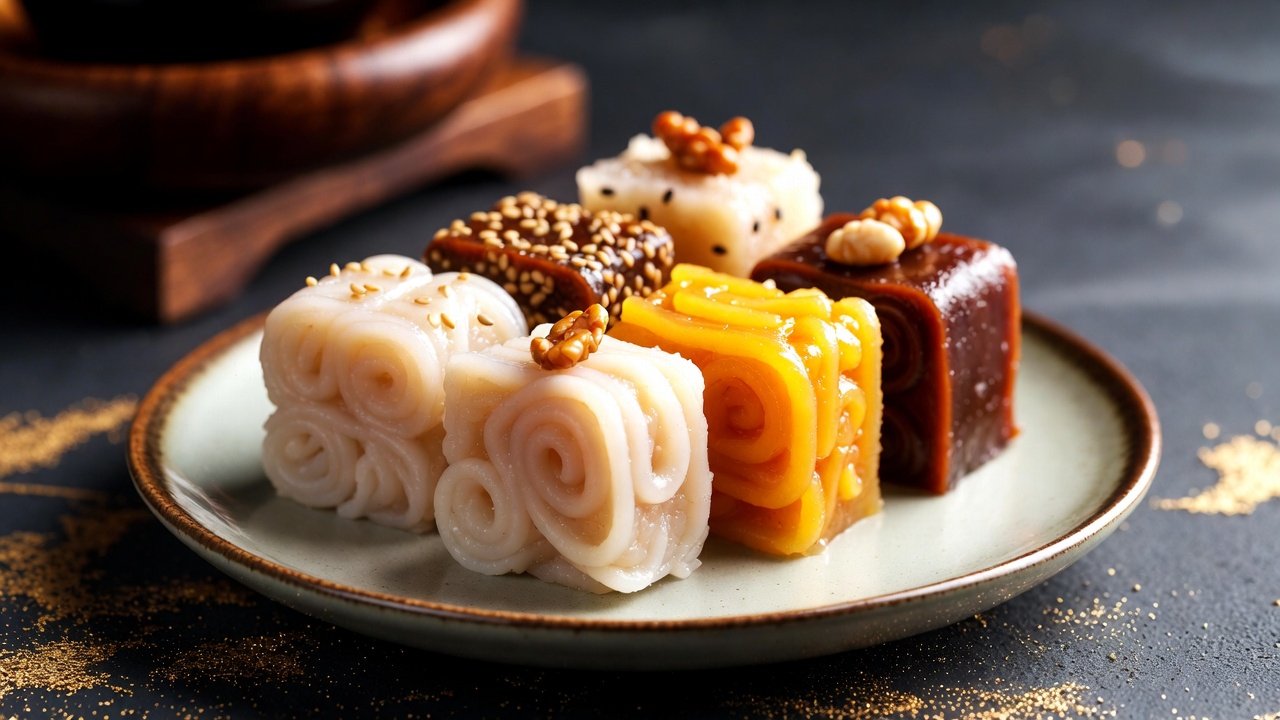
The first time I tried yakgwa, I was standing in a convenience store at midnight, holding what looked like a small, glossy donut the color of dark amber. I bought it on impulse because the packaging was pretty. One bite in and I stopped walking. It was sweet — not aggressively sweet like most store-bought cookies, but deep and warm, almost like honey-soaked pastry with a chew that caught me off guard. I had zero idea what I was eating. Turns out, that little thing was part of a much bigger world — Korean traditional sweets hangwa, a category of confections that’s been around for centuries but somehow just hit the mainstream spotlight in the past few years. And once you start paying attention, you see them everywhere.
What Are Korean Traditional Sweets Hangwa?
Hangwa is a broad term covering traditional Korean confections made from natural ingredients — grain flour, honey, sesame oil, rice syrup, nuts, and fruit. The name literally breaks down to “han” meaning Korean and “gwa” meaning confection or snack. It’s the counterpart to what Koreans call “yanggwa,” which refers to Western-style sweets like cookies, cakes, and chocolates.
The distinction matters because hangwa isn’t just old-fashioned candy. It represents a completely different philosophy of dessert-making. There’s no butter, no refined sugar, no dairy in most traditional recipes. Everything comes from plants, grains, and natural sweeteners. The textures range from crispy and airy to dense and chewy, and the sweetness tends to be earthy and layered rather than the one-note sugar hit you get from Western pastries.
What’s interesting is that hangwa was never really “everyday” food. Historically, these sweets were prepared for special occasions — royal banquets, ancestral rites, weddings, and major holidays. Making them was labor-intensive, sometimes taking days of preparation. That association with care and effort is still baked into the culture. When someone gives you a box of Korean traditional sweets hangwa today, it carries more weight than handing over a bag of store-bought cookies. It’s a gesture of respect.
Thing is, most foreigners living in Korea walk past hangwa every day without realizing it. That pretty box in the department store basement? Hangwa. The crunchy nut clusters at the traditional market? Hangwa. The trendy yakgwa latte at the cafe? Also hangwa, just remixed for 2025.
The Main Types You’ll Actually See
Hangwa is a category, not a single thing. There are dozens of varieties, but three dominate what you’ll encounter in daily life. Once you know these, you’ll start recognizing them everywhere — from convenience store shelves to elaborate gift boxes.
Yakgwa is the star right now. It’s made by kneading wheat flour with sesame oil and honey, shaping the dough into small rounds or flower patterns, deep-frying them, and then soaking the whole thing in a honey-ginger syrup. The result is dense, chewy, and intensely fragrant. The outside has a slight crunch from the frying, but the inside is soft and almost sticky with absorbed syrup. It tastes like what would happen if a donut and baklava had a Korean baby. I’ve seen people eat one and immediately buy a whole box. It’s that kind of dessert.
Yugwa is the opposite experience texture-wise. It starts as glutinous rice dough that’s dried, then puffed by deep-frying — kind of like a Korean rice crispy. After frying, it’s coated with puffed rice, sesame seeds, or other toppings. The texture is airy, light, and shatteringly crispy. Honestly, it reminds me of fancy cereal. Yugwa melts on your tongue in a way that makes you reach for another piece before you’ve finished the first one. It’s less sweet than yakgwa and more about that satisfying crunch.
Gangjeong is the nutty one. Imagine taking a handful of peanuts, sesame seeds, pumpkin seeds, or pine nuts and binding them together with rice syrup into a compact bar or cluster. That’s gangjeong. It’s crunchy, savory-sweet, and genuinely addictive. The versions made with black sesame are my personal favorite — slightly bitter, deeply nutty, and somehow elegant. You’ll find gangjeong sold in slabs at traditional markets, where vendors cut it to size with a big knife right in front of you.
Beyond those three, there are subtler varieties worth knowing about. Dasik are pressed tea cookies made from grain or nut powders — they’re dry, delicate, and usually served with tea. Jeonggwa are candied fruits or root vegetables simmered in honey — imagine ginger slices or lotus root turned into translucent, jewel-like sweets. They’re gorgeous to look at but an acquired taste. And then there’s yumilgwa, a fried dough cookie twisted into decorative shapes, which sits somewhere between yakgwa and a churro in terms of experience.
None of these are obscure if you know where to look. But yakgwa, yugwa, and gangjeong are your starting three. Master those and you’re fluent in hangwa basics.
Why Koreans Gift Hangwa on Special Occasions
If you’ve been in Korea during Chuseok or Seollal, you’ve seen the gift box towers stacked up in every department store and supermarket. Spam sets, fruit boxes, beef — and elegant wooden or paper boxes filled with hangwa. These aren’t random assortments. The tradition of gifting Korean traditional sweets hangwa is deeply tied to how Koreans express gratitude, respect, and celebration.
Historically, hangwa was placed on ancestral rite tables as an offering. The sweets symbolized wishes for prosperity and good fortune. Giving hangwa to someone meant you’d invested time and care — because making it from scratch was genuinely hard work. Even today, when most people buy rather than make it, that symbolic weight remains. A nicely packaged box of yakgwa or gangjeong says “I thought about this” in a way that a random gift card doesn’t.
The gifting occasions are specific. Major holidays — Chuseok (harvest festival) and Seollal (Lunar New Year) — are the biggest. But hangwa also shows up at weddings, 60th birthday celebrations, housewarming parties, and increasingly, as corporate gifts. Companies send premium hangwa boxes to clients and partners, especially during holiday seasons. The packaging has gotten noticeably more sophisticated in recent years — think minimalist boxes with linen wrapping, almost like luxury skincare packaging.
For foreigners, this is actually useful knowledge. If you’re invited to a Korean friend’s home during a holiday or need to bring a gift to a colleague’s event, a box of quality hangwa is a safe, appreciated choice. It shows cultural awareness without trying too hard. You can find gift-ready sets at department store food halls, traditional markets, or online through Coupang and Naver Shopping. Prices range from around 15,000 won for a simple set to over 100,000 won for the premium artisan stuff.
Something strange happened around 2022. Yakgwa — this centuries-old, grandma-approved, deeply traditional sweet — suddenly became the trendiest dessert in Korea. Convenience stores started selling yakgwa-flavored cookies, ice cream bars, and lattes. Cafes put yakgwa on their menus next to tiramisu and croissants. Bakeries started making “neo-yakgwa” — oversized, cream-filled, Instagram-ready versions that barely resembled the original but carried the name proudly.
The trigger was mostly social media. Korean food YouTubers and TikTokers started featuring yakgwa-making videos, and the ASMR quality of honey-soaked dough being pressed into flower molds turned out to be hypnotic content. The videos went viral not just in Korea but globally — views in the millions. Suddenly, people who’d never heard of hangwa were searching for recipes and ordering yakgwa kits online.
What I find fascinating about this trend is the cultural timing. Korea was already deep into a broader “retro” movement — old-school snacks, vintage fashion, traditional aesthetics repackaged for younger audiences. Yakgwa fit perfectly into that wave. It was authentically Korean, visually beautiful, and different enough from Western desserts to feel novel. The fact that it tasted incredible didn’t hurt either.
The trend hasn’t died down. If anything, it’s evolved. In 2025, you can walk into almost any Korean convenience store and find at least two or three yakgwa-adjacent products. CU has yakgwa cream puffs. GS25 has yakgwa-flavored milk. Even major coffee chains have seasonal yakgwa drinks. It’s gone from niche traditional food to mainstream comfort snack in about three years.
For the traditional hangwa artisans, this boom has been a double-edged sword. On one hand, demand for authentic handmade yakgwa has skyrocketed. On the other, the mass-produced convenience store versions are a very different product — sweeter, softer, and stripped of the subtlety that makes the real thing special. But hey, if a convenience store yakgwa cookie is someone’s gateway to discovering the real deal, that’s probably a net positive.
Where to Find and Try Hangwa in Korea
You have options at basically every price point and convenience level. Here’s the landscape.
Traditional markets are the best starting point for an authentic experience. Gwangjang Market in Seoul has vendors selling gangjeong slabs, yugwa stacks, and yakgwa by weight. Tongin Market is another good spot. The advantage of markets is that you can see the products up close, often sample before buying, and buy small quantities. The prices are also generally lower than department stores. Just point at what looks good and ask for a small bag — most vendors are used to curious foreigners.
Department store food halls are where you go for gift-quality hangwa. The basement floors of Lotte, Shinsegae, and Hyundai department stores have dedicated traditional sweets sections with beautifully packaged sets. The quality is consistently high, the presentation is stunning, and the staff can usually explain the different varieties. Expect to pay a premium — gift boxes start around 30,000 won and go up from there. But if you’re buying Korean traditional sweets hangwa for a special occasion, this is the safest bet.
Convenience stores are where the modern hangwa revolution lives. Yakgwa cookies, yakgwa ice cream bars, yakgwa-flavored mochi — it’s a different product category than traditional handmade hangwa, but it’s accessible, cheap (usually under 3,000 won per item), and a decent introduction if you’ve never tried the flavors before. Don’t judge all hangwa by the convenience store version, though. It’s like comparing artisan chocolate to a candy bar — same family, very different experience.
Online shopping through Coupang, Naver Shopping, or specialized stores like the Korean Traditional Food online mall lets you order hangwa directly to your door. Some artisan makers have their own websites with English-language options. Search for “yakgwa gift set” or “hangwa gift box” and you’ll get plenty of results. Delivery is usually next-day within Korea.
Hands-on classes are worth mentioning too. Several cultural experience centers in Seoul — especially around Insadong and Bukchon — offer hangwa-making workshops where you can shape yakgwa dough, fry it, and soak it in syrup yourself. These run about 20,000–40,000 won per person and usually last two hours. It’s a fun activity, especially if you have visitors from abroad looking for something beyond the standard palace tour.
A Quick Note on What Makes Good Hangwa
Since you’ll encounter a wide range of quality, here are a few things I’ve picked up from talking to vendors and reading food blogs.
Good yakgwa should be evenly golden, not dark brown. It should feel heavy for its size — that weight comes from proper honey absorption. If it’s dry or crumbly, it was either under-soaked or old. The fragrance should hit you before the taste — sesame oil and ginger should be clearly present.
Good yugwa should be light and airy, almost hollow-feeling. If it’s dense or hard, something went wrong in the puffing process. The coating should be evenly distributed and not falling off in chunks.
Good gangjeong should snap cleanly when you bite it, not crumble into dust. The nuts or seeds should be whole, not crushed, and the binding syrup should be just enough to hold everything together without making it sticky.
None of this is scientific, just pattern recognition from eating way too much hangwa over the past couple of years. But once you taste a well-made version next to a mediocre one, the difference is obvious.
FAQ
What does hangwa taste like? It depends on the type. Yakgwa is honey-sweet and chewy. Yugwa is airy and mildly sweet. Gangjeong is nutty and crunchy. None of them taste like Western cookies or candy — the sweetness is more subtle and earthy.
Is yakgwa the same as hangwa? Yakgwa is one type of hangwa. Hangwa is the umbrella category that includes yakgwa, yugwa, gangjeong, dasik, jeonggwa, and others.
Where can I buy hangwa as a gift in Seoul? Department store basements (Lotte, Shinsegae, Hyundai) have the best gift-ready options. Traditional markets are great for casual buying. Online through Coupang works too.
Are these sweets gluten-free or vegan? Yugwa and gangjeong are often naturally gluten-free since they use glutinous rice and nuts. Yakgwa contains wheat flour, so it’s not gluten-free. Most traditional hangwa is vegan — no dairy or eggs — but check individual products to be sure.
How long does hangwa last? Yakgwa keeps well for 2–3 weeks at room temperature, longer if refrigerated. Gangjeong lasts about a month in a sealed container. Yugwa is best eaten within a week before it loses its crispness.
Why did yakgwa suddenly become trendy? Social media — especially YouTube ASMR videos and TikTok food content — drove massive interest around 2022. It coincided with Korea’s broader retro food movement. The trend has stuck because the product is genuinely good.
Can I bring hangwa home as a souvenir? Absolutely. Yakgwa and gangjeong travel well since they’re sturdy and don’t need refrigeration. Vacuum-sealed gift boxes are ideal for flying. Yugwa is more fragile and might crumble in a suitcase.
Is hangwa served at Korean restaurants? Not commonly as a dessert course, but some traditional Korean restaurants and tea houses include dasik or jeonggwa with tea after the meal. You’re more likely to encounter it at cultural events or as a standalone purchase.
How much does a gift box typically cost? Simple sets start around 15,000–20,000 won. Mid-range boxes from department stores run 30,000–50,000 won. Premium artisan sets with wooden packaging can go over 100,000 won.
Unrelated but — what’s the difference between hangwa and tteok? Tteok is rice cake — steamed, pounded, or shaped from rice flour. Hangwa is confection — fried, pressed, or bound with syrup. They sometimes appear on the same holiday table, but they’re completely different categories of Korean food.