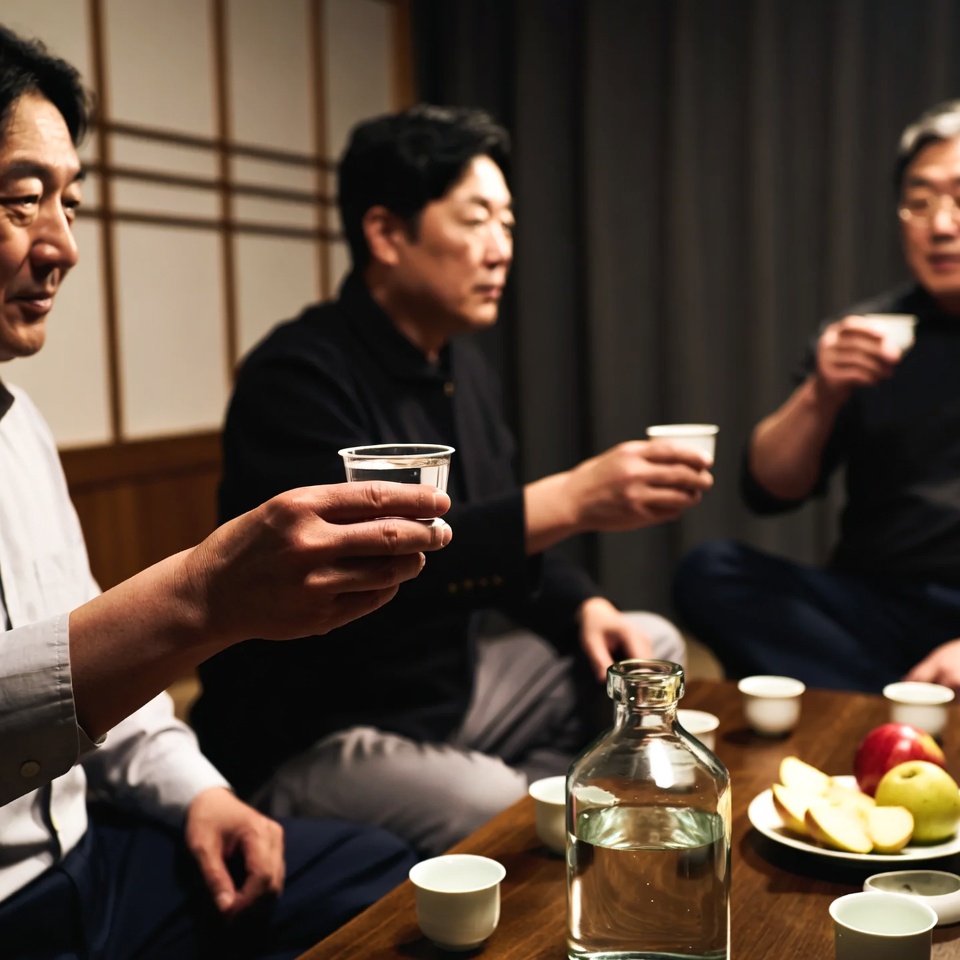
My first Korean work dinner lasted four hours. I had no idea what was happening. Someone poured me a shot of soju, I grabbed it with one hand, drank it facing my boss, and apparently committed three etiquette violations in under five seconds. Nobody said anything — they were too polite. But I could feel the awkwardness hanging in the air like cigarette smoke. That’s the thing about Korean drinking etiquette — nobody teaches you the rules until you’ve already broken them. And in a culture where after-work dinners aren’t optional socializing but a genuine extension of office life, knowing how to behave at the table matters more than you’d think.
Why Korean Drinking Etiquette Matters at Work
Let me be clear: 회식 (hoesik) is not just “going out for drinks with coworkers.” It’s a semi-formal team event where relationships are built, tensions are resolved, and — whether anyone admits it or not — impressions are formed. Your manager is watching. Not in a creepy way, but in a “does this person fit into the team” kind of way.
In Korean corporate culture, the boundary between work and personal is blurrier than most foreigners expect. A hoesik is where the stiff office hierarchy loosens up a little. Juniors get to talk to seniors in a more relaxed setting. New hires get a chance to show they’re approachable. And yes, how you handle Korean drinking etiquette at these dinners actually factors into how colleagues perceive you.
That doesn’t mean you need to be perfect. Actually, Koreans are generally forgiving when foreigners make small mistakes — they know you didn’t grow up here. But making an effort? That earns you serious respect. I’ve seen coworkers light up when a foreign colleague does the head-turn thing correctly for the first time. It’s a small gesture, but it signals that you care about the culture you’re living in.
The Head-Turn Rule and Why Everyone Does It
This is probably the most iconic piece of Korean drinking etiquette. When you drink in front of someone older or higher-ranking than you, you turn your head slightly to the side. Not a full 90-degree rotation — just a subtle shift so you’re not drinking directly face-to-face with the senior person.
The Korean way to describe it is 고개를 돌려 마시다 (turn your head and drink). It comes from Confucian-influenced respect norms — the idea being that openly drinking in front of an elder is a bit too casual, even confrontational. By turning away, you’re showing deference. It’s similar to how you might lower your eyes during a formal greeting.
Honestly, it felt weird the first few times I did it. Like I was hiding something. But once you see everyone at the table doing the same thing, it clicks. It’s not about shame or secrecy — it’s about signaling that you acknowledge the hierarchy. And yeah, it becomes automatic after a few hoesik dinners. You’ll catch yourself doing it even when you’re out with friends who don’t care.
One thing worth noting: among people of similar age or rank, the head-turn isn’t really expected. If you’re drinking with close colleagues who are your peers, you can just drink normally. The rule mostly kicks in when there’s a clear age or position gap.
I’ve also seen some regional variation in how strictly this is observed. In Seoul’s tech scene, the vibe at hoesik tends to be more relaxed — head-turns happen but nobody’s counting. In more traditional industries or smaller cities, the expectation is stronger. A friend who worked at a shipping company in Busan told me the head-turn was basically non-negotiable at every single dinner. Context matters, as always.
Two Hands, Always — Pouring and Receiving
If there’s one rule that catches foreigners off guard more than any other, it’s this: use two hands. When someone pours you a drink, receive the glass with both hands. When you pour for someone else, hold the bottle with both hands. This applies to soju, beer, makgeolli — basically any alcoholic beverage in a social setting.
The logic is the same as the head-turn. Two hands = respect. One hand = casual, potentially rude if directed at someone senior. You’ll notice Koreans do this instinctively — it’s drilled in from childhood, not just for drinks but for receiving anything from an elder (business cards, gifts, even change at a store).
Now, if holding a bottle with two hands feels awkward — especially with a big beer bottle — there’s a common workaround. You hold the bottle with your right hand and lightly touch your left hand to your right forearm or elbow. This counts as a “two-hand” gesture and is totally acceptable. I’ve seen some people just place their left hand on their chest while pouring. That works too.
For the iconic 건배 (geonbae) — the Korean version of “cheers” — there’s one more subtle rule. When you clink glasses with someone older or senior, keep your glass slightly lower than theirs. It’s a hierarchy thing again. You don’t need to slam it down to knee level. Just a small, visible difference in height. Most people do this naturally once they see it happen a couple of times.
And here’s something I didn’t know for a while: you don’t pour your own drink. In Korean drinking culture, you wait for someone else to pour for you, and you return the favor. Pouring your own soju is considered a bit sad — like eating alone on Christmas. If your glass is empty, someone will notice. That’s just how the table works.
Reading the Table — Refilling, Pace, and 정 (Jeong)
Once you’ve got the hand rules down, the next layer of Korean drinking etiquette is reading the rhythm of the table. This isn’t written in any guidebook — it’s something you pick up by watching.
First, the refilling thing. When someone’s glass is getting low, it’s considered thoughtful to top it up before it’s completely empty. This is connected to the concept of 정 (jeong) — a uniquely Korean idea that roughly translates to deep affection, care, or emotional bond. Keeping someone’s glass full is a small act of jeong. It says, “I’m paying attention to you.”
But here’s the flip side: you don’t pour into a glass that’s still half full. Wait until it’s nearly empty. Pouring into a full glass can signal impatience — like you’re trying to rush the person into drinking faster. The sweet spot is when there’s about a sip left.
As for pacing — this is where things get culturally interesting. There’s often a tacit expectation to roughly match the group’s drinking speed. If everyone’s on their third shot and you haven’t touched your first, it can feel a little disconnected. That said, nobody’s going to call you out. The culture is shifting, especially among younger Koreans who are much more relaxed about drinking pace.
Oh, and about 폭탄주 (poktanju) — the legendary “bomb drink” where you drop a shot of soju into a glass of beer. It’s a hoesik staple, especially in older-generation work culture. You might be offered one. You don’t have to accept. But if you do, just know it hits significantly harder than drinking the two separately. Proceed with caution.
Korean Drinking Etiquette for Non-Drinkers
Here’s the part that stresses people out the most. What if you don’t drink? Maybe it’s health, religion, medication, pregnancy, or you just don’t like alcohol. Does that make hoesik unbearable?
Short answer: no. And it’s getting easier every year. Korean drinking etiquette has evolved a lot, especially since the pandemic changed how people socialize. The days of bosses literally forcing soju on unwilling employees are — for the most part — fading. Younger managers especially tend to be respectful of personal boundaries.
That said, knowing how to decline gracefully still matters. A direct “I don’t drink” can feel a bit abrupt in Korean social settings. Softer approaches work better. Saying something like “오늘 운전이라서요” (I’m driving today) is the classic excuse and nobody questions it. Health reasons — “건강 때문에 못 마셔요” (I can’t drink for health reasons) — also get immediate understanding. Religious reasons are respected too, though you might get a few curious follow-up questions.
What works really well is still participating in the ritual. Hold a glass of Coke or sparkling water and join in the 건배 toasts. Pour drinks for others. Laugh at the jokes. The core of hoesik isn’t actually about alcohol — it’s about being present and engaged. I’ve seen non-drinkers become the most popular people at the table simply because they stayed, participated, and showed genuine interest in the conversation.
And honestly, attitudes are changing fast. I’ve noticed more and more Korean colleagues ordering non-alcoholic beer or soft drinks at hoesik without any pushback. The stigma around not drinking is fading, especially in tech companies and startups. But in more traditional industries — think finance, construction, government — the expectation can still be stronger. Just read the room.
There’s also a middle-ground move that works surprisingly well: accepting the first glass as a symbolic gesture, taking a small sip during the group toast, and then quietly switching to water or juice for the rest of the night. Nobody tracks your consumption that closely, and the initial 건배 participation covers most of the social expectation. I’ve done this plenty of times and nobody ever commented on it.
Practical Hoesik Survival Tips for Foreigners
Beyond the core rules of Korean drinking etiquette, there are a bunch of practical things that can make your hoesik experience smoother.
Seating matters. There’s usually a 상석 (sangsuk) — the “upper seat” — farthest from the door, where the most senior person sits. Juniors typically sit closest to the door or near the edge where it’s easy to get up and order things. As a foreigner, you probably won’t be expected to know this instinctively, but don’t plop yourself into the seat at the head of the table. If in doubt, just wait and let others sit first.
The 2차 (i-cha) question. After the main dinner, someone will inevitably suggest a 2차 — a second round at a different venue, usually a bar or noraebang (karaoke room). Sometimes there’s even a 3차 (sam-cha). You’re not technically obligated to go, but leaving after the first round can feel abrupt, especially if you’re new. My advice: go to the 2차 at least once. It’s usually where the real bonding happens. Skipping it every single time can create a subtle distance.
The morning after ritual. This one’s underrated. The day after a hoesik, a quick “어제 수고하셨습니다” (Great effort last night) to your team — in the group chat or in person — goes a long way. It shows you see the hoesik as a team event, not just a night out. Koreans notice this stuff. Some people also bring coffee or hangover drinks to the office the next morning as a gesture — it’s not required, but it’s the kind of move that gets you social points.
Who pays? Almost always the most senior person or the team’s department budget. Don’t reach for your wallet at the end — it can actually create an awkward dynamic. Just bow slightly, say thank you, and mean it. If you’re the senior person at a table with juniors, expect to pay. That’s the unspoken deal. Occasionally the company has a budget allocated for team dinners, in which case the team leader handles the corporate card. Either way, you’ll almost never split the bill at a hoesik — that’s more of a casual friends thing.
One more thing — food usually comes before heavy drinking at a hoesik. Don’t skip the food. Eating while drinking is considered responsible and respectful in Korea. Showing up just to drink and not eat sends the wrong signal. Most hoesik dinners center around shared dishes like samgyeopsal (grilled pork belly), dakgalbi (spicy chicken), or Korean BBQ — and the communal eating experience is honestly one of the most enjoyable parts. The alcohol is secondary to the food and conversation, even if it doesn’t always feel that way.
FAQ
Can I refuse to drink at a hoesik without offending anyone? Yes, and it’s increasingly common. Use a soft excuse like driving or health reasons. The key is to stay engaged at the table — that matters more than the alcohol itself.
Do I need to do the head-turn for every single shot? Only when drinking with someone clearly older or more senior. Among peers or close colleagues your age, it’s not expected.
What’s the right way to clink glasses during 건배? Hold your glass slightly lower than the senior person’s. Use two hands on the glass or touch your forearm with the other hand. A slight bow doesn’t hurt either.
Is soju the only thing people drink at hoesik? No. Beer is common, and many hoesik dinners serve both. Makgeolli is popular at certain types of restaurants. Wine is less common but shows up at fancier occasions.
How long does a typical hoesik last? The dinner portion is usually 1.5–2 hours. If you add 2차 and 3차, it can stretch to 4–5 hours. Some legendary ones go past midnight.
Who decides when the hoesik ends? Usually the most senior person at the table. When they signal it’s time to wrap up, that’s your cue. Leaving before that signal can be seen as slightly rude.
Is it true that you shouldn’t pour your own drink? Yeah, pretty much. It’s considered socially off to pour for yourself. Wait for someone to notice your empty glass — they usually do quickly. And return the favor.
Do foreigners get a pass on making mistakes? Mostly yes. Koreans appreciate effort over perfection. If you try the two-hand pour or the head-turn and get it slightly wrong, people find it endearing rather than offensive.
Is the hoesik culture dying in Korea? It’s evolving, not dying. Younger companies have shorter, less alcohol-heavy versions. But hoesik as a concept — team dinners for bonding — isn’t going anywhere anytime soon.
Unrelated but — why does soju taste different depending on the brand? Each region in Korea has its own soju brand (Chamisul in Seoul, C1 in Busan, Joeun Day in Daejeon). They use slightly different sweeteners and water sources, so yeah, the taste genuinely varies. Locals are surprisingly loyal to their regional brand.