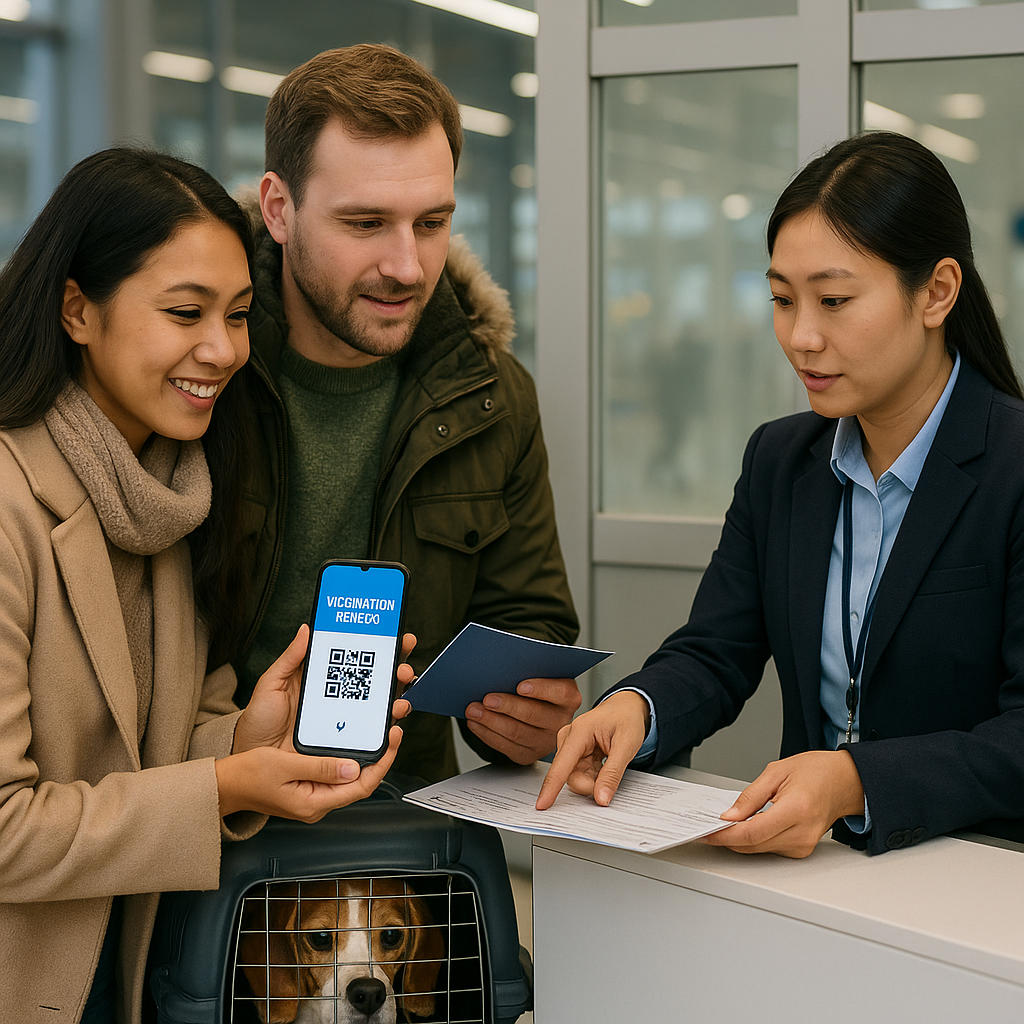
This is one of those travel questions that seems simple — until you’re standing at the airport with a pet, a phone full of PDFs, and a customs officer staring at you like, “Where’s the paper?” I went through that exact situation at Incheon a few years ago. I had my dog’s vaccination certificates neatly scanned, labeled, and saved on my phone. I thought I was being efficient. The APQA officer, however, was unimpressed.
So here’s the short answer: South Korea does not officially accept digital vaccination records as substitutes for original paper certificates. Digital copies are useful backups — even appreciated — but they don’t replace the real thing. Let’s break down why that’s the case, and what you can do to avoid an airport headache.
Why Paper Still Rules in Korean Pet Customs
South Korea’s pet import process is handled by the Animal and Plant Quarantine Agency (APQA), and it’s deeply rooted in document-based verification. It’s not that they hate technology — they just prioritize traceability and authenticity.
Digital copies (PDFs, screenshots, photos) can be altered too easily, and APQA’s job is to confirm that your vaccination record and microchip information are officially verified by a government authority. That means the paper trail — with signatures, stamps, and seals — is non-negotiable.
When you hand over a printed certificate with original stamps or embossing, the officer can see and feel the authenticity. A phone screen? Not so much.
That said, APQA officers do appreciate having digital versions on hand for quick cross-referencing, especially if your paperwork includes multiple pages or vaccine histories. Think of them as supplements, not substitutes.
What Korea Actually Requires
According to APQA’s import rules, pets entering South Korea must have a government-endorsed veterinary health certificate from the country of origin. That document proves your pet is vaccinated and disease-free. It also connects the pet’s microchip number to all the official records.
It has to be:
- Signed by a licensed veterinarian
- Endorsed (stamped or sealed) by the national animal health authority (like USDA, DEFRA, CFIA, etc.)
- Issued within 10 days before departure
- Printed on official letterhead or certificate paper
Digital-only versions — like an emailed PDF without the original stamp — don’t satisfy the “endorsed” requirement. Korean customs officers will likely treat it as incomplete and may require you to verify it through your home country’s animal health office.
The Role of Digital Backups (Why You Still Need Them)
Just because Korea doesn’t accept digital vaccination records doesn’t mean they’re useless. In fact, I highly recommend having them. Phones die, papers get wet, printers jam — stuff happens.
Digital copies can save your life in a few situations:
- Emergency verification: If an officer needs to confirm vaccine batch numbers or dates, you can zoom in and show them clearly.
- Lost luggage: If your checked baggage gets delayed, digital copies let you at least show proof while waiting for your documents.
- Travel connections: Some transit countries might ask for documents at layovers or airline check-ins. Digital copies buy you time.
When I flew from Toronto to Incheon with my dog, the airline staff in Vancouver demanded to see the rabies vaccine details — not the full certificate, just confirmation. My PDF copy did the job perfectly. But once I landed in Korea, only the original, stamped document mattered.
The APQA’s Perspective: Why They’re So Strict
The APQA’s entire system is built around prevention. South Korea hasn’t had a domestic rabies case in over a decade, and the reason is this obsessive attention to documentation.
They want to see:
- That your pet’s vaccination was given after microchipping.
- That the vaccine was issued by a licensed vet and verified by your national authority.
- That the document hasn’t been altered or reissued unofficially.
Digital formats don’t offer enough physical assurance for step three. It’s not personal; it’s policy.
There’s also the matter of legal traceability. APQA’s Animal Quarantine Certificate (which you receive after passing inspection) becomes part of Korea’s national import record. If they ever need to trace an imported animal’s vaccination source, they rely on hard-copy documents that can be archived — not cloud-stored screenshots.
How to Prepare the Right Way
If you’re traveling with your pet to Korea, here’s what you should do:
- Always bring the original vaccination certificate.
- Make sure it includes your pet’s name, species, breed, microchip number, vaccine manufacturer, batch number, and date of vaccination.
- Get the official government endorsement.
- This is usually a stamp or embossed seal from your country’s national animal health authority (like the USDA endorsement for U.S. travelers).
- Carry multiple paper copies.
- I print three: one for airline check-in, one for APQA, and one spare just in case.
- Save high-resolution digital copies anyway.
- Upload them to your phone, cloud, and email. If you lose your papers, these help reissue replacements faster.
- Organize everything in a clear folder.
- Label each document with tabs: microchip, vaccine, antibody test, health certificate. It makes customs go way smoother.
And maybe most importantly: don’t laminate anything. APQA needs to see original stamps and signatures. Lamination makes them suspicious.
Real Talk: What Happens If You Only Have Digital Copies
Let’s say your vet emails your certificates, you print them yourself, and they’re missing official stamps. What now?
Best case: the APQA officer might let you proceed if you can quickly verify the information through your home country’s animal health department (some can confirm electronically).
Worst case: your pet may be held temporarily in quarantine while they verify authenticity. This can take a few days and cost you hundreds of dollars in fees.
In other words, it’s not worth the risk. Always have the originals in your hand.
What About Human Vaccination Records?
Just to clarify — this article’s about pets, but the same principle loosely applies to humans entering Korea for health-related documents. Digital vaccination apps (like COVID records) are widely accepted now for people, but not for animals.
Pet documentation still runs on paper-based international certificates, not QR codes.
Final Thoughts: Paper First, Digital Second
In an age of QR codes and online portals, it feels outdated that pet entry still depends on ink stamps and carbon paper forms. But in South Korea, that’s how it works. Digital files are great for backups, but the APQA’s rules haven’t caught up to the cloud yet.
So if you’re preparing for the trip, think old-school: print, seal, stamp, repeat. Because when it’s 6 a.m. at Incheon Airport and your pet’s shivering in its carrier, the last thing you want is to hear, “Do you have the original document?”
FAQ
Does South Korea accept PDF vaccination records?
No. Only original, signed, and government-endorsed paper certificates are officially accepted.
Can I show photos of my documents at customs?
Only as a backup. Officers need to inspect original paperwork.
Are digital health certificates valid if emailed by my vet?
Not unless officially endorsed and printed with visible stamps or seals.
Can I get documents verified after arrival?
No, all endorsements must be completed before departure.
What if I lose my papers in transit?
Contact your vet and your national animal health authority immediately for emergency reissuance.
Do airlines accept digital vaccination proofs?
Some do, but APQA doesn’t. Always carry both.
Is Korea planning to go digital with pet records?
Not yet. There’s no official system for electronic verification at ports of entry.
Random but related: do vets in Korea issue digital certificates?
Most issue paper ones, though larger clinics may also email you PDFs for backup.
What Documents You Need to Bring Your Dog or Cat Into South Korea
Complete South Korea Pet Entry Checklist: Microchip, Rabies Certificate, and Quarantine Forms
Korean Pet Quarantine Rules Explained: What APQA Actually Wants From You