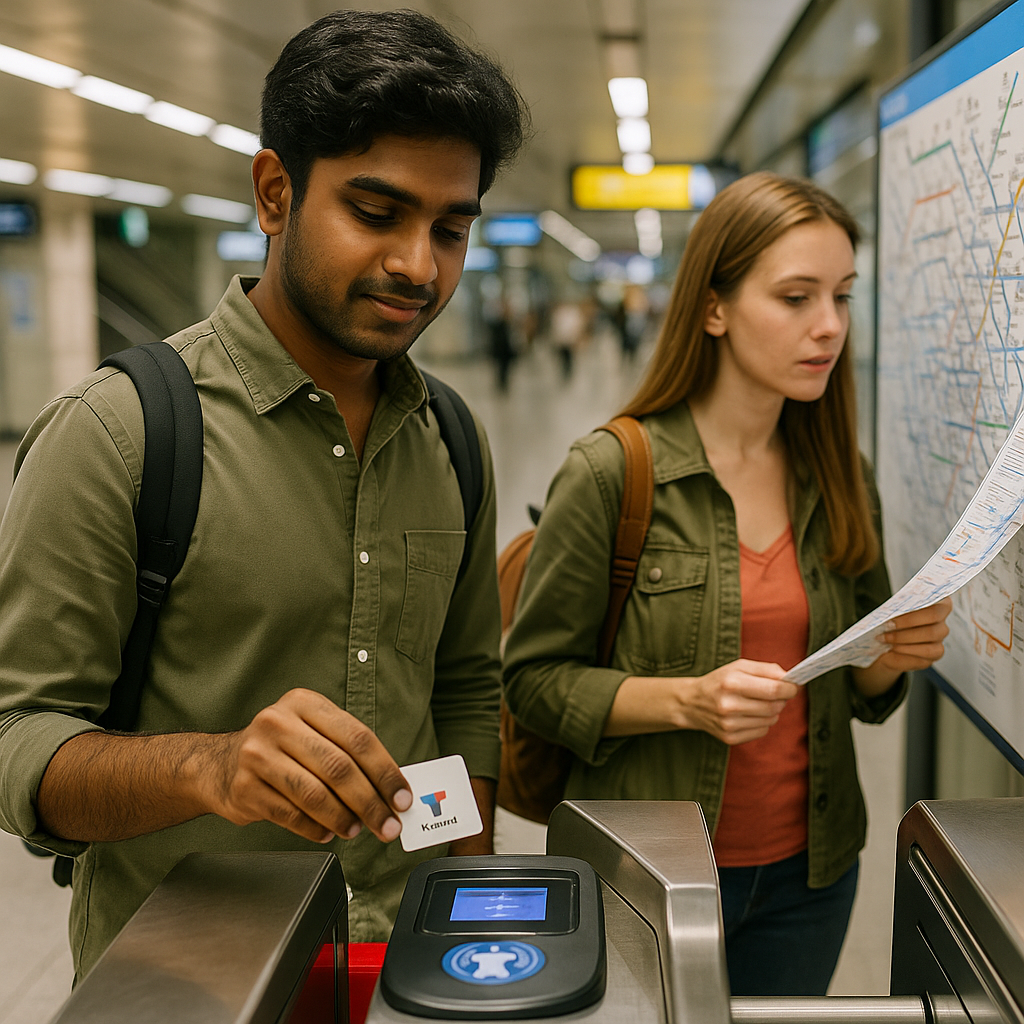
Just arrived in Korea? You’ll notice two things fast. One, the public transport system is insanely efficient. Two, everyone — and I mean everyone — taps this small card before getting on buses or subways.
That’s T-Money. Didn’t realize how dependent the entire country was on it until I forgot mine once. Felt like being stranded in a cashless wilderness. Dramatic? Maybe. But also true.
It’s way more than just a bus pass though. It’s your access key to Korean daily life. Subways, buses, taxis, even convenience stores. Tourists buy it, locals refill it. And somehow that same card design from fifteen years ago still works perfectly. But there are weird quirks. Unspoken tricks. A few “oh crap” moments most guides never mention.
Getting Your Hands on a T-Money Card
You can buy one at any convenience store. GS25, CU, 7-Eleven. Usually near the cashier. Costs around 2,500 to 4,000 won. But remember that’s just the card itself. Not the balance. You’ll need to load money (충전) onto it before using it. Critical step.
Saw a foreigner once buy a card, hop on a bus, tap it confidently. Nothing happened. Driver sighed. Said “No charge.” Made him get off at the next stop. That’s your first lesson right there. Load the card before you ride.
Most people charge it at subway stations via machines that accept both cash and cards. If you’re lost look for the blue-and-yellow kiosk near ticket gates. It’s all bilingual now thankfully. But sometimes those machines reject slightly crumpled bills. I swear they’re pickier than airport currency exchangers. Have backup bills ready.
T-Money vs. Cashbee vs. Korea Tour Card
They all do basically the same thing. T-Money is the OG. Works nationwide. Cashbee is more Busan-friendly though Seoul accepts it too. The “Korea Tour Card” is basically T-Money with tourist branding and some discount gimmicks that barely work half the time.
Stick with regular T-Money unless you collect cute card designs. Some are legitimately adorable honestly.
Seoul subway map looks like someone dropped spaghetti on a plate. But it’s surprisingly logical once you get used to it. Each line is numbered and color-coded. Everything runs on time. You tap your T-Money when you enter and when you exit. Forget the second tap? You’ll pay extra next ride. Learned that one the hard way.
Transfers between lines are free. As long as you don’t leave the gate. You can even transfer between subway and bus seamlessly if it’s within thirty minutes. That’s one of those small hacks nobody tells you about. The system remembers your last trip. Doesn’t double-charge you. Pretty smart.
Thing about Korean subways is they’re ridiculously clean and safe. You’ll see people sleeping on trains with phones in hand. Not a care in the world. Some stations even have full convenience stores and libraries underground. Libraries. Underground.
But it’s not perfect. Rush hour — around eight a.m. and six p.m. — turns everything into a sweaty sardine nightmare. If you value personal space at all aim for the first or last train cars. Trust me.
Bus System: Friendly Once You Decode It
At first buses seem way more confusing than subways. There are colors everywhere. Blue, green, red, yellow. Each meaning something different. Blue is long-distance across districts. Green is local. Red is express. Yellow loops around downtown areas.
It’s not rocket science. But at seven a.m. on a foggy Monday? Feels like it.
Tap your T-Money when you get on and again when you get off. Forget to tap off and you’ll lose your transfer discount. I learned that the expensive way during my first week. Cost me like three extra rides worth before I figured out what was happening.
Bus stops in Seoul display real-time arrival info in both Korean and English. Outside Seoul — like Daejeon or Gwangju — English might disappear. But the timing’s still accurate. Usually.
Underrated trick nobody mentions
If you’re short on balance you can use a bank card that has T-Money built in. It’s called a “transportation function” (후불 교통카드). Automatically charges your fare to your bank account. Lifesaver when you’re rushing and don’t have cash. Game changer honestly.
Didn’t realize for the longest time that T-Money works outside of transportation. You can use it to pay for stuff at convenience stores. Vending machines. Even some taxis. Some cafés near universities also accept it for small purchases. Not all but some.
There’s also a mobile version. “T-Money on Galaxy.” But it only works with certain Korean SIM cards and Android phones. If you’re an iPhone user or short-term visitor forget it. Physical card’s your best bet. Just how it is.
And get this. You can use the same card in multiple cities. Seoul, Busan, Daegu, even Jeju. Though their system is half-private and occasionally glitchy. Took a T-Money from Seoul to Busan once. No problem. But don’t expect refunds to be transferable. Those are local-only. Annoying but whatever.
Refunds and Leftover Balances
You can get cash refunds at convenience stores only if the balance is under 20,000 won. Anything higher? You’ll have to visit a T-Money service center. Usually in big subway stations like Seoul Station or Gangnam. Slightly annoying but fair I guess.
Also cards don’t expire. Unless you physically destroy them. I still use my original one from 2016. It’s scratched to hell. Works like a charm though.
Beyond Seoul: The Other Cities’ Systems
Busan technically uses both T-Money and Cashbee. Daejeon, Gwangju, and Ulsan accept T-Money without fuss. Jeju buses also take it but you’ll notice drivers often frown when tourists hold up the line tapping incorrectly. Happens to everyone. Don’t take it personally.
One fun difference. In smaller cities the drivers actually greet you. In Seoul? Silence. Just a beep and move along. Classic Seoul energy.
If you travel between cities by KTX you can’t use T-Money directly for train fare. But you can use it for subway or bus once you arrive. Nice not having to reset your whole transport setup when city-hopping.
Apps That Make Life Easier
Two apps you should install immediately:
KakaoMetro – For subways. Gives you real-time train times and platform directions.
KakaoBus – For buses. Live updates and stop names in English.
Both work nationwide and are way more accurate than Google Maps in Korea. Google’s navigation here is still weirdly limited honestly. You can even favorite routes for daily commutes. Makes mornings easier.
If you use Naver Maps it also integrates T-Money balance info now. But only if you’ve linked a Korean account. Found that out after trying for twenty minutes and giving up. Not worth the hassle for most tourists.
Little Survival Tips They Don’t Print on Maps
Few things they won’t tell you:
Don’t stand in front of subway doors. Locals will bulldoze you when they open. No mercy.
Always tap your card flat on the reader. Waving it around won’t register. Seen too many people do this.
Transfers don’t count if you wait more than thirty minutes between rides. System times out.
Late-night buses exist. Marked “N.” But they’re spaced out. Check schedules in advance or you’ll be waiting forever.
Never ever block the escalator’s left side. That’s the walking lane. People will glare. Some will say something.
Oh and buses don’t stop automatically. You must press the button before your stop. Tourists always forget this. End up riding three more stops awkwardly pretending it was intentional. Been there.
Why It All Just Works
What’s crazy is how well integrated everything is. The system’s been running for decades. Constantly updated but never broken. It’s one of those things that makes Korea feel like the future. Even if the app interfaces still look like they were made in 2008.
Thing is once you get the hang of T-Money you stop thinking about it. It just becomes part of the rhythm. Tap, beep, move. There’s a kind of quiet beauty in that efficiency. Sounds cheesy but it’s true.
And yeah you’ll occasionally forget your card. Curse under your breath. But you’ll also realize that for a few thousand won Korea basically gave you the keys to an entire country’s transport system.
Not a bad deal honestly.
FAQ
Can I use T-Money for taxis? Yes most taxis in big cities accept it. Just tap when paying. Easy.
Where can I recharge my T-Money? Any convenience store or subway station kiosk. Can’t miss them.
What if I lose my card? Sadly the balance isn’t recoverable. Buy a new one. Start over.
Does T-Money work in Busan? Yup though Cashbee’s more common there. Both work fine.
Can I get a refund as a foreigner? Yes if it’s under 20,000 won. Go to any convenience store. Over that amount visit a service center.
Is there a student discount? Yes but you need a “Youth” version linked to your ID or ARC. Worth it if you qualify.
Do buses and subways use the same balance? Exactly. It’s all one pool with automatic transfer discounts. Seamless.
Unrelated but can I buy coffee with T-Money? Sometimes yes. GS25, CU, and a few small cafés accept it. Not everywhere though.