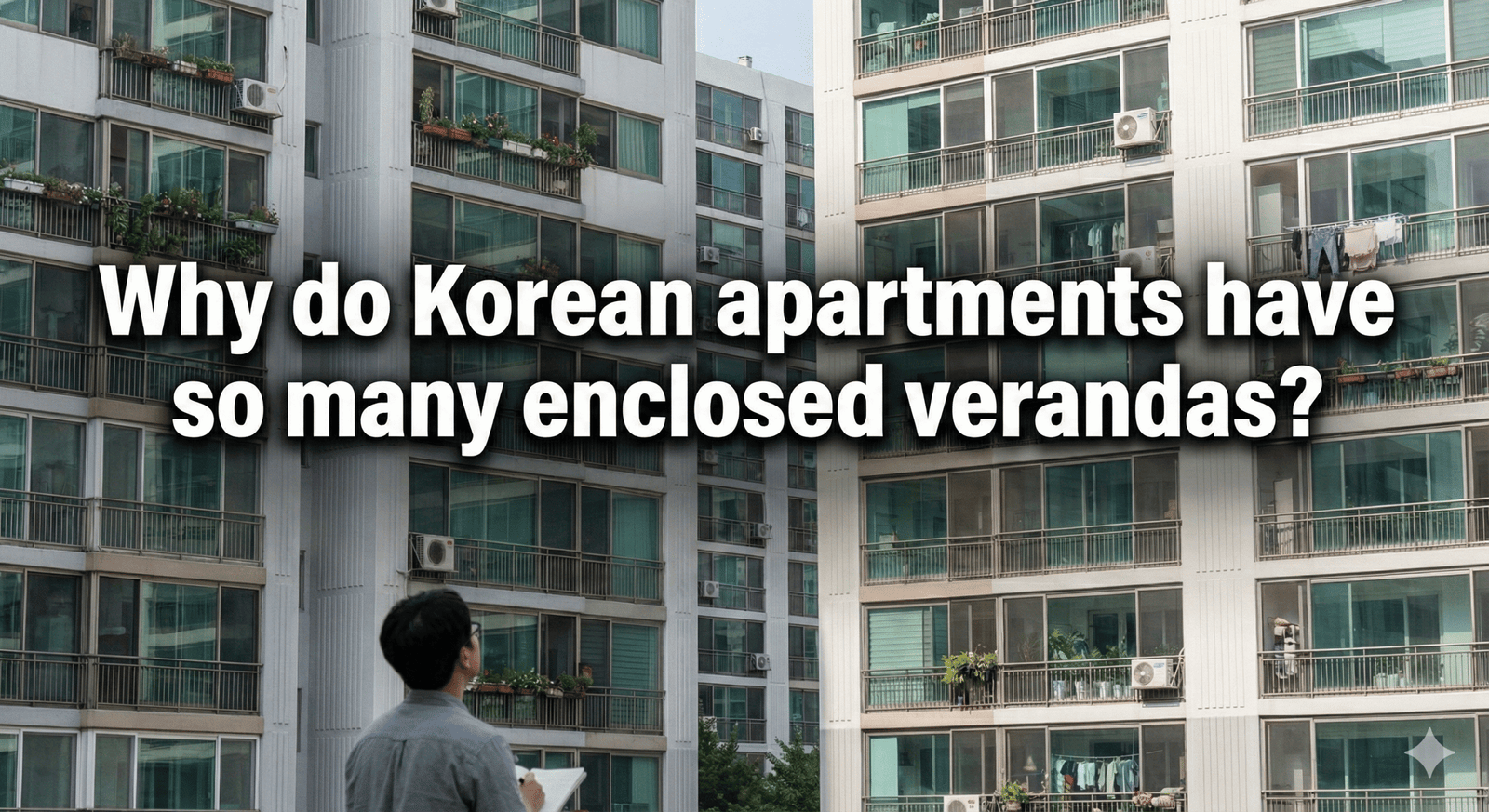
It’s one of those things you don’t really notice until you’ve lived in Korea for a bit. You’re standing in someone’s apartment, maybe in Seoul or Busan, and you realize—every windowed space seems… doubled. There’s the living room, and then beyond the sliding glass, another narrow stretch of tiled floor, kind of like a sunroom, kind of like a storage cave. That’s the veranda. And almost all apartments have it. Enclosed. Sometimes with plastic panels that rattle in the wind. Why? It’s a mix of practicality, history, and a few quirks that only make sense if you’ve experienced Korean housing culture up close.
From Open Balconies to Glazed Caves
Korean apartments didn’t always look like this. Back in the 70s and 80s, when high-rise living started booming, balconies were open. People dried laundry, planted flowers, maybe shouted across to neighbors. But then, weather happened. Winters in Korea are no joke—dry, biting, sometimes below -10°C. Rainy seasons can flood open balconies fast. So people started putting up glass or plastic panels to block the wind and water. It wasn’t a design trend at first; it was survival and convenience.
The shift became so common that construction companies eventually adapted. By the late 90s, many apartment designs included enclosed verandas from the start. Developers sold it as a bonus “multi-purpose space,” and Koreans—ever efficient with limited square meters—embraced it fully. The idea of expansion construction even took off: residents would remove the inner wall separating the living room and veranda, effectively enlarging the usable area. Technically, this blurred the line between legal living space and add-on, but people did it anyway.
I once read a forum post where someone joked that the veranda is the Korean version of a garage. You don’t park cars there, but everything else ends up inside: bikes, fans, old rice cookers, dehumidifiers, baby strollers. It’s true.
The Cultural Logic Behind “Extra” Space
Thing is, apartments in Korea are smaller than Western ones on average. Even a “large” three-bedroom unit might only be 85 square meters. So the veranda becomes psychological comfort space—somewhere between outdoors and indoors. People hang laundry, sure, but also dry chili peppers, store boxes of kimchi during winter, or grow succulents in improvised planters. It’s like a household buffer zone.
And there’s a weird social thing too. Having that extra bit of space—even if it’s technically not counted in the official apartment area—signals a kind of domestic abundance. You’re not cramped. You can breathe. My Korean friend once said her mom refused to live in a place without a veranda because “it feels like living in a box without a window.” It’s less about function now and more about emotional comfort.
I’ve also seen people insulate the veranda and turn it into a mini study, or even a treadmill zone. Real estate agents sometimes pitch it that way: “a flexible utility space.” But honestly, that phrase doesn’t capture how culturally ingrained it is. It’s almost like, if your apartment doesn’t have an enclosed veranda, it’s missing a piece of “home.”
Legal Loopholes and Architectural Quirks
Now here’s where it gets messy. Technically, the veranda(valcony) is supposed to be “semi-outdoor” space. When apartments are approved for construction, the official square footage excludes balconies. So when residents later enclose or “expand” them, they’re kind of sneaking extra floor space without paying taxes or affecting building density laws. That’s part of why these spaces became so normalized—they give you more room without increasing the official apartment size.
But of course, it got regulated. Around 2006, Korean building laws changed to allow developers to include enclosed verandas legally as part of the design. That’s why new apartments advertise expanded layout. You’ll notice newer units often have no sliding glass barrier at all—the space has already been merged into the interior. Ironically, that’s made older apartments with original verandas feel nostalgic for some people. Like a glimpse of 90s Korea preserved behind sliding glass doors.
And then there’s insulation. A lot of old verandas are freezing in winter and boiling in summer. So people tape up the glass edges, put plastic film on windows, sometimes even install a second set of windows. It’s a DIY climate battle zone. But no one really complains because everyone just… accepts it as part of apartment life.
The Psychological Comfort of Contained Views
I might be overanalyzing, but enclosed verandas also reflect something about Korean urban life. There’s this tension between density and privacy, between wanting sunlight and avoiding eye contact with the high-rise next door. The veranda offers a middle ground—a place to see the city but not be in it.
If you step onto one early morning, you’ll see it: misted glass, rows of drying laundry, sometimes potted plants that struggle for sunlight. It’s a quiet domestic theater. You feel outside but safe. Maybe that’s part of the appeal—life in Korea moves fast, but verandas are still spaces of pause.
There’s also a sound factor. Korean apartments have thin walls. Closing the veranda doors muffles traffic noise and neighbor chatter. It creates layers of separation, like emotional insulation.
I don’t think people consciously think, “I want an enclosed veranda because it makes me feel safe.” But the behavior patterns say it anyway. The trend persists even in new high-end apartments, though in sleeker form—“sunrooms” with motorized blinds, designer tiles, underfloor heating. Functionally identical. Just more expensive.
The Future of Verandas in Korean Living
Ironically, as new apartments integrate the veranda into the living space, old-school ones are gaining a sort of retro charm. Interior bloggers romanticize them now: hanging plants, cozy reading nooks behind translucent glass. What used to be “just storage” becomes aesthetic again.
And I’ve seen developers toy with modular balconies that can open or close electronically depending on the season. Smart verandas. Maybe that’s where it’s going—Korea loves tech integration. But I think even if design evolves, the idea of that “extra, enclosed edge of the home” won’t disappear. It’s too practical, too emotionally embedded.
Actually, come to think of it, this whole veranda story mirrors Korea’s housing evolution: adapting foreign architecture (Western-style apartments) to local weather, lifestyle, and values until it becomes its own thing.
FAQ
Why do Koreans enclose verandas instead of keeping them open?
Because open balconies aren’t practical in Korea’s climate—cold winters, humid summers, and fine dust. Plus, enclosed verandas provide usable storage and buffer against noise.
Do newer apartments still have verandas?
Sort of. Many modern ones have “expanded” layouts where the veranda is already integrated into the room. It’s the same idea, just formalized.
Can you legally expand a veranda in Korea?
Yes, but only under certain construction regulations. Older residents used to do it unofficially; now, most new buildings are designed that way from the start.
What’s usually stored in Korean verandas?
Everything. Laundry racks, old electronics, camping gear, kimchi fridges, and sometimes even a treadmill that no one uses.
Is it true that verandas affect apartment prices?
Yes, indirectly. Expanded or enclosed spaces can make units feel larger, which increases perceived value—even if the legal area hasn’t changed.
Does anyone still use open balconies?
Rarely. Maybe in detached houses or villas, but not in standard apartment complexes.
How do Koreans decorate verandas?
With plants, drying racks, shelves, or sometimes nothing at all. Some people just prefer the clean, empty look.
Unrelated but curious: do apartments really have floor heating?
Yes, nearly all do. It’s called ondol. Completely different system from the veranda thing, but connected in how Koreans think about warmth and comfort.
Is there any plan to phase them out?
I don’t know. Maybe. But given how attached people are to them, probably not anytime soon.