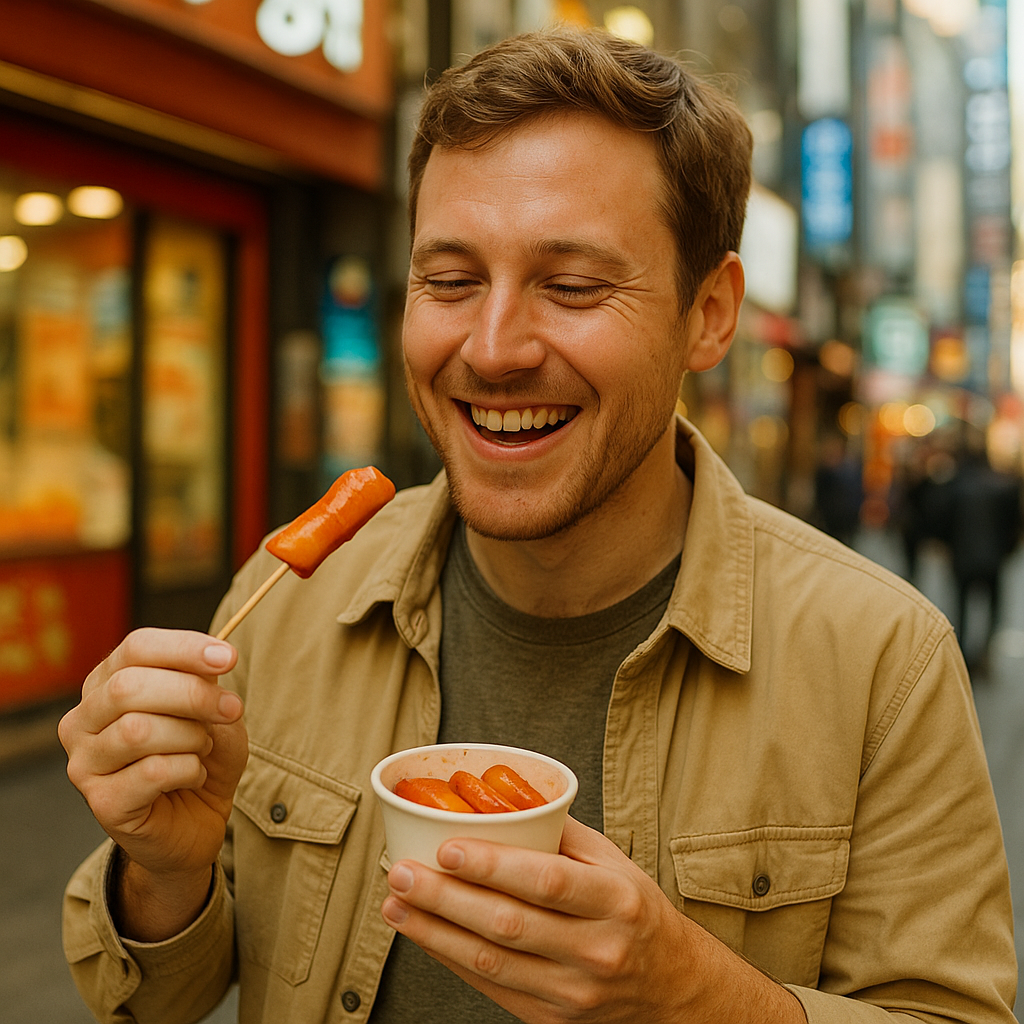
Your first trip to Korea is going to hit differently — bright neon nights, perfect public transport, spicy food that makes you cry and smile at the same time. But also: confusing etiquette, endless escalators, and 10 different ways to order coffee. Korea is fast, beautiful, and weirdly addictive — but it takes a few insider tips to survive your first few days without looking completely lost.
Learn a Little Korean (It Changes Everything)
You don’t need to be fluent, but learning a few key phrases will make your life about ten times smoother. English isn’t as common as you might expect outside Seoul, and even a small effort in Korean goes a long way.
Useful basics:
- 안녕하세요 (Annyeonghaseyo) – Hello
- 감사합니다 (Gamsahamnida) – Thank you
- 얼마예요? (Eolmayeyo?) – How much is it?
- 이거 주세요 (Igeo juseyo) – Please give me this
- 화장실 어디예요? (Hwajangsil eodiyeyo?) – Where’s the restroom?
Even if your pronunciation’s terrible, people appreciate the effort. It softens every interaction. I once saw a foreigner just say “annyeong” to a taxi driver — instant smile, instant respect.
Apps like Papago (by Naver) beat Google Translate here. It’s built for Korean idioms, menus, and slang.
Get a T-Money Card Right Away
You’ll use it for literally everything — subway, bus, taxi, even snacks at convenience stores. Grab one at Incheon Airport or any CU, GS25, or 7-Eleven.
Top it up with cash at machines or the counter. No registration, no fuss. You just tap and go.
Bonus: transfers between bus and subway are discounted automatically if you tap properly on exit. It’s like the city knows your route before you do.
Actually, one tip: don’t forget to tap off when leaving buses, or you’ll get overcharged. Learned that the hard way.
Skip the ATM Fees — Get a Wise or Global Card
Korean ATMs love charging foreigners. If your home bank doesn’t partner locally, fees can eat you alive.
A Wise, Revolut, or Global Blue card often saves you from bad conversion rates. ATMs labeled “Global” or “Foreign Card Accepted” (usually in 7-Eleven or subway stations) are your best bet.
And yes — Korea is highly cashless, but you’ll still need some bills for taxis in small towns, markets, or temple donations.
Always Carry Tissues and Hand Sanitizer
Here’s something no guidebook tells you: many public bathrooms don’t provide paper towels, and sometimes no toilet paper either. Locals carry small tissue packs or wet wipes.
Also, soap dispensers occasionally run dry. A mini sanitizer solves that. Koreans are clean freaks — they’ll notice and respect your hygiene game.
Download These Apps Before You Land
Korea has its own app ecosystem. Skip the Western ones; they won’t get you far.
Must-haves:
- Naver Map or KakaoMap – Google Maps doesn’t work properly here.
- Subway Korea – precise subway times and transfers.
- Papago – translation app made for Korean.
- Kakao T – taxi app, faster than hailing one manually.
- Klook or Naver Pay – tickets and discounts for attractions.
Koreans are glued to their phones, and everything runs digitally. Cashless, paperless, frictionless — once you sync with that rhythm, life becomes absurdly convenient.
Don’t Expect Personal Space
Subway rush hour in Seoul? Welcome to human Tetris.
People will brush past you, bump into you, and no one apologizes — not because they’re rude, but because the density makes “sorry” impractical. The unspoken rule is: keep moving, don’t slow the flow.
If you stop abruptly in the middle of a busy walkway to check your map, expect at least five side glances. The fix? Step aside, lean near a wall, then check your phone.
You’ll fit right in.
Understand the Etiquette (So You Don’t Look Like a Tourist)
Korean manners are subtle — more about what not to do.
- Don’t talk loudly in public.
- Don’t eat while walking (it’s considered sloppy).
- Don’t stick chopsticks upright in rice — it’s a funeral symbol.
- Don’t pour your own drink first in a group.
- Use two hands when giving or receiving anything.
And this one’s big: remove your shoes when entering homes, some traditional restaurants, and even temples. Socks matter here — maybe avoid holes.
Try Street Food — It’s Legit Safe
Unlike some countries, street food in Korea is super clean. Vendors are licensed and inspected regularly.
Must-tries:
- Tteokbokki (spicy rice cakes)
- Hotteok (sweet pancakes)
- Odeng (fish cake skewers)
- Gimbap (Korean sushi rolls)
- Tornado potatoes — yes, it’s a thing
You can eat from stalls in Myeongdong, Gwangjang Market, or Hongdae without worrying about getting sick. Just bring cash.
Actually, street food is how locals grab dinner between subways. It’s part of the culture, not a “tourist thing.”
Stay Connected — Wi-Fi Is Everywhere (Almost)
Seoul’s Wi-Fi coverage is wild. Subway stations, cafés, malls, even some buses have free connections.
But for real reliability, rent a pocket Wi-Fi or local SIM at the airport. Prepaid SIMs from KT or LG U+ work flawlessly for tourists.
Pro tip: some SIMs even include a T-Money chip built in. You just tap your phone for transit. The future is already here.
Expect Speed in Everything
Meals come out in minutes. Deliveries arrive faster than your brain processes. People walk like they’re late, always.
It’s not aggression — it’s ppalli-ppalli culture, the “hurry, hurry” mentality that powers the country.
You’ll feel rushed at first, then weirdly energized by it. The key is to match the rhythm but know when to step back — maybe at a quiet hanok café or along the Han River at night. Korea runs fast, but it also knows how to pause beautifully.
Dress Neatly — Always
Koreans take appearance seriously. Even casual outfits look intentional. You won’t see many people wearing gym shorts or wrinkled clothes in public.
If you look polished, you’ll blend in better and get treated with more respect — especially in nicer restaurants or department stores.
That said, tattoos are still semi-taboo in traditional spaces. Cover them up in temples, saunas, or family restaurants, just to avoid awkward stares.
Don’t Skip the Small Stuff
Some moments in Korea aren’t about the big sights. It’s the small things that hit hardest — a 2 a.m. walk through Hongdae, a grandmother offering you rice cake at a market, or an old man humming trot music on the subway.
Korea’s beauty hides in between — in the rhythm, not the itinerary.
So yes, visit Gyeongbokgung and Namsan Tower, but also wander a random alley in Ikseon-dong or get lost in a night market. That’s the real Korea.
FAQ
Do I need cash or card in Korea?
Both. Cards work almost everywhere, but cash is still useful for markets or taxis.
Is Korea safe for solo travelers?
Extremely. Even late at night, most areas are safe to walk alone.
Do I need to tip in restaurants?
No. Tipping isn’t part of the culture — it might even confuse people.
What’s the best time to visit?
Spring (April–May) and autumn (September–October) are perfect — mild weather, fewer crowds.
Can I drink tap water?
Technically yes, but locals prefer filtered or bottled water.
Is public transport easy for foreigners?
Yes, incredibly. All signs have English translations.
Do I need a power adapter?
Yes, Korea uses 220V with round two-pin plugs (Type C/F).
Unrelated — what’s with the couple culture?
Oh, it’s intense. Matching outfits, couple rings, even anniversaries every 100 days. Welcome to the world’s most romantic efficiency.
Can I use Google Maps?
Not really. Use Naver Map or KakaoMap instead — they’re accurate and detailed.
What’s the biggest mistake tourists make?
Assuming English will solve everything. Learn a few phrases and show effort — it changes the entire trip.