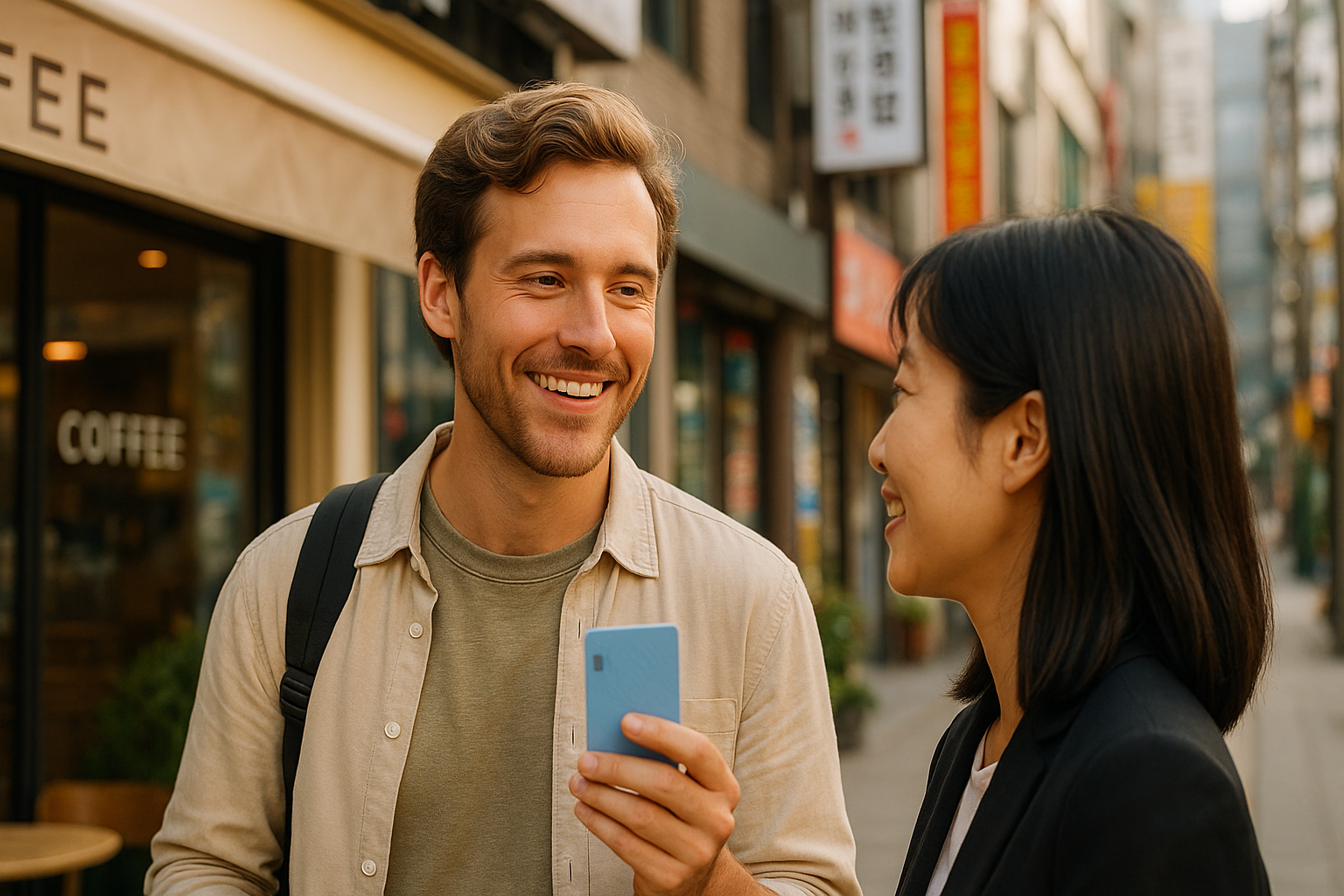
If you’ve ever landed at Incheon Airport and felt instantly overwhelmed — neon everywhere, people moving at hyperspeed, music blasting from convenience stores — welcome to Korea. It’s not just another country. It’s a cultural kaleidoscope that can either fascinate or fry your brain, depending on how prepared you are.
Culture shock here doesn’t usually come from language or food. It’s the pace, the unspoken rules, and the thousands of tiny social codes you never realized existed. But the good news? Once you understand them, Korea starts to make perfect sense — even the things that feel upside down at first.
One of the biggest adjustments foreigners face is Korea’s deep sense of hierarchy. It’s not always visible, but it shapes everything — how people talk, eat, and even make eye contact.
Seniority (by age, job position, or experience) defines interactions. You’ll see it right away in language: Korean has multiple levels of formality, and using the wrong one can sound disrespectful even if you didn’t mean to.
For instance, calling your boss “you” (너) instead of “manager-nim” could sound shockingly blunt. Even simple greetings change based on age.
It’s not that Koreans are obsessed with rank; it’s that respect is a social lubricant. Once you learn to mirror it — bow slightly, use polite speech, pour drinks with two hands — you’ll notice people immediately warm up.
Actually, that’s the irony: Koreans aren’t cold. They’re structured. When you adapt to the structure, you stop feeling like an outsider.
Expect Blunt Honesty — and Don’t Take It Personally
Westerners often misinterpret Korean directness as rudeness. It’s not. It’s efficiency.
Someone might tell you, “You look tired,” “You gained weight,” or “That shirt doesn’t match.” In English, those would sting. In Korean, they’re neutral observations. The intent isn’t to insult — it’s to acknowledge reality.
The same goes for workplace or group feedback. Koreans often critique openly because the goal is improvement, not ego protection.
If you can mentally reframe that — “They’re helping, not judging” — you’ll dodge a lot of emotional turbulence.
And truthfully, once you get used to it, it’s kind of refreshing. No fake politeness. Just raw honesty wrapped in context.
Accept the Speed (and the Chaos)
Korea runs fast. Like, very fast. Internet speed, food delivery, public transport — everything is engineered for immediacy.
People walk like they’re late, even when they’re not. Cafes are full but silent because everyone’s working. Subways feel choreographed. You’ll barely have time to process before the next thing happens.
At first, it’s overwhelming. Then it becomes addictive.
The key to avoiding culture shock here is flowing with the pace instead of resisting it. Don’t try to slow everything down to your comfort zone — adapt your rhythm.
For instance, if someone rushes past you without saying sorry, they’re not being rude. They’re in sync with the national tempo. You’ll join them soon enough.
This is the tricky part. So much of Korean etiquette is unspoken. You don’t realize you broke a rule until someone gives you that polite half-smile.
Some quick lifesavers:
- Don’t stick chopsticks upright in rice — it’s a funeral symbol.
- Don’t pour your own drink in company; pour for others first.
- Don’t sit before the eldest does.
- Don’t talk loudly on public transport. Ever.
- Don’t touch someone’s arm or shoulder casually unless you’re close.
Oh, and when paying at a store, always hand or receive things with both hands. It’s a small thing, but it signals respect.
Actually, I’d argue Korea’s politeness system is built on gestures more than words. Once you master them, you can get by comfortably even with minimal Korean.
Know That Privacy Works Differently
This part surprises a lot of foreigners. Korea is communal — people live close, eat together, work late together. But at the same time, personal privacy isn’t framed the same way as in Western cultures.
Strangers might ask about your age, job, salary, or even relationship status within five minutes of meeting you. Not because they’re nosy — it’s their way of placing you socially so they know how to communicate.
It’s context, not intrusion.
If you understand that, you stop feeling invaded. Koreans aren’t trying to pry; they’re trying to use the right language level and tone with you.
Manage the Food Shock (Because It’s Real)
Let’s be honest: the food is incredible — until your stomach protests.
Korean cuisine is spicy, fermented, and often salty. If you’re not used to that, the first week can be a digestive rollercoaster. Kimchi for breakfast? Boiling soup in summer? Ice cream in winter? Yep.
Tip: ease into it. Alternate Korean meals with something lighter for a few days. Drink lots of water. And don’t assume every red dish is nuclear-level spicy — some aren’t.
Actually, food is a great cultural bridge. Complimenting a meal, even in simple Korean (“맛있어요!”), earns genuine smiles. It’s one of the easiest ways to connect.
Don’t Overthink Silence
If you’re from a culture that fills every silence with chatter, Korea will feel strange. People can sit together quietly for long stretches without discomfort.
This is especially true in cafes, on dates, or during group meals. Silence doesn’t mean boredom or awkwardness; it means comfort.
I used to overcompensate — talking nonstop to “keep things alive.” Eventually, a Korean friend told me, “You don’t need to talk so much. Just be here.” That line fixed a lot of my anxiety.
Recognize the “We” Mentality
Individualism is admired in theory here, but in practice, Korea runs on collective consciousness. People think in terms of we, not I.
You’ll see it at work (team-first attitude), in school (group projects everywhere), and even in how people dress (unspoken coordination).
It’s not suppression of individuality — it’s harmony. The goal isn’t to stand out; it’s to fit in beautifully.
At first, it might feel stifling if you’re used to self-expression. But once you experience the smoothness of group coordination, you start to get it.
You’re part of something bigger — and that’s strangely comforting.
Be Mentally Flexible
Culture shock doesn’t happen because things are weird. It happens because your brain keeps comparing — “In my country, we do it this way.”
The moment you stop doing that, the shock fades.
Think of Korea as a parallel world, not a strange one. Things here evolved differently — language shaped manners, urban design shaped social habits, and technology shaped pace.
If you observe before judging, you’ll adapt faster.
And, if you’re curious enough, Korea will reward you. It’s one of those places where the more you understand it, the more it unfolds like a story.
FAQ
How long does culture shock last in Korea?
Usually a few weeks. The first month’s the hardest — after that, it gets easier.
Is it rude to speak English in public?
Not at all, but speaking even basic Korean phrases earns a lot of goodwill.
Why do people stare sometimes?
Curiosity, not hostility. Especially outside Seoul where foreigners are rare.
Do I need to bow all the time?
A small nod usually works. Deep bows are for formal situations.
Can I tip at restaurants?
No, tipping isn’t part of the culture. It might even confuse staff.
What’s the biggest mistake foreigners make?
Assuming silence = coldness or bluntness = rudeness.
Unrelated — do Koreans really work that much?
Yes, but it’s slowly changing. Work-life balance is becoming a big topic.
How can I make Korean friends easily?
Join language exchanges, local hobby clubs, or hiking groups. Koreans love shared activities.
Do I need to follow all the etiquette rules perfectly?
No one expects perfection — just effort. That’s enough.
Is Korea friendly to long-term foreigners?
Yes, especially younger generations. Openness is growing fast.