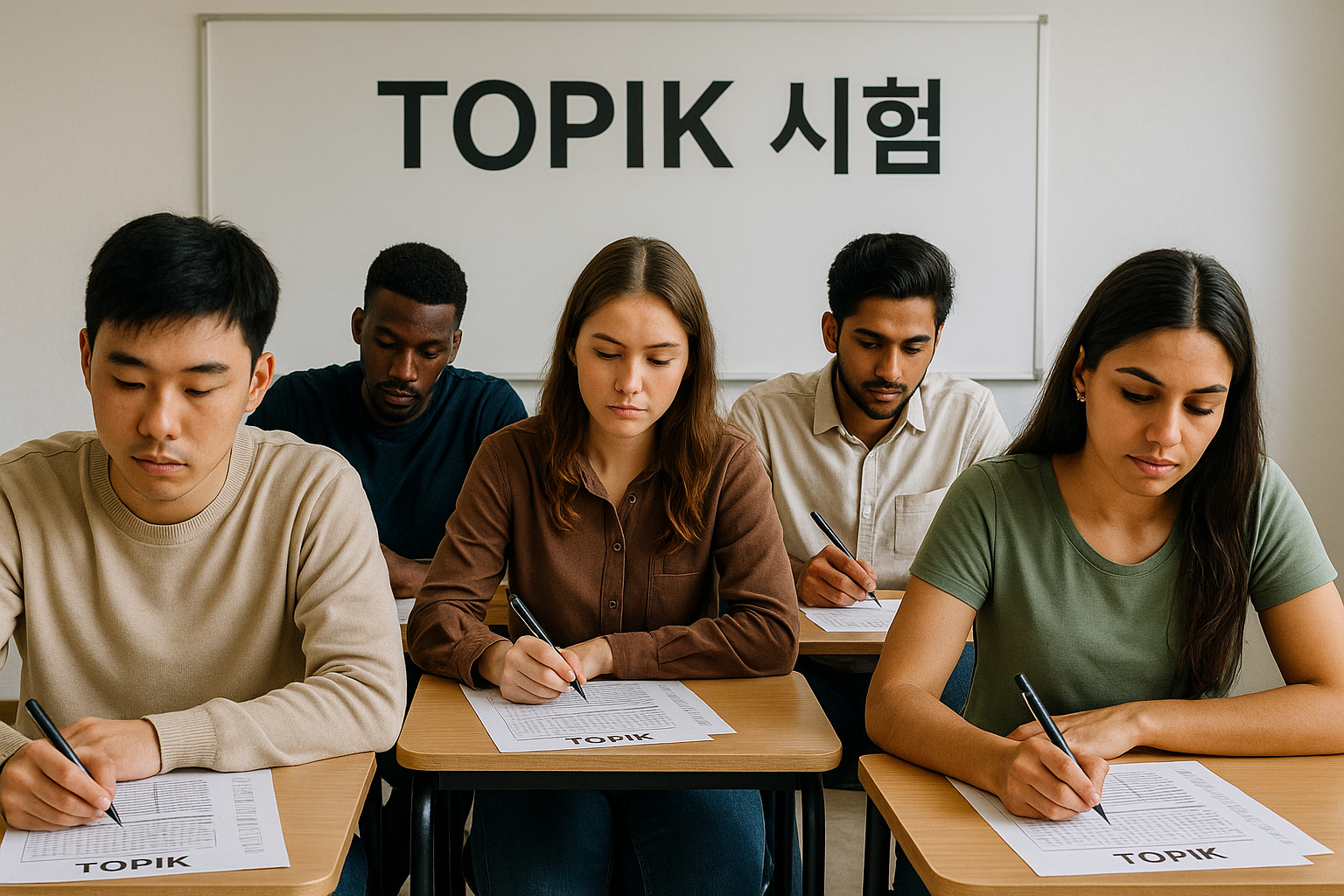
So the thing is, everyone talks about the TOPIK like it’s some mystical Korean rite of passage. It’s not. It’s an exam—tedious, bureaucratic, occasionally unpredictable, and yet… if you’re planning to study, work, or live long-term in Korea, you’ll probably have to face it. The Test of Proficiency in Korean, or TOPIK, is run by the Korean government, and it’s the gatekeeper for university admission, job eligibility, and sometimes even visa perks.
But before you rush to sign up, let’s unpack what actually matters.
The Weirdly Simple Structure That’s Not Simple at All
There are two main levels: TOPIK I and TOPIK II.
- TOPIK I (Levels 1 & 2): Reading and listening only.
- TOPIK II (Levels 3 to 6): Reading, listening, and writing (the monster section).
The tricky part is the scoring. You don’t get a “pass” or “fail.” You get a score band that places you into a level, so technically you can do terrible in one section and still scrape by with a decent level—depends on the total.
Thing is, I’ve seen people who know conversational Korean perfectly well completely bomb the writing section just because they didn’t know the formal essay structure (the infamous 서론–본론–결론).
Registration Chaos: Expect Nothing Smooth
You’d think in 2025, registering for an international exam would be simple. Nah. The official TOPIK site still looks like it was coded on Windows XP. Registration opens, the server crashes, and within ten minutes the test centers in Seoul are gone.
If you’re abroad, sometimes your local Korean embassy or a partner university handles it. The catch? They might only offer it once or twice a year. Miss it, and you’re waiting another six months.
How Hard Is It, Really?
Depends. Level 2 feels like “I survived Duolingo for a year.” Level 3 starts throwing grammar you’ve never seen in textbooks. By Level 5, you’re reading newspaper editorials about politics and labor unions.
TOPIK doesn’t test real-life Korean—it tests academic Korean. So don’t expect slang, don’t expect texting phrases, and definitely don’t expect leniency for typos. It’s made for people aiming for Korean universities or companies, not for ordering tteokbokki in Myeongdong.
The Writing Section That Breaks Spirits
Everyone fears the writing section of TOPIK II. And for good reason. You’ll get a mix of fill-in-the-blank grammar questions, sentence ordering, short-answer, and then the beast: Essay Writing.
Typical prompt? Something like:
“Discuss the impact of technological development on interpersonal relationships.”
You’re supposed to write a structured essay in Korean using formal grammar (격식체), about 600–700 characters, in 50 minutes, while panicking silently. Most foreigners end up learning fixed templates like “이 글에서는 ~에 대해 논하고자 한다” just to survive.
Study Materials That Don’t Totally Suck
Official past papers are gold. Forget random YouTube “TOPIK tips” videos unless you enjoy misinformation. The official TOPIK site has PDFs with listening audio files—practice those religiously.
Some people swear by TOPIK GUIDE, Korean Grammar in Use, or Yonsei TOPIK prep books. I personally found Reddit’s /r/TOPIK threads more honest than half the commercial guides out there.
And a tip nobody tells you: read Korean news articles aloud. It kills two birds—grammar exposure + pronunciation speed.
Scoring Breakdown (a bit boring but necessary)
| Level | Score Range | Description |
|---|---|---|
| 1 | 80–139 | Basic survival Korean |
| 2 | 140–199 | Daily life level |
| 3 | 120–149 | Work/university readiness |
| 4 | 150–189 | Intermediate academic Korean |
| 5 | 190–229 | Professional/academic fluency |
| 6 | 230–300 | Native-adjacent fluency |
Notice the overlap? Yeah, that’s not a typo—the official chart actually overlaps in some test guides, depending on version. Confusing, I know.
Is TOPIK Worth It?
If you need it for visa, university, or employment—yes.
If you’re learning Korean for fun or social reasons—not really. You’ll get frustrated by how formal and outdated the language is.
But some people find it motivational. There’s something satisfying about holding an official certificate with the word “proficiency” on it.
Random Things Nobody Mentions
- You can’t use mechanical pencils (yep, still bubble sheets).
- Test centers are freezing in winter, boiling in summer.
- Korean students take it too—it’s not just foreigners.
- The results take over a month to come out, and yes, the site crashes again on result day.
My Take
TOPIK isn’t really about proving fluency. It’s about proving you can survive in Korean bureaucracy. It rewards pattern memorization, not creativity. But ironically, the grind of preparing for it teaches you a weirdly valuable kind of discipline—like decoding bureaucratic Korean in real life.
So yeah, take it if you must. Prepare smart, not long.
And if you can write a coherent essay on “Korean cultural exports and globalization,” you’ve basically beaten the system.